Avoid Costly Mistakes: Professional Tips for Purchasing a Pre-Owned / Second-Hand / used HERR-VOSS STAMCO MMR6-6 Hydraulic Forging Manipulator?
If you’re considering buying a used Herr-Voss Stamco MMR6-6 hydraulic forging manipulator, that’s a big investment. These machines are heavy duty, complex, and safety-critical. Getting one that’s sound is essential. Below are professional tips and red flags to help you avoid costly mistakes.
What Is an MMR6-6 Manipulator — What to Know
Before inspecting, understand what this model is supposed to do and what its main components are. While exact specs vary, some points:
- The “MMR” likely refers to Multi-Move / Manipulator type from Herr-Voss/Stamco for forging or handling heavy hot steel pieces.
- “6-6” may indicate capacity or reach (for instance 6,000 lb capacity, or 6 ft reach, etc.). There’s a YouTube video showing a 6000 lb x 24″ Herr-Voss Stamco MMR6-6 manipulator.
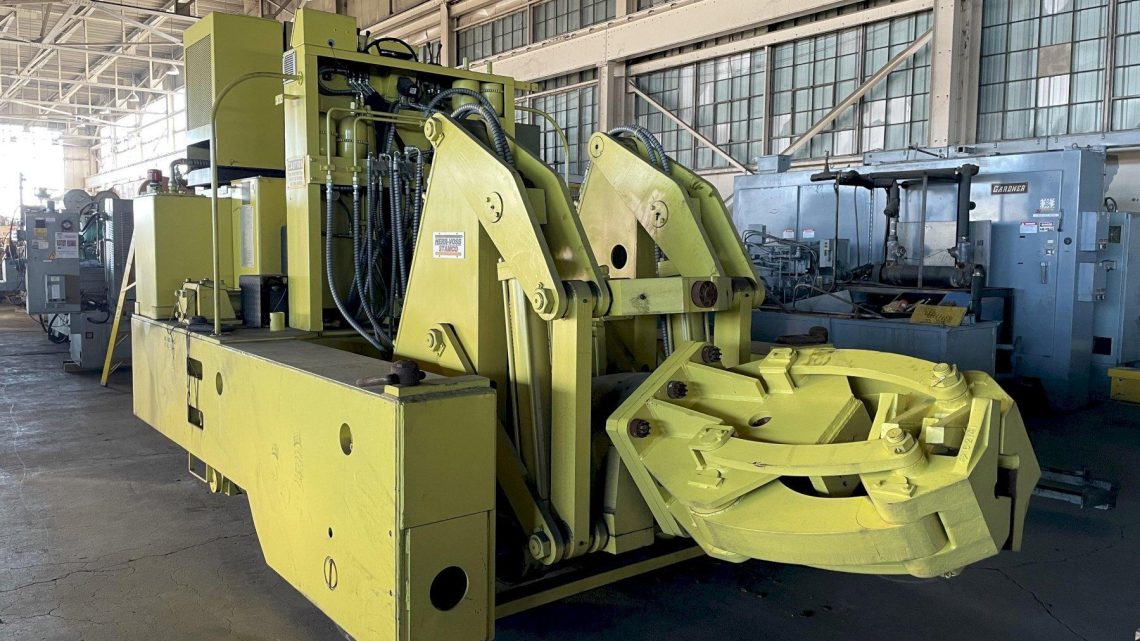
- Key systems: hydraulic power unit, cylinders, structure (boom, arms, joints), traversing or rotational axes, tilting or rotating end effector / clamp, controls & safety interlocks, operator station, wiring.
Knowing these helps you identify what parts are critical, what part wear you should expect, and typical trouble areas.
Key Areas to Inspect / Test
Here are the aspects you must check (mechanical, hydraulics, safety, etc.), with what to look for, common failure modes, and how to assess condition.
| Area | What to Inspect / Test | Why It Matters / What Failure Shows Up As / Cost Involved |
|---|---|---|
| Structural Integrity & Frame | • Check for cracks, distortion, warping in the arms, booms, pivot joints, welds. • Look for signs of heat damage if used around furnaces or hot work (discoloration, scaling). • Inspect pins / bushings at pivots: wear, elongation of holes. • Check the mounting/anchoring points; see if any fatigue or foundation issue. | Any structural damage compromises both precision and safety. Repairing bent arms or cracked welds is expensive, especially for thick steel, and may require specialized welding & post-heat treatment. Pivot pin/bushing wear can lead to excessive play, loss of accuracy or worst, a failure under load. |
| Hydraulic System | • Inspect cylinders: for leakage past seals; check rod surfaces for scoring, pitting or corrosion. • Check hoses, fittings, connectors, swivel joints for wear, leaks, signs of past overheating. • Hydraulic power unit: check pump(s), motor, filters, reservoirs; look at oil condition (cleanliness, water content, sludge). • Check for consistent, correct pressures in all operating modes; test under load. | Hydraulic failures are a big cost. Leaks waste fluid, reduce performance and compromise safety. Re-sealing / replacing cylinders and hoses can be expensive and time-consuming. If the power unit is undersized, old, or worn, performance suffers. Also oil contamination accelerates wear and causes damage to valves or pump internals. |
| Control System & Safety Interlocks | • Check the controls: are joysticks / control levers responsive? Any dead zones? • Safety interlocks: limit switches, emergency stops, guard doors, overload protection. Are they functioning and compliant? • Wiring & electrical components: inspect for damage, corrosion, wiring condition, cable drag chains, connectors. • Check if controls are up to modern / local safety standards (e.g. protective covers, emergency stop accessibility). | Safety failures can lead to accidents. Control failures under load are dangerous. Electrical problems can cause downtime or fire risk. If control or safety hardware is missing or noncompliant, the cost to bring up to standard (both material and regulatory inspections) can be large. |
| Motion / Function Tests Under Load | • Move the manipulator in all axes (lifting, lowering, rotating, extending etc.), under load and no-load. Look for smooth motion, absence of jerks, binding, stick-slip, or backlash. • Test responsiveness, speed (lifting, lowering) and compare to specs. • Check if the manipulator holds position under load (no drift). • Check rotating / swivel joints under load. | Under load is where defects show. Wear in bearings, misaligned pivots, worn cylinder seals, or hydraulic fatigue often manifest only under real load. Poor load holding can lead to dropped loads or dangerous drift. These are expensive/ hazardous problems. |
| Wear & Maintenance History | • Ask for usage data: hours, loads, duty cycle, how often in heavy use vs idle. • Maintenance records: oil changes, seal replacements, filter replacements, inspections. • Any history of collisions, overloading or misuse. • Environmental conditions: exposure to high heat, slag / scale / dust, moisture. | What you see snapshot-wise may look OK, but history tells whether the machine has been abused or neglected. Heat, slag, dust, moisture are all enemies of hydraulics & moving parts. High duty cycles reduce remaining useful life. |
| Alignment / Geometry | • Check alignment of the end effector (the part that picks or holds the load) relative to the booms and pivots; whether things are square, whether the manipulator holds the load without twist or sag. • Inspect for sag in main boom under load. Fixes might include re-rigging or reinforcing structure. | Structural misalignment or sagging causes inefficiencies, increases fatigue in components, could reduce precision or cause load slipping. Also may cause unexpected stresses leading to fatigue failure. |
| Condition of End Effector / Clamps / Grippers | • If there is a clamp, gripper, or tool attachment, inspect it carefully: wear, deformity, gripping surfaces, jaws, joints. • Check hydraulics or actuators of the end effector; check whether it holds the load consistently and safely. • Any custom attachments: check condition and whether spare parts are available. | The end effector is where load is transferred; any defect here is high risk. Replacing custom grippers may be hard. If the jaws or clamps are worn, load slippage or dropped loads possible. |
| Foundations, Mounting, Travel, Range & Reach | • Check the path of travel if the manipulator moves on rails / travel beams / tracks: condition of rails, alignment, wear, mounting. • Reach and swivel radius: make sure it suits your workspace; inspect for interference points. • Check the mounting base: is it solid, is the foundation properly engineered? • Look at overhead obstacles or limits in the environment where it will operate. | A manipulator is only useful if it can reach and move safely in your workspace. Poor mounting or misaligned rails cause binding or excessive wear. Foundation issues can loosen or misalign structure over time, causing safety and accuracy issues. |
| Operational Costs & Spare Parts | • Ask about parts that are likely to wear: seals, hoses, hydraulic fluid, bushings, pins, bearings. • Are spare parts for this model still made / available? Are there third-party suppliers? • Energy consumption: how powerful is the hydraulic power unit; efficiency; how often running idle vs load. • Cost of maintenance contracts or local support. | Even if the machine is mechanically OK, if spare parts are rare or imported at high cost, or support is difficult, your ongoing cost could be large. Hydraulic systems especially depend on good quality seals etc. If energy consumption is high, running costs eat up savings. |
| Safety, Compliance & Regulatory | • Check whether the machine meets safety regulations in your country: guarding, emergency stops, load ratings, inspections. • Are there any certificates: load test certificates, inspection reports, safety audits. • Check load charts and capacity labels are still visible and accurate. • Operator safety features: control layout, ergonomic access, visibility, safe walkways etc. | Non-compliant machines might require retrofitting, which can be expensive. If safety features are missing, there is risk of legal liability. Also insurance may not cover a machine loose on safety compliance. |
| Transport, Installation & Tire-in Costs | • Inspect if the machine can be moved / disassembled safely; weight, access points, lifting lugs, hazard removal. • Foundation/anchoring required: does it need a pit, floor reinforcement, rails etc. • Electrical / hydraulics connections: whether your facility is compatible (voltages, power, etc.). • Environmental needs: oil containment, fire safety, spill containment. | Moving and installing heavy equipment is expensive and risky. If you underestimate these costs, what looked like a good deal ends up being a money sink. Also getting proper mounting and setup is essential for safety and machine life. |
Red Flags / Deal Killers
Here are conditions or issues that, unless addressed or priced very favorably, should make you walk away or strongly negotiate:
- Cracks in structural booms or pivot arms, especially near welds or high-stress zones.
- Major hydraulic leaks or cylinders with pitted or corroded rods.
- Missing or non-functional safety devices: emergency stops, interlocks, limit switches.
- Severe play or looseness in pivot joints or long sag in booms.
- Controls or wiring that are damaged, badly modified or exposed to excessive heat or environment damage.
- Overstretched hoses, faded or missing load rating labels, or any mismatches in capacity or condition.
- History of overloading, collision, misuse. (E.g. the manipulator used for loads beyond its rated capacity.)
- Poor or no maintenance documentation. If the seller cannot provide when oil/filter changes, seal replacements, major repairs etc., that is a sign of risk.
- Incompatibility with your facility: power, space, mounting, safety compliance.
- Absence of spare parts or vendors for that specific model in your region.
Negotiation & Cost Buffer Suggestions
- Always budget explicitly for a “refurbishment / bring-up-to-spec” buffer, not just purchase price. Things like new seals, hoses, electrical rewiring or control replacement, welding, etc. can cost a lot.
- Include inspection under real load as a condition of purchase. You should see it in operation, lifting actual loads.
- If possible, get a recent load test / proof test certificate. If not available, have the seller agree to do one or to allow you to.
- Ask whether spare parts kit comes with the purchase (often sellers have spare seals/hose sets).
- Try to negotiate in a margin for transport, rigging, foundation, installation ‒ these can easily double cost.