Avoid Costly Mistakes: Professional Tips for Purchasing a Pre-Owned / Second-Hand / used Studer S35?
If you are thinking of buying a used Studer S35 cylindrical grinding machine (or similar Studer/United Grinding machine), it’s a high-precision investment. Doing due diligence can save you a lot of money, time, and headache. Below are professional tips & red flags — things to check carefully — so you don’t end up with hidden, costly problems.
What is a Studer S35 — Why It’s Valuable
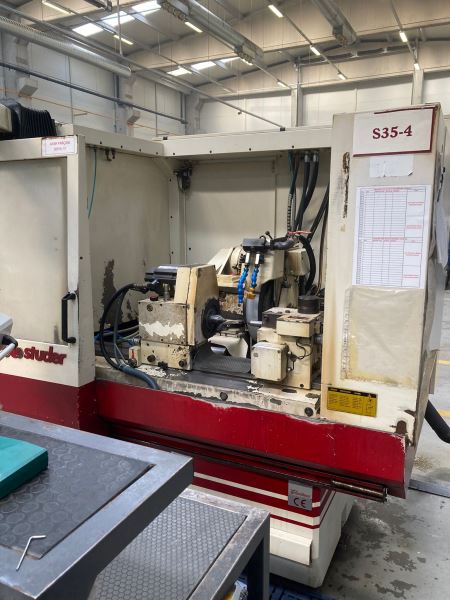
Understanding what you’re buying helps you spot discrepancies. The Studer S35 is a universal cylindrical grinder known for precision, stability, and ability to handle demanding jobs. When new or well-maintained, it achieves tight tolerances, smooth surface finishes, and consistent performance. But like any grinding machine, its accuracy degrades over time if not serviced properly.
Key Areas to Inspect & Test
Here are the most crucial components / systems to inspect, with suggested tests, what to look for, typical failure modes, and what problems may cost.
| Component / System | What to Inspect / Test in a Used S35 | Why It Matters / What Often Fails / Repair Consequences |
|---|---|---|
| Machine Geometry & Guideways | • Check flatness and straightness of the bed and slideways. Use a precision straight edge, feeler gauges, or better yet a laser/optical alignment tool. • Look for wear grooves, pitting, rust on the ways. • Check that the wheelhead travels freely without catch points. • Check alignment of spindle centre with tailstock / workhead. | Worn ways or sloppy guides degrade accuracy, introduce vibration, affect run-out. Repairing or re-scraping/gilding guideways is expensive and time-consuming. If severely worn, might reduce usable precision irreversibly without heavy rebuild. |
| Lubrication / Coolant Systems | • Are pumps working? Is oil / coolant delivery good, leaks free? • Is coolant clean (no metal fines, debris, microbial growth)? • Lubricants: are lines clogged? Is automatic lubrication functioning? • Is coolant nozzle condition good; splash shields, guards in place? | Inadequate lubrication causes accelerated wear of ways, spindle bearings, slide surfaces. Dirty coolant damages spindles, causes clogging, rust. Fixing clogged lines, replacing lubrication components, cleaning tanks is a non-trivial cost. |
| Spindle, Bearings & Wheelheads | • Spin up spindle; listen for noise, uneven sound, check temperature rise. • Measure run-out of wheel mount taper / flange. • Inspect condition of wheelhead (swivel if present), any backlash or looseness. • Check for signs of overheating or previous crash damage. • Examine wheelhead lift/hydraulic or pneumatic mechanisms if fitted. | Spindle bearing failures are among the costliest fixes. Damaged wheelheads may mean long lead times for parts. If the wheel taper or mounting flange is worn, run-out increases, surface finish suffers. Hydraulics/pneumatics failure means loss of setup precision. |
| Control System & Electronics / Software | • Check the machine’s control panel, all axes work, display is clear, no ghosted characters or flickering. • Is the control software / PLC version supported? Are backups / manuals available? • Watch for alarm history: frequent drive overloads, limit switch issues, errors. • Ensure any measuring/probing systems are intact and have been maintained / recalibrated. • If wheel dressing/dressers are automatic, check they function correctly. | Old or poorly supported electronics can be a weak link. Replacing or repairing control/drive units can become major costs. Undocumented or modified software can cause reliability issues. Dressing mechanisms out of spec lead to consumables waste and poor surface finish. |
| Wear Parts, Consumables & Accessories | • Inspect grinding wheels: condition, wheel balance, whether proper wheel specification is used. • Check dressers: shape, condition. • Check tailstock, centers, work rest, steady rest, fixtures. • Look at auxiliary gear: shields, guards, chip removal, coolant nozzles. • Pumps, valves, seals, belts, couplings etc. | These often wear out first and need replacement. If many are missing or in bad condition, the cost of getting the machine ready for production may be high. Also availability of spare parts (especially older models) may be limited or pricey. |
| Axis Movement, Linear Drives & Ballscrews | • Check backlash or play in each axis. • Check travel limits, whether homing is accurate. • Check condition of ways; inspect for scoring, rust, chatter marks. • Move axes under load (or dry run) and observe motion: is it smooth? Are there “sticking” spots? | Worn screws, guides, or servo motors reduce precision and repeatability. Fixing or replacing ballscrews or guideways is costly and time consuming. Also may require recalibration, affecting availability. |
| Service History & Usage Pattern | • Ask for total operating hours / meter readings. • Get maintenance records: lubrication, alignment, rebuilds, repaired crashes. • Inquire about duty cycle – continuous heavy work or light intermittent use. • Check whether machine has been in harsh environmental conditions (high humidity, dust, metalworking debris). | A grinder that has been lightly used vs one that has been abused will cost differently. Maintenance neglect often leads to compound failures; one worn part accelerates wear of others. Corrosion or environmental damage is often hidden until you inspect closely. |
| Trial Run & Test Part | • If possible, grind a test workpiece of material similar to what you plan to run. Evaluate surface finish, roundness, concentricity, thermal stability over time. • During a test run, monitor temperature drift, vibration, noise. • Check machine under different wheel loads. | This is the ultimate proof. Machines may look good but under load their weaknesses show. Poor finish, drift, chatter, thermal expansion problems manifest under real work. |
| Physical Condition, Safety & Infrastructure | • Check for rust, damage to guards, doors, switch covers. • Check lighting, safety interlocks, emergency stops (E-Stops) work. • Check foundation, leveling: is the machine seated properly? Vibrations in surrounding building. • Power supply requirements: voltage, phase, availability of clean power. • Is coolant disposal / filtration in place? • Is there space, crane / hoist / transport logistics to move it safely and install? | Even if the machine is mechanically excellent, liabilities like safety compliance, electrical problems, foundation / leveling issues, or inability to move/install can make operation hard or expensive. |
Red Flags / Deal-Killers
Here are things which, if present, either make the machine too risky unless the price is dramatically reduced — or are reasons to walk away:
- Severe wear or damage in guideways / bed — deep grooves, rust pits, warping.
- Spindle bearing noise, overheating, or major run-out — rebuild cost is high.
- Unknown or missing documentation / control software / manuals — if you don’t have manuals, you may struggle with setup or repair.
- Obsolete control electronics with no spare parts — parts may be out of stock or extremely expensive.
- Major hydraulic or lubrication system failures — e.g. broken pumps, seals leaking everywhere, lubrication starvation.
- Excessive downtime or multiple subsystem issues — if many things are broken or marginal.
- Signs of collision / crash damage — wheelhead crashes, spindle damage, improper setups in past.
- Control alarms / error logs showing recurring problems — e.g. limit switch faults, drive errors, service unit faults.
- Poor or dirty coolant and lubrication history — accumulated damage from neglect.
- Transport / installation obstacles — machine too heavy for the location, no adequate rigging, no facility for aligning / leveling.
Estimate of Hidden / Likely Repair Costs to Build Into Offer
When negotiating, allow room for:
- Wheelhead rebuild (bearings, seals, taper grinding).
- Guideway scrapping or refurbishing.
- Replacement of consumables (grinding wheels, dressers).
- Control electronics repair / backup / parts.
- Hydraulic / pneumatic repairs.
- Coolant filtration / cleaning.
- Calibration and alignment work after installation.
These can sometimes amount to a significant fraction (10-30%) of the purchase price for older machines, depending on condition.
Supplier / Support / Parts Considerations
- Spare Parts Availability: Does Studer / United Grinding still supply parts for the S35? If not, are there reliable aftermarket or used parts sources in your region?
- Technical Support / Service: Is there a trained technician locally (or from the maker) who knows older Studer machines? How accessible & responsive is United Grinding’s support?
- Overhaul & Retrofitting Options: Sometimes a second-hand Studer machine can be overhauled or retrofitted (upgraded spindle, new electronics) by the manufacturer or specialized firms. These may offer a better long-term value. Studer offers refurbishing of guideways, control cabinets, hydraulics etc. for used machines.
- Software Licenses & Control: Check if software, licenses, and safety / guards are compliant with your country’s regulatory requirements.
Case Studies & Common Problem Sources
From published rebuilds / forums etc., here are issues that repeatedly crop up with Studer machines, including the S35 or similar models:
- Lubrication system clogging → wear of bedways or guide surfaces.
- Spindle bearing failures often from coolant contamination or coolant leaks.
- Wheelheads / dressing units developing leaks, seal failures, problems with swivel or lift mechanisms.
- Electronic / servo drive faults, limit switch or homing issues, especially as machines age.
- Geometric wear due to high hour use, thermal drift, fatigue.