Avoid Costly Mistakes: Professional Tips for Purchasing a Pre-Owned / Second-Hand / used LVD PPED 20/50?
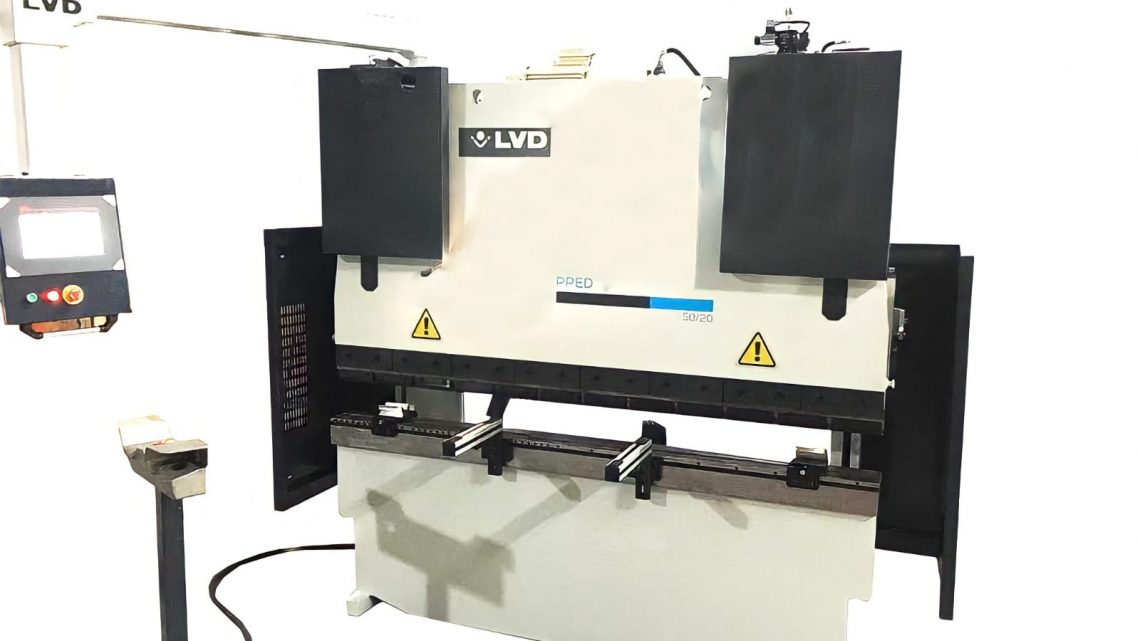
Here are professional tips and a detailed checklist for buying a used LVD PPED 20/50 (or similarly rated PPED series) press-brake. If you go through this, you’ll reduce risk of paying too much for hidden issues.
What is LVD PPED / Key Specs to Know
Before the checks, you need to know what the machine should be, so you can spot deviations. LVD’s PPED series are hydraulic press-brakes, described by LVD as “Accurate, Economical Bending”.
Some important specifications/features to use as your baseline:
| Feature | Typical Values / What to Look For |
|---|---|
| Pressing force | Depends on model: e.g. PPED 50-20 = ~ 500 kN, PPED 80-25 = ~ 800 kN, etc. |
| Working (bend) length | Ranges from ~2,000 mm up to ~4,000 mm depending on model. |
| Stroke, ram/tongue height etc. | Stroke ~200 mm in many models; table/ram distance etc. |
| Backgauge axes options | 2-axis or 4-axis backgauge (X, R ± possibly Z1, Z2) depending on the version. |
| Hydraulic system type | Servo-controlled hydraulic PPED; rigid frame, hardened steel pistons; linear encoders in many units. |
| Control interface | LVD “Touch-B” touchscreen control; graphical; CADMAN software compatibility etc. |
Knowing what your particular 20/50 refers to (e.g. 500 kN, 2000 mm length? “50” being ~50 tons or 500 kN, “20” being 2000 mm or similar) helps. Always check the exact model variant.
What to Inspect / Tests to Do
Here’s a checklist of what to look for, what to test, and what questions to ask when evaluating a used LVD PPED. Use this on-site.
A. Documentation & History
- Maintenance records: hydraulic oil changes, filter changes, pump maintenance, cylinder servicing.
- Hours of use: both “ram / bending cycles” and machine “power-on” hours. Machines with low cycles but high idle time often are better than heavy cycle ones.
- Repairs or incidents: crashes (ram/Jaws ram colliding with tooling), backgauge damage, overloading etc.
- Control updates / software version, whether the control is original or retrofitted.
- Availability of parts: spare parts for hydraulic components (valves, cylinders, seals), backgauge axes, control electronics etc.
B. Structural / Mechanical Condition
- Frame integrity: look for cracks, weld repairs, deformations, rust. The frame must be straight. Any bending or twisting in the frame will affect precision.
- Ram / beam alignment: is the ram parallel to the table? Does the ram close evenly across its length? Check at ends and centre.
- Guideways and slide surfaces: are they smooth; do they show wear, scoring; are lubricated rails in good condition?
- Backgauge mechanism: check all backgauge axes (X, R, Z1, Z2 if present); test for play, binding, smoothness; check that gauge fingers are straight, clamps tight.
- Hydraulic cylinders: inspect for leaks around seals, cylinder rods condition (no scoring or rust), consistency of motion.
- Hydraulic pump / valves: listen for whining or cavitation; test under load; see if outputs match specification (force, speed).
- Tooling condition: punches, dies. Worn, chipped, misaligned tooling leads to poor bends and can damage machine or parts.
C. Controls, Electronics & Accuracy
- Control system: the LVD Touch-B interface; is it responsive; are there error / alarm histories; is software version modern / supported?
- Linear encoders: if present, check calibration; whether they still track position accurately.
- Sensors and safety systems: over-travel, limit switches, light curtains / guards; safety interlocks all functional.
- Electrical cabinet: condition of wiring, cleanliness, signs of overheating, water ingress, rust etc.
D. Performance / Functional Testing
- Test bend: Use your typical material (thickness, length, type) and typical tooling. Check the bend angle, length, consistency along the length (ends vs middle).
- Repeatability: move through same program, return to zero etc. Does the angle stay consistent? Does the backgauge return to position reliably?
- Under load test: heavier jobs; longer pieces; test full length working to check frame deflection, ram creep etc.
- Speed & force check: verify that the machine exerts the claimed force and that movement speeds (approach, bending speed, return) are as expected.
- Hydraulic response: speed of ram, smoothness; how the machine behaves near bottom of stroke; whether there’s lag or overshoot in control.
E. Wear, Consumables & Spares
- Seals, hydraulic hoses; are any visibly replaced or in shortage; check for past leaks.
- Oil condition: hydraulic oil clarity; any contamination; does it smell burnt; are filters maintained.
- Tooling cost: punches, dies; check availability and cost.
- Backgauge fingers / rails – if replacements exist or if they are custom/hard to get.
- Control / electronic spares: touch panels, plc boards etc.
F. Logistics & Facility Fit
- Machine footprint, weight; foundation / floor capacity; crane / rigging required.
- Power supply: voltage, phase, hydraulic power, oil cooling if needed.
- Safety/regulatory compliance in your country: CE or local equivalents. If safety systems need upgrading, that is a cost.
- Operator training; availability of service technicians familiar with LVD PPED; cost of imports/spares.
Red Flags — When to Be Very Careful Or Walk Away
These are warning signs that the deal may cost more than it’s worth.
- Frame or bed with visible cracks, serious corrosion, or repair scars.
- Ram that is visibly sagging, misaligned, or uneven closing; signs of bending, wear or abuse.
- Backgauge that is inaccurate, has excessive play, or some axes non-functional.
- Hydraulic leaks that are persistent; pumps or cylinders with rusted rods or pitted surfaces.
- Control system with missing modules, unresponsive parts, or whose spare support is discontinued.
- Slow or weak hydraulic response; inability to reach claimed thrust under load.
- Speed dramatically below spec or inconsistent under load.
- Tooling badly worn or damaged; dies and punches not straight; misaligned tool holders.
- The hydraulic oil is dirty/black or smells burnt: often sign of neglected maintenance or overuse.
- Sellers who cannot provide maintenance history, or who cannot let you see/control the machine under power or do test bends.
Price / Negotiation & Total Cost
- Always calculate Total Cost of Ownership (TCO), not just purchase price. Include costs of transport, installation, setup, safety upgrades (if needed), tooling, replacement parts, downtime, calibration etc.
- Get quotes for repairing any defects you find (e.g. replacing backgauge rails, resealing cylinders, refurbishing ram etc.). Use those costs to negotiate price reduction.
- Compare price of a similar new or newer PPED unit; the marginal difference may not be big after refurbishment and setup.
- Ask for warranty or guarantee covering key items (force, accuracy, backgauge repeatability) if possible, even if just short term.
- Consider the value of included tooling; sometimes it’s sold with minimal tooling, meaning you’ll need to purchase dies/punches; this adds up.