Avoid Costly Mistakes: Professional Tips for Purchasing a Pre-Owned / Second-Hand / used Charmilles Roboform 350 Microtec EDM Machine?
Here are detailed, professional tips and checklists to help you avoid costly mistakes when buying a pre-owned / used Charmilles Roboform-350 / Roboform 35 / EDM sinker / microTEC (or similar) machine. If you go through these thoroughly, you’ll be in much better shape negotiating a fair deal and avoiding hidden issues.
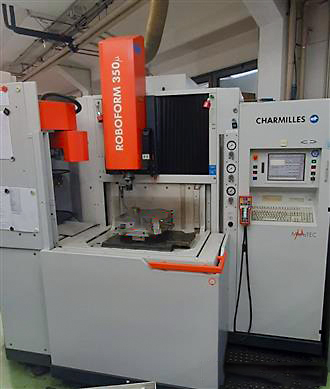
What is the Charmilles Roboform-350 / “MicroTEC” Version — Key Specs & What They Imply
First, know what the baseline / typical specs are—this sets your expectations and shows what to verify. Several listings show consistent parameters.
| Spec | Typical Value / Range for Roboform 350 / MicroTEC |
|---|---|
| Travel (X × Y × Z) | ~ 350 mm × 250 mm × 300 mm |
| Table size | ~ 500 × 400 mm |
| Worktank / Dielectric Tank Size | ~ 800 × 550 × 350/370 mm (lxw×h) |
| Max Workpiece / Load Capacity | ~ 500 kg workpiece; large table / chuck system; distance from table to quill ~150-450 mm depending on configuration. |
| Generator / Power Supply | 64 Amp source (ISOPULSE or equivalent) in many models listed. |
| Control / Features | Many have C-Axis (rotary orientation), some have electrode changers or racks, System 3R chucks, linear glass scales for axes. |
These give you what to expect—and what you should check that matches up.
What to Inspect / Test: Critical Areas
Here is a breakdown of what to look for, test, and verify physically and via documentation. It helps to bring someone who knows EDM machines if possible.
A. Documentation & Machine History
- Maintenance / service logs: when were generator / electrodes replaced? When filters changed? When dielectric changed? When glass-scales calibrated?
- Running hours: both “power-on” hours and “erosion / machining / cutting” hours if available. EDM machines age particularly with active machining time.
- History of repairs, crashes or misuse: e.g. electrode collisions, overflow of dielectric, thermal shocks.
- Upgrades or modifications: Has the machine been retrofitted with new generator, C-Axis, automation, better dielectric filtering, or better electrode handling? These affect value.
- Parts availability & manuals: For Charmilles / GF Machining Solutions, make sure you can get spare electrodes, generator parts, control parts, etc. Manuals (mechanical, electrical, control) are very important.
B. Mechanical & Structural Condition
- Guideways / linear motion / axes: They must move smoothly; check for wear, pitting, rust. If glass scales are fitted, check their condition. Backlash or sloppy motion in X, Y, Z will degrade accuracy.
- Quill / ram condition: Check for run-out, wobble, alignment; check if ram to table distance (minimum and maximum) matches spec. If quill is worn, or repair has been done poorly, accuracy will suffer.
- Table & Work Tank: Is the table flat and undamaged? Are T-slots, chuck or fixture mounting surfaces in good shape? Is the work tank/dielectric tank intact (no leaks, no rust, no major corrosion)? Are filters, pumps intact?
- Electrode handling / changer systems: If the machine has electrode racks, changers, C-Axis, make sure they operate correctly and reliably. If electrode weight limit is claimed (e.g., 50 kg etc.), check its reliability under that load.
- Dielectric delivery / filtration system: This is critical. Clean fluid, correct flow, no leaks, properly working pumps. Dirty or poorly filtered dielectric causes short circuits, poor finish, etc.
- Heat / thermal systems: Are there coolant / cooling systems for the generator, for the machine body if needed? How is temperature drift handled? Is there provision for thermal stabilization?
C. Electrical / Control / Software
- Power supply / generator health: The generator is heart of EDM. Check whether it’s working well, whether output matches specs under load. Does the source output remain stable (current, voltage)?
- Electrical cabinet / components: Wiring, connectors, fans, dust/dirt in electronics, signs of overheating, damage. Ensure safety interlocks work.
- Control system software / pendant: Does the control have full functionality? Are there error logs? Is the user interface responsive? Are there any obsolete modules?
- Glass scales, encoders, sensors: If fitted, ensure they are still accurate, clean, not compromised.
- Axis calibration / backlash: Some machines allow calibration; measure backlash, revisit zero positions, etc.
D. Performance / Accuracy Tests
- Test cut / test erosion: If possible, do a real job using your typical electrodes/materials to evaluate finish surface quality (roughness), accuracy, spark stability, etc.
- Repeatability tests: Move axes to limits and back, return to a known zero, measure deviation. Also check C-Axis rotary accuracy if present.
- Thermal stability: Run the machine for a while; check whether internal temperature changes cause drift; test for unevenness in long jobs.
- Under full load: If you will be using large fixtures / heavy workpieces, test (or have seller show) the performance under that load: table sag, alignment spacing, stability.
E. Wear / Consumables & Spare Parts
- Electrodes: Check condition of past electrodes; how easily replaced; existence of worn sets; electrode change rack or changer.
- Filters, pumps, seals: Are there leaks; are seals intact; are rubber parts hardened or degraded; are hoses in good shape.
- Generator components: Are transformers, capacitors, switching elements etc. in good condition or needing replacement? Generator sources often expensive.
- Work tank / dielectric fluid: Has it been replaced / filtered / cleaned; what condition is dielectric in; does the machine maintain correct levels, no contamination.
- C-Axis / Chucks / Fixtures: Are chucks (e.g. System 3R) in good condition; do they grip well, no wobble; are rotating axes accurate; are their spare parts available.
F. Logistics, Facility & Cost of Ownership
- Physical footprint & weight: These machines are heavy; for example, many Roboform-350s are ~2.8-3 tons, floor space ~1.6-1.8 m width/depth and height 2.3-2.5 m. Moving, rigging, installing will cost.
- Power / electrical requirements: Voltage, phase, cleanliness/stability of supply. Generator demands (64 A etc.) matter.
- Dielectric / fluid utilities: supply, filtering, draining capability, disposal, environmental compliance.
- Cooling / heating / temperature control: Ambient temperature, cooling of generator, etc.
- Operator skill / support / spare parts sources: Do you have technicians familiar with Charmilles? Are parts for Roboform 350 locally available or easy to import?
Red Flags / When to Be Very Cautious / Walk Away
Here are warning signs you should treat as deal breakers, unless the price is very low or the seller agrees to fix:
- Generator is weak, or has unstable output, or heavy damage / repair history that’s undocumented.
- Spindle / quill (ram) shows excessive wear, wobble, badly out of alignment.
- Table or worktank is rusty, corroded, leaking, or has been abused; repairs are heavy.
- Axis motions are loose / sloppy, backlash large, or linear scales non-functional or absent when claimed.
- Control software / interface is malfunctioning, giving error codes, missing functions, obsolete with no parts available.
- Electrode changer / C-Axis / fixturing system doesn’t work or is damaged.
- Dielectric fluid severely contaminated; filtration/pumps not working; dielectric tank leaking.
- Cooling systems or thermal management missing or failing.
- Poor or no documentation: missing manuals, missing maintenance logs, unknown history.
- The machine has been stored in bad environment: outdoors, dusty, humid, or subject to temperature swings (freeze etc.).
- Claims about capacity / performance that don’t match measured specs during inspection.
Price / Negotiation & Total Cost of Ownership
- Always compare price + refurbishment + transportation + installation costs. Often the used machine looks cheap but once you add moving, rigging, cleaning, replacing consumables/spares etc., you can get close to a newer/refurbished alternative.
- When you inspect, estimate cost of things you’ll need (new electrodes, filter media, dielectric fluid, repair of any wear, calibration etc.).
- Ask for warranty or guarantee on critical items if possible (e.g. generator performance, alignment, quill run-out). Even a limited “30-90 days” guarantee on function helps.
- Seek units that have had recent maintenance and/or refurbishment; machines in “excellent condition” often cost more but save money long term.
- Consider resale value: machines with documented history, good condition, good control, parts availability will maintain value better.
Specific Roboform-350 / MicroTEC Items to Check
Since you asked about the MicroTEC / Roboform-350 variant, here are points especially relevant:
- MicroTEC / Accura-C / high-precision rotary C-Axis: If the unit has Accura-C or similar, check the accuracy of C-Axis (positioning precision, backlash in rotary axis).
- Linear glass scales: Many units list these—check their condition, cleanliness, calibration. When present, they improve precision significantly.
- Electrode weight limits & quill travel: If you plan to use heavy electrodes, or tall ones, make sure the limit claimed is real and that the machine can safely handle it without sag or misalignment. Many listings show 50 kg electrode limit.
- Tank height / table-to-ram distance: Need sufficient clearance for your workpieces; also check the mechanism’s cleanliness (ram seal, quill bearings etc.).
- Drop tank type or dielectric tank type: Having a “drop tank” or automatic dielectric handling makes a difference in maintenance and usability.