Avoid Costly Mistakes: Professional Tips for Purchasing a Pre-Owned / Second-Hand / used Hermle C600 U CNC 5-Axis Machining Center
Buying a used Hermle C600 U (5-axis CNC machining center) can offer great value—but only if you do your homework. This is a high-precision, complex machine; hidden defects or mismatches can lead to very expensive repairs or poor performance. Below is a professional-level list of tips, checks, and red flags to guide you toward a safe, informed purchase.
Why extra diligence matters (and a baseline spec set)
Before diving into checks, it helps to know what typical specs look like so deviations stand out as red flags.
Typical specs & features (for Hermle C600 U)
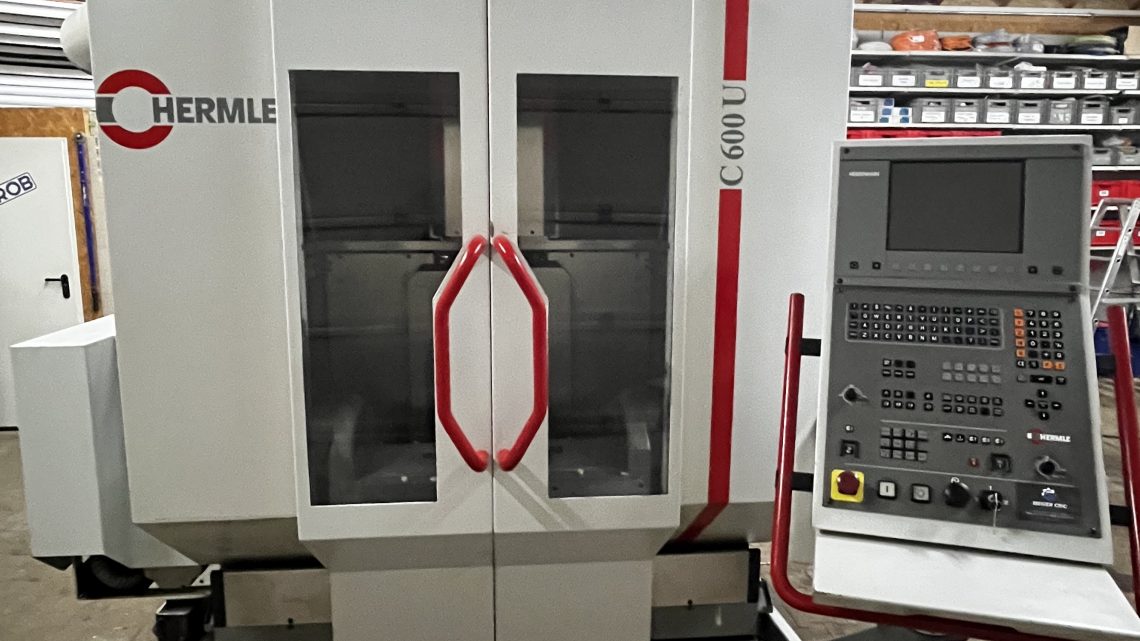
From one used listing (Franke CNC) and market sources:
- Travel / working envelope: ~ X = 600 mm, Y/Z = 450 mm each
- Spindle: up to ~12,000 rpm (some variants claim up to 15,000 rpm)
- Tool magazine: 30 pockets (ATC)
- Table / rotary axes: Swiveling trunnion table (A, C axes) with full 360° C, ±110° A range
- Spindle torque, drive ranges, tool capacities: e.g. torque ~90 Nm, tool diameter limits ~80 mm (or larger when pockets empty)
- Control: Heidenhain TNC 430 in one listing
- Features: coolant-through-spindle (CTS), Renishaw probe, direct measuring systems, glass scales & encoders on axes
Use this as a “reference fingerprint” for the machine you’re inspecting. If something is wildly off (e.g. only 400 mm X travel), ask for justification or modifications.
What to check (on-site / in person) — structured approach
Below is a recommended inspection roadmap, from documentation through live testing to negotiation safeguards.
1. Documentation, history & ownership
- Service / maintenance logs: Look for periodic calibrations, spindle overhauls, axis repairs, way-lay coating maintenance, etc.
- Original manuals, parts list, wiring / circuit diagrams, parameter backups: You want the full suite — missing documents are a red flag.
- Factory modifications / retrofits: Did the seller or previous owners retrofit drives, replace the control, upgrade axes, or change spindle? Ask for change records.
- Hours / cycles / uptime: Unlike simple machines, a 5-axis spends many hours idle or in repositioning — knowing spindle on hours, table motion hours, etc., is valuable.
- Parts & support availability: Hermle is still active in many markets, but older or customized components (rotary axis, encoders, measuring systems) might be obsolete or expensive.
- Spare parts package or warranty: Negotiate inclusion of critical spares (e.g. seals, axis encoders, spindle bearing set) or at least a short guarantee.
2. Visual & mechanical inspection (power off)
This is where you spot wear, neglect, or “cosmetic cover-ups.”
- Structural condition: Check for cracks, weld repairs, dented castings, or signs of structural stress.
- Guideways / slides / linear rails: Look for wear, scratches, pitting, scoring. Remove covers / bellows and inspect the full length.
- Ball screws / lead screws / rotary drives: Look for backlash, wear grooves, irregularity, noise, or backlash when manually reversing direction.
- Spindle / taper / drawbar / tool holder: Inspect the spindle nose, check for damage or wear, and check for axial / radial play (with careful manual force).
- Encoders / scales / feedback devices: Glass scales or linear encoders must be pristine; scratches or dust ingress can cause errors.
- Wipers, seals, bellows, way covers: These protect sensitive axes — if they’re damaged or missing, expect debris ingress over the years.
- Coolant and CTS (coolant-through-spindle) system: Inspect tanks, filters, lines for clogging, sludge, corrosion, leaks.
- Electrical cabinet / wiring / connectors / drives: Open up the cabinets — look for signs of overheating, scorching, replaced wiring, cable routing, cleanliness, dust, or smell of burnt insulation.
- Servos, amplifiers, and drive modules: Check for missing modules, mislabelled modules, aftermarket modules or splices.
- Rotary table bearings, axis, trunnion: Manually can you move/tilt the table? Do you feel smoothness or grit?
- Tool magazine / tool changer mechanism: Check physically for stiffness, alignment, broken pins, misalignment, broken fingers.
3. Power-up, movement tests, dynamic checks
After the cold-check stage, move to dynamic tests, always under controlled supervision.
- Controlled power-up & diagnostics: Monitor currents, voltages, fault logs, drive alarms, initial error messages.
- Homing / referencing: Does the machine home correctly on all axes? Are limit switches and homing sensors functional?
- Axis jogging / movement: Move axes at slow, medium, and faster speeds — listen/feel for binding, chatter, hesitation.
- Rapid traverse (rapids) test: Move between extremes to see if axes stay accurate, check for lost steps or sag.
- Backlash / reversal error: Reverse directions and measure positional deviation (e.g. using indicator or internal diagnostic routines).
- Simultaneous 5-axis motion: Run a test program with combined axes, and observe if axes stay in sync, no lags, hysteresis, or creeping.
- Spindle ramp-up / stability: Bring spindle to different rpm levels (e.g. 1000, 6000, 10000 rpm) and listen for vibration, noise, temperature rise, or imbalance.
- CTS / coolant flow test: Check coolant-through-spindle lines, pressure, leaks, and whether flow is proper at different rpm.
- Tool change cycle: Cycle tool changes, check speed, alignment, tool pick/release, and any intermediate movements.
- Probe / measurement routines: If the machine has a probe (e.g. Renishaw), test its probing cycle and feedback to the control.
- Thermal stabilization / warm-up: Let the axes rest or run light cycles for 30–60 minutes to see drift or creeping behavior.
4. Metrology & precision validation
To see whether the machine can still deliver close to its original precision:
- Ballbar / circularity test: Run a circle in X/Y, X/Z, Y/Z planes and evaluate deviation. (Often done by third-party instrumented test services.)
- Laser interferometer checks: If available, use a laser interferometer to measure straightness, pitch error, yaw, squareness, and thermal compensation behavior.
- Geometric tests on the rotary table / trunnion: Check A/C axis indexing, backlash, wobble, tilt, and repeatability.
- Cut a test part / benchmark geometry: Run a known test program (e.g. a stepped part, bore + pocket + wall) and measure critical dimensions and surface finish.
- Reverse cutting / symmetric testing: Use reverse-sided operations to see if the machine’s errors cancel (this helps detect misalignment or “knee drift” issues).
5. Infrastructure & installation compatibility
Even a perfect machine can be a disaster if your shop can’t support it.
- Foundation / floor / vibration isolation: The machine’s weight and dynamic loads demand proper base stiffness, damping, and leveling.
- Power / voltage / phase / frequency: Confirm compatibility (e.g. 400 V 50 Hz vs 480 V 60 Hz). Check the quality of the power supply, noise, grounding.
- Cooling / chiller / HVAC: For precision, temperature control and cooling systems must match. Check shop’s environmental stability.
- Compressed air, dust/chip removal, lubrication systems: Ensure your facility can support the machine’s requirements.
- Access, rigging, transport: Entry dimensions, crane capacity, floor loading must all be feasible. Improper rigging can damage the machine before you even start.
- Network, software, communication interfaces: Check Ethernet, fieldbus, probe interfaces, DNC, CAM connections — you want them compatible with your shop environment.
6. Negotiation, contract & warranty leverage
- “Inspection before acceptance” clause: Insist on a window (e.g. 30 days) to perform acceptance tests after delivery.
- Holdback / escrow payment: Deduct a portion until the machine passes functional and accuracy tests on your floor.
- Spare parts / consumables inclusion: Ask for a baseline spares kit (seals, filters, sensors, encoders, belts) or at least a guarantee for critical spares.
- Warranty / repair guarantee: Even in used sales, some sellers may extend limited warranties on spindles, drives, or rotary axes.
- Transport / insurance liability: Clarify who bears risk in transit; insist on proper crating, vibration dampers, shock monitors.
- Acceptance test at your site: Define in contract the tests you will perform (e.g. circle tests, tool change cycles, accuracy verification) and the passing criteria.
- As-is disclaimers: Be cautious of “as-is, no returns” offers unless you’re confident; always try to retain some recourse.
Red flags and warning signals
- Seller refuses a live inspection, or only offers pictures.
- Missing or partial documentation, parameter files, or drawings.
- Unusual wear on guideways, evidence of poor lubrication, or metal debris accumulation.
- Spindle noise, wobble, or vibration during ramp-up.
- Axes that lag, drift, or lose synchronization during simultaneous motion.
- Tool changer or magazine misalignment, stuck tools, or inconsistent change cycles.
- Rotary table backlash, indexing errors, or wobble in the trunnion.
- Modified drives or hardware of nonstandard or unsupported type without recording.
- Electrical cabinet damage, burn marks, “jerry-rigged” wiring.
- Unknown or non-existent spare part sources.
- Seller refuses acceptance tests after installation, or insists “no returns.”