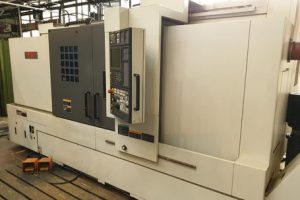
Avoid Costly Mistakes: Professional Tips for Purchasing a Pre-Owned / Second-Hand / used GOODWAY GA300?
If you’re considering buying a pre-owned/used GOODWAY GA-300 (or GA-3000 / GA-series lathe/turning center), there are a lot of potential pitfalls. Doing your homework and inspecting carefully can save you large repair costs, downtime, or even buying a machine that won’t fit your needs. Here are professional tips (technical, logistical, financial) to help you avoid costly mistakes.
What is a GOODWAY GA-300 (GA-series) – Key Background
Before inspecting, you should understand what typical GOODWAY GA-series machines offer, so you know what to look for / expect.
- The GA series are rigid CNC turning centers, built for demanding operations: heavy cuts, tough materials, high torque, rigid box ways, large diameter servo turrets.
- The GA-300 (or GA-3000) is one of the discontinued models of GOODWAY. Specs from markets show: ~500 mm turning diameter, ~600 mm turning length; bar capacity ~90 mm; spindle power ~22-30 kW depending on version.
- The manufacturer provides an operation/maintenance manual with installation, electrical requirements, safety, etc.
So: this is a serious machine. It is powerful, heavy, has many precision components (spindle, turret, ways, controls), and heavy duty power/electrical demands.
What to Check / Inspect Before Buying (Used)
Here is a checklist—broken into categories—that you should go through when inspecting a used GOODWAY GA-300 (or any similar CNC turning center). Bring along someone with technical CNC experience, tools, possibly someone who knows these machines specifically.
| Category | What to Inspect / Ask | Why It Matters |
|---|---|---|
| Machine History & Documentation | • Ask for service/maintenance records (lubrication, spindle/ tool changer, ways). • Ask for hours: both power-on hours and cutting / work hours. • Ask for parts replaced or major overhauls (e.g. spindle bearings, ball-screws, drive motors). • Ask if any crash history or repairs from damage. • Manuals & schematics: control manuals, lubrication schematics, wiring etc. | Without good history, many hidden wear issues are likely. Spindle or axes that have been abused will cost a lot to fix. Manuals help with spares & repairs. |
| Mechanical / Structural Condition | • Inspect the ways (box ways especially on GA series) for wear: grooves, scoring, signs of rust, lubrication starvation. • Check spindle: run‐out, noise, vibration. Feel the spindle taper: is it clean, corroded, marred? • Turret / tool‐changer: does it operate smoothly, accurately indexing? Any looseness, slop in turret? • Ball screws (or leadscrews): backlash, play, signs of wear. • Bearings, guides on axes: smooth motion, no binding, any unusual noises. • Bed alignment: check alignment in X & Z axes with gauge blocks or test pieces. • Coolant / chip conveyor / enclosure: is coolant clean, filters working; are there leaks; is chip removal effective; any signs of rust or corrosion inside enclosures. | Mechanicals are expensive to fix. If ways or spindles are worn badly, replacement or regrinding can cost more than what you saved buying used. Poor coolant management can cause rust or damage. |
| Electrical / Control Systems | • Control / CNC panel: condition of buttons, switches, display. Any error history? Has firmware/software been updated? • Verify the brand & version of CNC controller. GOODWAY often uses CNC control systems (sometimes Fanuc etc.). Check whether spare parts / support is available locally. • Wiring, cables, connectors: any signs of overheating, burns, chafing, water/coolant ingress. • Servo drives / motors: run all axes; check for overheating, response times, noises. • Safety interlocks, guards, sensors must work correctly. • Power requirements: does your facility supply proper voltage, current, phase, capacity? GOODWAY GA-series machines have substantial electrical draw. The manual indicates e.g., 3-phase AC 200/220 V or 380 V, depending on version. | A machine that looks good mechanically but has poor control/or electronics will cost a lot to retrofit or maintain. If parts are obsolete, it becomes a risk. Also safety & legal compliance are essential. |
| Performance / Accuracy Testing | • Run a test job: cut parts that require precision (e.g. turning a known diameter, cutting threads, boring holes), then measure. • Check repeatability: move back & forth in X and Z axes, see if returning to exact position. • Spindle accuracy: measure run-out at different speeds; check vibration. • Thermal behaviour: run the machine for some time, see if accuracy drifts. • Tool changing under load: check turret stability, indexing accuracy under different load conditions. | Even if specs look good, wear accumulates. A machine that cannot meet your required tolerances is useless. |
| Wear and Consumables | • Consumables that wear often: chuck & jaws; pull-studs; tooling; belts; seals; filters. • Are there spare parts for those consumables available locally? • Check lubrication system: oiling points working, automatic lubrication etc. • Check coolant condition; is coolant concentration correct; are there additives for rust prevention etc. • Look for rust, corrosion not only outside but internal coolant channels. | Even if main components are good, worn consumables or lack of spares kills uptime or drives up costs. |
| Logistics / Installation | • Physical footprint: size, weight. Can you transport it, install it in your shop? Crane, foundation, leveling etc. • Power supply: correct voltage, phase, clean/fixed power. • Cooling: does it need separate coolant system, chiller? • Environmental conditions: dust, temperature, humidity; affecting machine performance. • Dealer / seller support after sale: do they offer installation, calibration, warranty? | Even if the machine is good, if you can’t install or support it efficiently, costs will balloon. |
Specific Risks / “Gotchas” with GOODWAY GA-series (incl. GA-300)
Because of their design and features, these machines have specific things to watch out for:
- Spindle bore & power: Different versions have different spindle bores, spindle noses, different power ratings. A GA-300 might have a certain spindle type that is expensive or difficult to find parts for. Ensure the one you are inspecting matches what you need (bar capacity, hole through spindle, power) and that spares are obtainable.
- Control system version: Older/discontinued GA-models may have controls that are out of support or using custom/obsolete hardware. Procuring replacement boards, displays etc. may be difficult. Upgrading might be costly.
- Wear on box ways: GA-series uses box ways which are more rigid but also sensitive to lubrication & maintenance. If lubrication was neglected, wear can be severe and expensive to repair.
- Turret/turret indexing mechanism: Large servo indexing turrets; if not well maintained, indexing might drift; backlash can develop; mechanical components (gears, bearings) can fail.
- Electrical components in humid environments: If machine has been stored in a damp location or has coolant leaks inside electrical cabinets, risk of corrosion, short circuits.
- Accurate leveling & foundation: Because of their weight and rigidity, if the machine is not properly leveled/floated, alignment can be off, increasing wear.
Pricing & Financial Considerations
- True market value: Research recent sold prices of GA-300 / GA-3000 machines similar condition. This helps you negotiate. Some listings: Kitmondo, Exapro etc have GA-300 used machines; check those.
- Cost of transport & installation: The machine will likely be heavy. Shipping, crane work, unpacking, leveling, installing coolant piping, and power hookups can be a big part of total cost.
- Spare parts budget: When buying used, plan for a “first year spares kit”: bearings, seals, tool taper, jaws, etc. Even machines in good shape often need a few parts.
- Downtime risk: If the machine is critical for your operations, factor in time you might be non-productive while refurbishing or commissioning the machine.
- Opportunity cost of buying slightly bigger/newer: Sometimes spending more for a newer or “refurbished certified” unit with warranty can pay off.
Red Flags: When to Walk Away Without Buying
Here are warning signs that likely indicate the machine is not worth buying (unless you can negotiate a huge discount or the seller agrees to fix problems):
- Major spindle noise / vibration that persists after warm-up.
- Excessive backlash or play in axes, indicating worn screws or guides.
- Control system with no support or missing parts/manuals.
- Severe corrosion, rust inside coolant channels, on ways etc.
- Evidence of prior crash/crash damage (e.g. alignment bent, welded/chipped parts).
- Missing safety features, broken interlocks etc.
- The machine usage doesn’t match wear: e.g. low hour count but clearly worn components (either misuse or poorly maintained).
How to Inspect (Practical Steps)
Here are steps you could follow in a visit to inspect a used GA-300. Depending on how rigorous you want to be:
- Pre-visit questions: ask for photos (ways, spindle, control panel), for documentation, for machine hours, for parts history. These help decide whether to visit in person.
- On-site inspection:
- Turn machine on, let it run idle, listen for any unusual sounds.
- Run all axes (X, Z) through full travel, listen, feel for smoothness, check alignment.
- Run spindle through speed range; feel for vibration; check temperature of spindle housing after some time.
- Test tool changer/turret: indexing speed and accuracy, clamping tightness.
- Check hydraulic, pneumatic, coolant, lubrication systems for leaks, proper flow, cleanliness.
- Make a test cut / trial job if possible; measure results.
- Check electrical cabinet: for cleanliness, wiring condition, cooling fans, fuses, breakers.
- Observe the condition of all visible surfaces: paint, chip accumulation, rust, missing guards etc.
- Post-inspection evaluation: estimate cost to refurbish any defects. Add to purchase price. Compare to cost of buying a newer or better condition machine.
Summary Recommendations
- Define your minimum required specs before you look (tolerances, swing/length, speed, spindle power, control features). Know what you must have vs what’s “nice to have”.
- Always try to get a machine that has good documentation and local spares/service availability. For GOODWAY, check who supplies or repairs these machines
- Budget in for repair/refurbishment even if the machine looks good. Assume you will need at least minor work.
- If possible, negotiate that significant defects be addressed before purchase (e.g. spindle bearing replaced, ways scraped, control updated).
- Consider whether buying a refurbished/“certified used” GA-series machine (if available) might be safer—even if more upfront—given the possible reliability cost.