Avoid Costly Mistakes: Professional Tips for Purchasing a Pre-Owned / Second-Hand / used VTEC VISION WIDE TECH?
If you’re considering buying a pre-owned / second-hand VTEC / Vision Wide Tech (“Vision Wide” / “VTEC VISION WIDE TECH”) CNC machining centre (bridge, double-column or similar), there are many potential pitfalls. These machines are large, precise, expensive to install & maintain, so doing your homework is critical. Below are professional tips, checks, and warnings to help you avoid costly mistakes. I also included features and design details specific to Vision Wide machines so you can use them in your inspections.
What are Vision Wide / VTEC Machines — Key Features & What to Expect
Before going into inspections, understand what these machines are, so you know what “normal” looks like, and what to be concerned about.
- Vision Wide Tech (Taiwan) makes double-column / bridge-type machining centers: e.g. VB-series, SF-series, VF-series etc.
- They use box guide ways (box-ways) for rigid support in heavy duty cutting tasks, sometimes linear ways in variants.
- Spindle designs are two-step gear type in many cases, often with optional higher rpm, and options for coolant through spindle, higher Z-travel etc.
- Standard accessories: centralized auto lubrication, coolant systems, tool-magazines with ATC, protection/guards, electrical cabinet cooling, etc.
Knowing these, you can check if the individual machine has the features it should, and whether those are still functioning.
What to Check / Inspect Before Buying Used Vision Wide Machines
Here is a detailed checklist for inspecting such a machine. I split it by areas: documentation, mechanical/structure, electrical/control, performance/accuracy, wear & spares, logistics & costs.
| Area | Key Checks / Questions | Why It Matters / Warning Signs |
|---|---|---|
| History & Documentation | • Ask for full maintenance & service history (lubrication, spindle overhauls, drive motors, ATC, coolant system). • Ask for running hours: both idle hours and cutting/work hours. • Any history of accidents / crashes (tool collisions, spindle crashes, over-travel damage). • Check whether any upgrades or modifications were made (e.g. new spindle, new control, added linear scales). • Manuals: mechanical, spindle, control, electrical schematics. Are they available? • Spare parts availability & what parts are still standard vs obsolete. | Without good history, many hidden issues (spindle wear, guide way wear, ATC failures) might be present. Obsolete controls or parts are common risks. |
| Mechanical / Structural Condition | • Guide ways: box-ways are critical in these machines. Inspect for wear, rust, scoring, damage on ways. Look especially where the table / column slide. • Spindle: test for run-out (taper, nose), vibration, noise, heat. • Column straightness, alignment of X / Y / Z axes. • Check the beam, table, support structure for cracks, deformation, or distortion, especially if heavily loaded or misused. • ATC / Tool Magazine: proper functioning, indexing accuracy, clamping, alignment. • Ball screws / lead screws / linear ways (if fitted): backlash or play, worn threads. • Check condition of way covers and guardings—they protect the guide ways and screws. • Coolant / chip removal paths: are there blockages, corrosion, leaks inside enclosures? • Check lubrication system: all automatic lubrication points working, no dry spots; inspect for oil contamination / leaks. | These machines are heavy, rigid, expensive to fix if guide ways or spindle are worn. Structural damage is hard to repair. ATC issues cause downtime. Lubrication neglect is a major wear factor. |
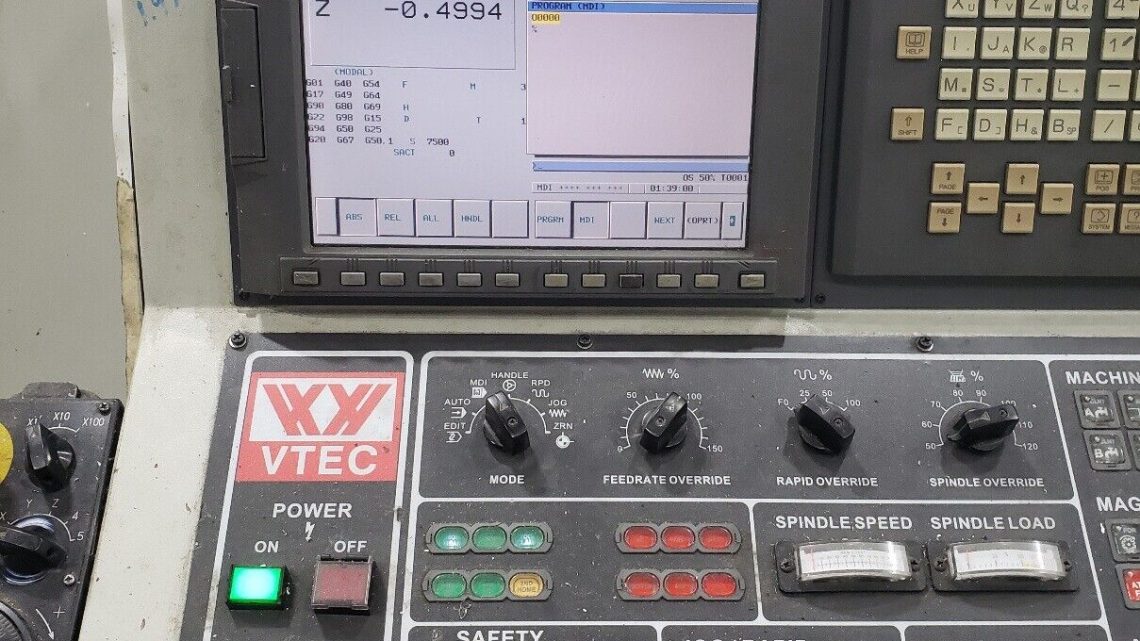
| Electrical / Control Systems | • What CNC controller does it have (Fanuc, Siemens, proprietary)? Version? Is it still supported? • Check panel condition: buttons, display, emergency stops, indicator lamps. Are all safety interlocks functioning? • Wiring: look for signs of overheating, water ingress, corrosion, exposed cables. • Servo drives & motors: test all axes, see for heating, unusual sounds. • Spindle drive: cooling, oil cooler, belts/gears (if gear type). • Power supply requirements: voltage, phase, capacity. Is your site able to supply what it needs reliably? • Check for accessories like temperature or thermal compensation, linear scales, sensors etc. (if machine has them). Are they working? • Backup battery for memory / program storage: is it healthy? | If the controller is obsolete or parts unavailable, repairing failures or upgrades could be costly. Electrical issues often cause long repair times. Thermal drift, if uncompensated, can degrade tolerances significantly. |
| Performance & Accuracy Testing | • Run a test job: cut piece requiring precision. Measure flatness, straightness, squareness, repeatability. • Check spindle run-out at various RPMs. • Move axes to limits, then back; check repeatability. • Thermal stability: run machine for a while, see if accuracy shifts. • Tool change: is the ATC switching tools smoothly, fast, accurately? • Under load: try real heavy cutting, not just light finish passes. • Check vibration / chatter during operation; check for unusual noises. • Check the accuracy of any linear/option scales if fitted. | Even a nicely looking machine may have lost precision; tolerances drift with wear, thermal changes. Under-load test reveals condition of drive trains, rigidities. |
| Wear, Consumables & Spares | • Spindle bearings, tool holders, collets / taper, gears in the spindle (if gear type) likely wear items. • Seals, belts, way wipers. • Coolant (chemical condition), pumps, filters. • ATC components: grippers, tool pockets, indexing mechanism. • Is local availability of spare parts good? Import cost / lead time? • Check whether machine has been maintained properly (lubrication, coolant maintenance, regular servicing). • Check wear on table surfaces, mounting surfaces, clamps. | Consumable / wear parts often cost more over time than what the initial price savings were. If spares are rare or very expensive, downtime / cost can kill the deal. |
| Logistics / Setup / Environment | • Size, weight of the machine: do you have capacity (floor, foundation, crane) to move & install it? • Foundation needs: double-column bridges need rigid foundation, floor levelling, vibration damping perhaps. • Power supply: voltage, phase, stable supply. Clean, consistent power is critical. • Cooling for spindle, drives, electric cabinet. Does site have needed utilities (coolant supply, waste, drainage, compressed air etc.)? • Environmental conditions: temperature swings, humidity, dust. These affect accuracy, wear. • Transport cost, customs/import if applicable. High weight means big transport + handling costs. • Local service & support: are there technicians who know Vision Wide / VTEC machines in your region, spare part dealers? | Even if machine is good, if you can’t install it properly, or support it, the cost and risk might be overwhelming. Logistical oversights are among the most common causes of cost overruns. |
Red Flags / When to Walk Away
Here are warning signs that a used Vision Wide / VTEC machine might not be worth buying—even if the price looks good.
- Guide ways show visible scoring, rust, or wear; unrepairable without major rework.
- Spindle exhibits strong vibration, serious run-out, or excessive noise. Spindle overhaul is very expensive.
- ATC (Automatic Tool Changer) is non-functional, erratic indexing, big delays or frequent failures.
- Control system is outdated, unsupported, or custom with no access to replacements.
- Electrical cabinet condition is poor: water ingress, rust, corroded connectors. <br> Severe signs of moisture damage.
- Frequent coolant leaks, or coolant system neglected (filters, pumps). <br> Coolant issues lead to rust, corrosion, and degraded performance.
- Lack of accurate documentation or service history; if owner cannot show maintenance logs.
- Machine has been poorly used: overloads, frequent crashes, overloaded work tables etc.
- Environmental misuse: stored outdoors without cover, subject to rain/humidity; exposed to high dust, corrosive environments.
- High transport or installation costs that may offset the saving from buying used.
Pricing & Financial Decisions
When evaluating a second-hand Vision Wide / VTEC machine, consider these:
- True total cost = purchase price + transportation + installation + setup + commissioning + spare parts needed + any refurbishment + downtime before fully operational.
- Estimate how much rework may be needed: replacing spindle bearings, re-scraping ways, control calibration etc. Get quotes if possible for the needed repair before purchase.
- Compare with cost of a newer machine or “refurbished certified” unit. Sometimes paying more for a clean, well-supported machine yields better long-term value.
- Consider resale value / depreciation: can you resell later? Machines with rare parts or obsolete controls lose value more.
- Negotiate items such as: if defects are found, ask seller to reduce price or include repair; ask for guarantee on critical components (spindle, guide ways) if possible.
Specific Considerations for Vision Wide / VTEC Machines
Here are features or design traits of Vision Wide which present both opportunities (if good) and risks (if neglected):
- Box guide ways: these are very rigid / good for heavy cutting, but sensitive to poor lubrication, coolant leakage, and rust. Ensure these are in good shape. If ways have been neglected, restoration is expensive.
- Spindle gear type (two-step gear): gear wear, gear backlash, lubrication in spindle is a critical area. Ensure spindle gearboxes are in good condition, no unusual noise, smooth shift if applicable.
- Thermal/structural stability: bridge machines are large, sensitive to thermal distortion. Many Vision Wide machines have options/feature for thermal compensation, or stiffer structures (Meehanite castings, stress relief, ribs etc.). If these features are present, check that they are still functional; if not present, your tolerance requirements must account for thermal drift.
- ATC / tool magazine: many Vision Wide machines include fairly large magazines (32-40 tools, sometimes more, with optional capacity). These systems are mechanically complex and often high maintenance. Ensure magazine is not worn, that grippers/tool holders are aligned, that magazine indexing is accurate.
- Controller & support: Vision Wide tends to ship with Fanuc or compatible controllers, but versions, firmware, spare parts may vary. If control is proprietary or older, spares may be slow or costly. Also check if control PC boards, display panels, backup batteries etc are in good condition.
- Cooling, lubrication, and chip management systems: large machines generate heat, chips, coolant flow. If coolant system is dirty or compromised, or chip conveyors are broken/ineffective, then maintenance and wear costs become large.
- Documentation: Vision Wide provides manuals, circuit diagrams, etc. Make sure the unit has these, and they match the machine. Missing/wrong documentation increases risk.
Practical Steps / Inspection Protocol
Here’s a suggested sequence of actions to follow in inspecting a specific used machine.
- Pre-visit research: ask the seller for high resolution photos of ways, spindle nose, ATC, tool magazine, electric cabinet, bottom enclosures. Ask for service history, hour meter, cutting hours. Ask about any known issues / present defects.
- On-site inspection:
- Visual inspection: overall condition, rust, missing parts, damage, alignment of guards.
- Move machine under no-load: run each axis through full travel, feel for smoothness, listen for scraping, grinding, unusual noises.
- Spindle test: measure run-out, check end load, noise, heating.
- ATC / tool magazine test: load/unload tools, test indexing, clamping.
- Coolant / lubrication: run coolant/pumps, inspect flow, leaks, filters.
- Electrical cabinet: open up (if seller permits), check wiring, cleanliness, cooling fans, moisture.
- Cutting test: make trial cuts: heavy machining if possible, also fine finishing. Measure key features (flatness, straightness, repeatability).
- Technical evaluation:
- Get someone with experience in bridge-type machining centres / double column machines to assess wear on ways, understand tolerances.
- If possible, get alignment readings (laser, level, dial indicators) between axes.
- Check thermal drift by allowing warm-up and checking key dimensions.
- Cost estimation & negotiation:
- Identify what needs replacement or refurbishment and get cost estimates.
- Calculate installation costs, site modifications, power upgrades.
- Use findings from inspection to negotiate price or request the seller to do necessary repairs.
- Warranty / after-sale support:
- Even used, try to have some short warranty on critical parts (if seller agrees).
- Confirm whether local service technicians are familiar with Vision Wide machines, or whether spare parts are stocked locally / regionally.