Avoid Costly Mistakes: Professional Tips for Purchasing a Pre-Owned / Second-Hand / used Cloos Romat 310 Welding Robot System?
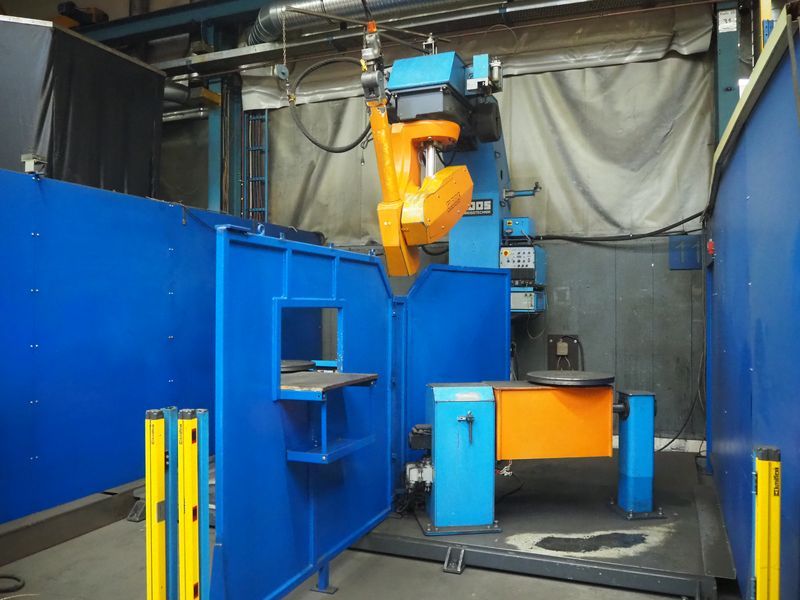
Here are professional tips & a checklist to help you avoid costly mistakes when buying a pre-owned / used CLOOS Romat 310 welding robot system. The Romat 310 is a large, complex welding cell / manipulator system, so there are many potential pitfalls. Being thorough up front will save you a lot of money, downtime, and disappointment.
Key Specs / What the Romat 310 Should Be
Knowing what to expect helps you benchmark what you see. Some published specs for the CLOOS Romat 310 include:
| Specification | Typical / Published Values |
|---|---|
| Robot model / type | CLOOS Romat 310 (6-axis robot arm) |
| Payload | ≈ 10 kg |
| Reach | ~ 1,540 mm |
| Repeatability | ~ 0.1 mm |
| Control system(s) | Often “Rotrol II” or variant (welding control, torch control, manipulator axes) |
| Welding source(s) / power | e.g. Quinto 503, Synergic 500 A / 1000 A in some large Romat 310 units |
| Manipulators / workholding | Large positioners, multiple axes (sometimes 9, 11 axes) with large travel, high workpiece weights (often several tonnes) |
These values are reference: actual configuration can vary a lot depending on what “options” the cell has (manipulators, turning tables, positioners, size of workspace, welding sources, dual/tandem welders, etc.). So expect variation.
What to Inspect / Test In-Person — What Experts Look For
Because this is more than just a single robot arm (it’s a full welding cell with multiple axes, big manipulators, tooling, welding sources etc.), inspection must cover mechanical, electrical, welding process, control/software, safety, and utilities. Below are the key areas and what to test.
| Area | What to Examine / Test | Why It Matters / What Can Go Wrong |
|---|---|---|
| Robot Arm & Joints | • Jog all 6 axes through full range; check for smooth motion, no binding, hesitation, looseness or slop. • Listen for noise in joints, gearboxes, reducers. • Check for backlash / play in each axis. • Inspect mechanical condition of gearboxes, seals; check for leaks or grease/oil loss. • Inspect robot arm cable harnesses, corridors, protective covers: wear, cracks, exposed wires. | Wear in joints or reducers reduces precision, increases maintenance cost. Loose or leaking gearboxes lead to failure. Damaged cabling often causes intermittent faults. |
| Welding Source(s) & Torch / Gun Assembly | • Inspect the welding power source(s): are they working? Test under real operating current. • Check condition of torches / welding guns, cable leads, swannecks, connectors. Pay attention to wear or overheating marks. • Examine consumables (contact tips, nozzles, liners) for wear. • Inspect gas supply lines, cooling systems (if torch is cooled), shielding gas lines, gas flow meters etc. • If there’s mechanical torch cleaning, seam tracking, sensors etc, test whether they still function. | The welding source is central: weak or failing source will produce bad welds, downtime, scrap. Torch lead / gun failures often are expensive, especially if replacement is OEM. Weld quality depends heavily on gas flow, consumable condition, and alignment of torch. |
| Manipulators / Positioners / Fixtures / Work Envelope | • Check manipulators or positioners: travel, indexing, accuracy. Under load (with workpiece), see whether they still maintain rigidity and alignment. • Check workpiece fixtures: clamps, turning tables etc: condition, capacity, alignment. • Examine the physical workspace: size, throat / reach, height under robot, movement of manipulators etc. • Check that the foundation / base of manipulators is solid, well aligned, free from distortion. | If the manipulators or positioners are worn or misaligned, welds will drift, defects happen; capacity may be reduced. Also, work envelope must match what you will weld. Base / foundation weakness = drift or inaccurate robot paths. |
| Control System & Software | • Check the control / PLC / robot controller: all modules present; controllers power up; pendants or teaching devices work; displays / HMIs are responsive. • Examine the software version(s), any patches, feature options (e.g. seam tracking, torch cleaning etc). • Check robot program storage and backups: are programs intact; is there a backup battery? • Check alignment / calibration data: TCP (tool center point), user frame offsets, whether deviation over time was recorded. • Inspect logs / error histories; any recurring faults or warnings. • Examine wiring in control cabinet: burn marks, corrosion, moisture, fan / ventilation condition. | Outdated or corrupted control software leads to difficult troubleshooting. Loss of parameters, bad calibration makes robot produce bad welds. Poor cabinet condition leads to failures or safety risks. |
| Welding Cell / Work Environment / Utilities | • Gas supplies: argon / CO₂ / mixed gas lines, regulators, purity, interference, flow rates. • Power supply: is the incoming power adequate (voltage, phase, current capacity); check stability, harmonics. • Cooling / cooling water supply (if used for torch or sources), torch cooling, water quality. • Ventilation, fume / smoke extraction, spatter shielding. • Safety systems: guarding, light curtains, interlocks, emergency stop, safety covers etc. • Workpiece preparation area, fixture flipping or manipulator tilting capability (if needed). • Shielding / environment: spatter buildup, cleanliness; how well protected has the robot and cell been from weld spatter, heat. | Utilities or environment poorly handled degrade performance, safety, and maintenance. Gas or power problems cause weld defects. Safety deficiencies mean potential liability or need for retrofits. Spatter corrosion can damage joints, cabling, sensors. |
| Wear & Maintenance History | • Total operating time (arc-on / weld time, not just hours powered). • What kinds of welding were done: high current, thick plate, intermittent, difficult joints etc. • Records: when consumables replaced, when welding source serviced, when reducers / gearboxes serviced, when robot calibration done. • Any accidents / collisions that may have twisted torch neck, damaged robot joints. • How often was preventive maintenance done; how well was the robot protected when idle. • Condition of spare parts: how many are included; how many need replacement soon. | A robot cell that has been heavily used or mis-maintained may have expensive hidden wear: reducer backlash, worn torch leads, spatter damage, bad calibration. History helps you estimate future maintenance cost. |
| Accuracy / Weld Quality / Test Runs | • Witness a weld sample: ideally similar material, thickness, weld type, position. Inspect welds visually and with basic NDE if needed (penetration, porosity, bead appearance). • Check weld repeats: same program produce same quality over several runs. • Check torch / tool center drift: over a run, is the torch nose still at the right location; check rework due to drift. • Check alignment of seam tracking or arc sensors (if installed). • Measure positional repeatability: e.g. zero, move, return, measure error. • Test the robot under full load (long welding runs) to see temperature rise, cooling, wear. | Weld defects, repeatability errors, drift are what you’ll pay for in scrap, rejects, quality issues. Spatter, heat buildup, misalignment often only show up under real weld load. |
| Physical / Structural Condition | • Inspect robot arm, flange, wrist for cracks, corrosion, worn surfaces. • Check torch mount / neck: is it bent or damaged; any misalignment. • Inspect stiffeners, robot pedestal (base), foundation: level, no cracks, no settling. • Check moving axes for misalignment or play. • Check safety shields, guarding, omnipresent wear on surfaces that are exposed to spatter. • Torch cowlings, covers, cabling conduits: condition. | Structural issues reduce accuracy, may cause instability or safety issues. Torch misalignment or neck damage degrade weld quality. Spatter corrosion is a typical hidden damage. |
| Spare Parts / Support / Documentation | • Are manuals (robot, welding source, control system) included? Electrical schematics? Parts diagrams? • Is the manufacturer or reseller still supporting / supplying spares for components (robot reducers, welding sources, torch parts, control modules)? • Are consumables included? What condition are they in? • Training / knowledge: are there operators / maintenance people familiar with CLOOS / Rotrol / the welding source in your area? • Software licences, if any, current; backup copies of robot programs / welding parameter settings. | Without spare parts and proper documentation, solving even small issues gets expensive. If no local expertise, support or training, maintenance and troubleshooting may cause long delays. |
Red Flags / “Deal Breakers” to Watch For
These are the things that often lead to unexpectedly large costs or that, once you see them, the risk becomes much higher. If any of these are present, negotiate strongly or consider walking away.
- Reducer / gearbox wear that causes backlash, noisy or irregular motion.
- Torch neck damage / misalignment or worn/out-of-round torch or gun parts.
- Welding source(s) that can’t reliably produce required current, or has excessive downtime / known failures.
- Control system problems: lost calibration, dead or flickering displays, missing software modules, difficulty fetching backups or parameter data.
- Cable harness damage, spatter burn through, exposed wires, broken protective covers.
- Poor gas flow, leaks, or gas supply problems.
- Environment excessively harsh (spatter, heat, moisture) without appropriate protection.
- Significant downtime history or neglected maintenance records.
- Safety non-compliance: missing guards, broken interlocks, emergency stops not working.
- Missing or non-functional sensor systems (seam tracking, torch cleaning etc.) if they were part of the application plan.
- Foundation or structural damage (e.g. cracked base, misaligned pedestal) that will require civil / structural work to correct.
- Obsolete components with no replacements; long lead times for critica items make future repair costly or impossible.
Questions to Ask the Seller (Before and During Inspection)
To fully understand what you might be buying and to anticipate cost, ask:
- What is the arc-on / welding time (in practice) vs just “hours powered” or robot jog hours?
- What type of welding processes has the cell performed (MIG/MAG, TIG, Sub-Arc, pulse, tandem etc.) and under what conditions (material types, thicknesses, position)?
- What training or maintenance schedule has been followed? Can you supply documentation / logs?
- Have there been any collisions, over travel, torch or robot axis crashes?
- What is the condition of consumable components (torch, contact tips, nozzles, liners etc.) and are any included?
- What welding sources are installed (brand, amperage, synergy curves etc.)? What is their condition?
- Which safety systems are present and working (guards, interlocks, light curtains, emergency stop)? Any known non-compliance or required upgrades?
- What control system is used (version, software/firmware), and are all modules/licences included? Are there backups of programs/calibration/TCP etc.?
- What is the work envelope, manipulator / positioner sizes, weight capacity? Can it accommodate the largest/most demanding parts you plan to weld?
- What utilities are required (power capacity, gas, cooling, ventilation)? Are those utilities in place and sufficient?
- Are spare parts available locally for key wear parts? What are typical lead times and cost?
- Can you see it running a representative weld job (material, thickness, type) and generate some sample welds?
How to Evaluate the Price vs True Cost
After you inspect / gather information, you must estimate what else you will need to put in (time / money) before it becomes reliably useful, and what costs may follow.
- Estimate cost of replacement of worn or near-end-of-life consumables (torches, nozzles, contact tips, liners, torch lead).
- Estimate cost of refurbishing or replacing reducers / gearboxes if backlash is present.
- Cost of cleaning / replacing protective covers, cable harness repair or replacement.
- If safety or control updates are needed (e.g. fix interlocks, update software, replace displays) include that cost.
- Transportation, unloading, foundation / pedestal work. For big Romat cells often heavy manipulators, large base frames, may need structural supports.
- Utility upgrades: power supply, gas supply, ventilation, fume extraction.
- Installing and calibrating: setting up TCPs, calibrating positioners, welding parameter tuning, possibly staff training if system is somewhat old or rare.
- Spare parts availability and cost: whether key spares are still made by CLOOS or need to be custom / second-hand.
- Downtime before startup: testing, debugging, possibly repairing components discovered to be faulty.
Compare the asking price plus all these anticipated costs vs cost of either a newer / better maintained used cell, or an alternative with lower total cost of ownership.