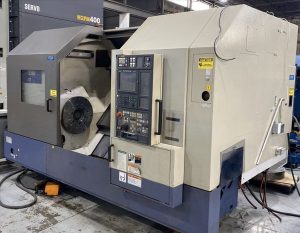
Avoid Costly Mistakes: Professional Tips for Purchasing a Pre-Owned / Second-Hand / used CHURCHILL CW Plain Cylindrical Grinder Swing 13 x 120 Inch?
Here is a professional-grade guide—drawn from machine tool inspection best practices—tailored for a CHURCHILL CW plain cylindrical grinder (swing 13″ × 120″) to help you avoid costly mistakes when purchasing one used.
I. Understand the baseline / “normal spec”
II. Documentation & provenance
III. Visual / structural inspection
IV. Mechanical & motion testing
V. Grinding head, spindle, wheel head tests
VI. Auxiliary systems, steadies, tooling
VII. Precision, geometry & test grinding
VIII. Hidden costs & risk items
IX. Negotiation & deal structuring
X. Red flags / walk-away criteria
I. Understand the Baseline / “Normal Spec” for Churchill CW 13″ × 120″
Before visiting, collect the expected capacities and design features so you can spot exaggerations or discrepancies.
From listings:
- Swing over bed: ~ 12″ (i.e. 12-13″)
- Distance between centers: ~ 120″ (≈ 3048 mm)
- Comes with 3 × 2-point steadies (for long work support)
- Machine size / weight: dimensions ~ 7900 × 2400 × 1900 mm, weight ~ 10,500 kg
- Equipped with coolant / clarifier (filtration / coolant recirculation)
These establish the nominal capacity: the machine should handle cylindrical grinding on shafts up to ~120″ long, up to ~12–13″ OD (with modest allowances).
If a seller claims much higher swing, unusually high speeds, or extra features (multiple wheel heads, internal grinding, etc.), be skeptical unless specified and demonstrably working.
II. Documentation & Provenance
Before you even go in, insist on:
- Original manuals, schematics, wiring diagrams, parts lists (grinding machines of this size often have complex wheel head, drive circuitry, coolant plumbing, guard systems, etc.).
- Service & maintenance logs / repair invoices — look especially for wheel head rebuilds, spindle bearing changes, coolant pump repairs, clarifier / filtration servicing.
- Usage history: how intensively was it used? Did it run continuous shifts, or in light duty? Was it in a clean / controlled environment or a dirty / abrasive shop?
- Modifications / retrofits: Has the machine been altered (e.g. upgraded drive motors, electronic retrofits, extra wheelheads, added electronics) — get full documentation and rationale.
- What comes with the sale: steadies (the listing suggests 3 × 2-point steady rests) , tooling, work holding, grinding wheels, spare wheels, spindle adaptors, guard parts, coolant filters, clarifiers.
- Control or electrical records: if there’s any electronics (e.g. variable speed, digital readouts, motor drives), whether there are backups of programs, settings, wiring backups.
- Inspection / test run history: ask if there have been recent tests, alignments, or calibrations.
If the seller can’t provide solid documentation, your risk goes way up.
III. Visual / Structural Inspection
Walk around the machine carefully, before any power is applied.
- Examine the bed, base, frame castings for cracks, weld repairs, repairs, or distortion. Cylindrical grinders carry significant mechanical loads; structural integrity is paramount.
- Inspect guideways / ways / table slide surfaces (if the machine has a traverse or reciprocating table): look for scoring, rust, pitting, corrosion, worn surfaces.
- Look at way covers, bellows, guards, splash shields. Missing or damaged covers often allow chips and grit ingress, which accelerates wear.
- Inspect the grinding head, wheel head housing, spindle housing, mounts: check for signs of coolant leakage, drips, stains, rust.
- Examine mounting points: anchor bolts, base, leveling pads, foundation area. Any evidence of shifting, repair, or misalignment.
- Check electrical enclosures, junction boxes, wiring conduits: any signs of water ingress, burning, corrosion, discoloration.
- Inspect the steadies (if mounted): their frames, jaws, supports, bearings; if they’re bent or damaged, that’s a cost.
- Look for oil / coolant residue, stain lines — these often tell where leaks or seepage have occurred repeatedly.
IV. Mechanical & Motion Testing (Non-Grinding Moves)
This is critical: you need to see how the machine behaves under motion, even without grinding.
- Move the workhead / table / carriage (if applicable) in all available axes (longitudinal traverse, cross travel, in/out feed, etc.). Check for binding, dead zones, stiffness, jerkiness, uneven resistance.
- Use a dial indicator (or suitable measurement tool) to check for backlash / play in the drives, slides, feed screws, guides.
- Watch for zones where motion feels loose or the feed ratchets or slackens — these often reflect wear or play in slideways, nuts, bearings.
- Listen for unusual noises: scraping, grinding, metallic contact, sudden jumps or gear whine.
- Check that all lubrication points (slides, bearings, spindles) have their oil / grease supply intact. Turn on any lubrication pump (if exists) to confirm it’s working.
- If there is any hydraulic or pneumatic actuation (e.g. for steady jaws, wheel head feed, tailstock, etc.), test movement to confirm smooth operation and no leaks.
V. Grinding Head, Spindle, Wheel Head Tests
This is where many expensive failures lurk in cylindrical grinders.
- No-Load Spindle Run
- Run the spindle (wheel head) at its various speed ranges (low, medium, high) without a wheel mounted (or with dummy). Listen carefully for bearing hum, vibration, harmonic noise.
- Watch for irregular rotation, vibration, signs of instability.
- Runout / Whirl Test
- Mount a precision test bar or mandrel in the spindle; use a dial indicator to measure radial and axial runout while rotating through 360°. Acceptable runout should be minimal (in the sub-0.001″ or few microns range, depending on machine class).
- Inspect the spindle taper, or mounting surface, for nicks, wear, damage. Poor taper seating causes runout and vibration.
- Wheelhead / Feed / Traverse Testing
- If the wheelhead has axial feed (in/out movement), test its input via its feed drive. Confirm it moves smoothly, without sudden jerks, backlash, or binding.
- If there is a transverse feed (in many plain cylindrical grinders, the wheel moves in/out to vary depth), test that feed axis similarly.
- If there is a camber or “rocker” swiveled adjustment or table tilt feature, test that as well — it must move smoothly, accurately, and lock firmly.
- Wheel Mount & Flange Integrity
- Check the wheel flange, arbor / spindle wheel mount, and locking nuts for wear or distortion.
- Ensure the wheel mount is true and not bent, and can mount a wheel securely without slop.
- Spindle Bearing Condition
- If possible, place a stethoscope or vibration sensor near the bearings while running; listen for bearing rumble or defects.
- If bearing lubrication is accessible, inspect oil or grease, check for metal contamination.
VI. Auxiliary Systems, Steadies & Work Support
These supporting systems are essential and often overlooked—but their failure can cripple performance.
- Steadies / centers / steadies: Since this machine is advertised with 3 × 2-point steadies, inspect these supports carefully: check jaw surfaces, bearings, alignment, travel, locking mechanisms.
- Coolant system / pump / clarifier / filtration: Run the coolant system, verify flow, check for leaks, air ingestion, cleanliness, filtration function.
- Electrical motors / drives for table movement, coolant, feed motors: test under no load, check for overheating, unusual vibration.
- Controls, switches, panels, wiring: power up controls (if provided), verify all switches, dials, displays, emergency stops, indicator lights, interlocks work.
- Chip removal / guard / cover systems: any guards, chip shields, enclosures should be present and functional.
- Safety interlocks (doors, covers) should operate reliably.
- Tailstock or work head (if dual) attachments / attachments: if present, test their movement, alignment, locking.
VII. Precision, Geometry & Test Grinding
The ultimate test is whether the machine can grind parts to precision even after you bring it into your shop. On-site you should perform:
- Geometric checks
- Use a reference master bar or ground test workpiece, place indicators at multiple positions, and check straightness, taper, runout along the length.
- Check alignment of headstock axis, table motions.
- Verify that the traverse (or axial movement) is linear and consistent across the full stroke.
- Confirm that when you retract and return to same position, you get repeatable readings (i.e. test repeatability).
- Test grinding a sample part
- Grind a known cylindrical test piece (e.g. a ground shaft) using modest cuts.
- Measure the diameter at multiple points, check for straightness, roundness, surface finish quality.
- Perform plunge grinding, traverse grinding, in/out feeds as applicable.
- If the machine has a cambering or radius feature, try grinding a radius or profile and check fidelity.
- Do this both near the center of travel and near travel limits — machines often degrade near the extremes.
- Thermal / load tests
- After running for some time, measure thermal stability: is the spindle drifting, or do dimensions shift as machine heats?
- Test for consistency over time (e.g. two identical test cuts spaced apart in time) to see if the machine maintains performance.
VIII. Hidden Costs & Risk Items to Assume
Even a grinder that “seems OK” may carry latent repair costs. Be realistic about these:
- Rebuilding spindle bearings or replacing wheelhead bearings (especially expensive on large machines)
- Reconditioning or regrinding worn slideways or table ways
- Repairing / replacing feeds, screws, nuts, guides
- Repairing or overhauling coolant / filtration / clarifier systems
- Retrofitting or replacing electrical drives, wiring, controls if components are obsolete or damaged
- Replacing or refurbishing steadies or work supports
- Calibration, re-grinding wheel flanges, alignment, and test calibration after transport
- Transport, rigging, foundation work, leveling, anchoring
- Downtime during repair / setup
- Sourcing spare parts for older Churchill models (bearings, motor spares, electrical parts)
- Adapting to your local utilities (voltage, wiring, safety compliance, grounding)
IX. Negotiation & Deal Structuring Tips
Protect yourself in the contract:
- Insist on a full inspection / test period, during which you run all motions, test grinding, checks, etc., before the final payment.
- Hold back a portion of payment until acceptance tests are achieved.
- Require delivery of all documentation (manuals, wiring diagrams, maintenance logs, drawings) as part of the sale.
- Ask for written disclosure of known defects or defects the seller is aware of (e.g. “wheelhead bearing has slight hum,” or “steady #2 has some play”).
- Negotiate a short-term warranty (e.g. 30–90 days) on critical systems (spindle bearings, major drives) if the seller is open to it.
- Include in the contract the responsibility for rigging, transport, alignment, leveling (or clarify which party is responsible).
- Ask that the seller help (or finance) initial alignment/test grinding after relocation.
- Try to include spare wheels, adaptors, steady rests in the deal (often sellers are amenable to bundling them).
- If possible, inspect and test the machine under near-production conditions (i.e. with your tooling, your workpiece) rather than just a superficial test.
X. Red Flags & Walk-Away Criteria
Some conditions are severe enough that you should strongly consider passing on the machine (or demand deep discount). Key red flags:
- Seller refuses full access (to move motions, test grinding, open enclosures).
- Excessive backlash, binding, stiffness, or nonuniform motion in any axis.
- Spindle / wheelhead noise, vibration, or unacceptable runout.
- Wheelhead feed / traverse motion is jerky or has significant backlash.
- Steadies are bent, misaligned, damaged, or nonfunctional.
- Coolant or filtration system malfunctioning, leaking, or corroded.
- Electrical panels show signs of burn marks, corrosion, water damage, missing parts.
- Control / interface (if present) is nonfunctional or missing critical components.
- Structural damage, serious casting cracks, or evidence of prior major structural repair.
- Modifications that appear poorly done (welds, misalignments) instead of clean OEM upgrades.
- Spare parts (bearings, drive components, controls) for the model are extremely rare or unobtainable.
- Test grinding yields poor finish, nonrepeatability, out-of-tolerance dimensions, excessive heat drift.