21/09/2025
What Should I Pay Attention To When Buying a Second-Hand / used VTEC YCM 1400?
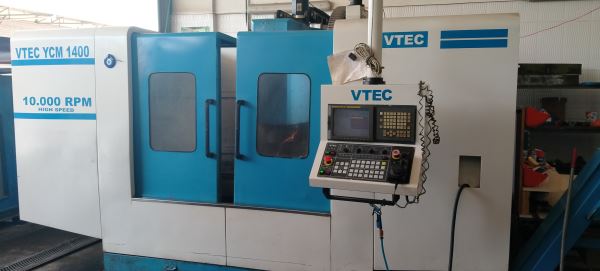
Here are many important things to check / ask about when buying a used VTEC YCM 1400 (or similar VMC from VTEC / YCM). Because specs vary by exact model and year, some items will be more or less relevant depending on what version you’re looking at.
What to find out up-front
Before you go to inspect, try to get this info from the seller:
- Exact model & year, and all option packages (spindle RPM, tool changer type, coolant, chip conveyors, etc.).
- Controller type/version (e.g. Fanuc, Siemens, etc.).
- How many hours it has run (spindle hours, axis usage if known).
- History of use (what materials, how heavy the cuts, harsh environment?).
- Maintenance history: oil changes, spindle bearings, ways, coolant, etc.
- Any known problems / crashes / repairs in past.
What to check in physical inspection
Here is a checklist of mechanical, electrical, and operational features to inspect carefully.
| Area | What to look for / test |
|---|---|
| Spindle & tool-holding | – Spindle run-out (radial & axial) using a test bar or indicator. – Condition of spindle taper: are there nicks, damage, wear? – Spindle bearings: listen for noise (grinding, humming), vibrations, heat. – Check any through-spindle coolant, if equipped: leaks, consistent pressure, sealing. |
| Axes & guideways | – Move each axis (X, Y, Z) full travel: smoothness, any binding or resistance. – Check backlash: in ball screws (if ball screw type), in gear blocks, in slides. – Guideway condition: look for scoring, rust, pitting, wear marks. Cleanliness of covers. – Lubrication: automatic lube if present, oil condition, leaks. |
| Table & workholding | – Flatness & surface finish of table. – T-slots condition: any deformation, wear, cracking. – Workholding devices: vises, clamps etc., check if included and condition. |
| Tool changer / magazine | – Does the ATC (automatic tool changer) function properly? – Tool change time, accuracy in tool swapping. – Magazine condition: alignment, damage, wear. – Tightness of toolholders / fitting reliability. |
| Control / electronics | – Which control (brand, firmware), and whether there have been upgrades or modifications. – All displays, switches, limit/homing switches should work. – Check alarm/error history if accessible. – Wiring: look for burnt connectors, signs of moisture, corrosion. – Servo motors / drives: do they heat up a lot, any unusual noise or smells. |
| Coolant / lubrication / hydraulic systems | – Coolant pump, lines, reservoir: leaks, contamination, smell, sludge. – Lubrication system for slides / ways / screws: does it deliver consistently, any dry spots. – Hydraulic systems (if any) for any clamping etc.: leak-free, responsive. |
| Machine alignment, accuracy & test-cuts | – Squareness of axes: table vs spindle, etc. – Make a sample part: see if dimensions are within tolerance, test surface finish. – Check that machine returns to zero positions cleanly. – Run at different spindle speeds, feeds: listen for chatter, overheating. |
| Structural condition | – Frame, column, base: any cracks, damage, repairs. – Machine leveling: whether it is level now; misleveling causes errors. – External signs of abuse: dings, smashed covers, chips lodged in ways or slides. |
| Safety features | – Emergency stop buttons present & functional. – Guards, interlocks, door sensors. – Cooling / ventilation works so motors / drives don’t overheat. |
| Accessories & spare parts | – What tooling / fixtures / accessories are included? – Is there spare tooling, spare tool holders, extra inserts, etc. – Are common spare parts for this model available locally / how expensive. |
Common problems / red flags with used VTEC / YCM machines
While I didn’t find model-specific historic issues for “VTEC YCM 1400” in my research, general complaints and patterns from YCM / VTEC / similar VMCs suggest these are frequent trouble spots:
- Excessive wear or damage on guideway wipers / covers, leading to chips or coolant getting under seals and damaging ways or screws.
- ATC/tool magazine misalignment or wear causing mis-picks or chatter.
- Spindle bearings deterioration especially if machine was run hard or coolant flow was insufficient.
- Controller issues: firmware/parameter loss, limit switch failures, weak backup batteries.
- Poor maintenance of coolant: if coolant was neglected (dirty / not replaced), rust / corrosion in internal passages.
- Ball screw backlash or spindle taper wear, especially if tooling was heavily loaded or improperly used.
- Electric components aged: relays, capacitors, connectors, cooling fans — these often fail when machines are older or in less optimal environments.
Price / Value & Practical Considerations
- Estimate how much refurbishment might cost: replacing worn bearings, screws, electrical parts, re-alignment.
- Transport, installation, leveling costs are often overlooked but can be substantial for VMCs.
- Power / utilities: ensure your workshop can supply the required voltage, air, coolant, etc.
- Operator skill: whether staff are familiar with that control brand / programming quirks.
- Down-time risk: buying used means you may face unexpected downtime; ensure you can source service / spares quickly.