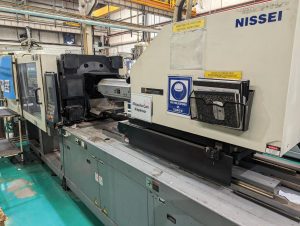
What Should I Pay Attention To When Buying a Second-Hand / used DMG Mori NLX2500SY/700 CNC Turning Center?
If you’re considering buying a used DMG Mori NLX2500SY/700 turning center, there are many technical, mechanical, and practical factors to check. These are sophisticated machines with dual spindles, Y-axis, live tooling, etc., so the inspection needs to be thorough. Here’s what to pay special attention to:
Key Specs & What You Should Know Upfront
Before you inspect, gather the original specs / intended configuration so you can see if what you are looking at matches. Useful specs include:
- Spindle speeds, spindle motor power
- Travel in all axes (X, Z, Y), also for sub-spindle (if present)
- Turret(s) number of stations; live tooling options
- Tool changer style / capacity
- C-axis capabilities in turret(s)
- Feed rates, rapid traverse speeds
- Control type / software version (DMG Mori CELs, etc.)
Having those helps you recognize deviations (missing features, worn components, modifications).
Mechanical / Structural / Wear Inspection
- Spindles (Main & Sub-Spindle)
- Check spindle run-out (both radial & axial) using a test bar. Any looseness, eccentricity or vibration is bad.
- Listen for bearing noise when spinning idle. Heat or humming/buzzing is a warning.
- Inspect spindle nose/ taper / clamp mechanism: wear, chips, damage.
- Check that chuck opening/closing and spindle brakes are working properly. There are reports of hydraulic / brake issues on these machines.
- Turret(s) & Tool Stations
- Turret indexing: does it index cleanly to stations without hesitation or misalignment? Any tool station damage.
- Live tooling functionality: radials / axials; check performance, vibration, stability when live tooling is used.
- C-axis turret & tool holders: check for freedom of movement and correct locking; alignment.
- Axes & Guideways
- Move all axes through full travel: X, Z, Y (upper turret if Y present), sub-spindle axis. Look for binding, irregular motion, stiffness.
- Check backlash, especially in ball screws, turrets, and Y-axis.
- Look for wear, rust, scoring or staining on guideways; check lubrication (way oil, lube lines, automatic lubrication system). There are reports that way lubrication consumption is significant (and leaks, or bad lubrication manifolds/lines cause issues).
- Hydraulic, Pneumatic, and Braking Systems
- Hydraulic oil condition & timing of oil/filter changes: neglected hydraulic oil can lead to residue that gums up valves, causing turret / brake / chuck issues.
- Check chuck/clamp brake function. Are both spindles’ chucks working well? Any problems with the spindle brakes sticking?
- Check solenoids / valves for hydraulic circuits: open/close actions, clutch / brake controls, etc.
- Control System / Electronics / Software
- Check correct function of the control (including any latest version of CELs or whatever is installed).
- Homing / limit switches for spindles, turrets, axes should be reliable.
- Check if all sensors / encoders are working well.
- Review error / maintenance logs if possible.
- Thermal Stability and Structural Alignment
- These machines can produce heat; check whether cooling / thermal compensation is intact so that accuracy is maintained over longer runs.
- Check for any distortion or misalignment: between the spindles, turret alignment, tool center-points.
- Check bed, base, and structural castings for cracks or damage.
- Test Cut and Accuracy
- Perform test machining: turning, live-tooling, Y-axis moves, sub-spindle operations if part off, etc. Measure tolerances and surface finish.
- Test repeatability: move to a position, retract, return, see how close you get.
- Check if part removal / unloading or operation of any catchers or part off devices work smoothly.
- Wear / Maintenance History
- Ask for run-hours, usage type (heavy cuts, continuous production, light finishing, etc.).
- Records of major overhauls: spindle bearings replaced, turrets rebuilt, hydraulic / lubrication maintenance.
- Has the machine suffered crashes or accidental collisions? (Turret vs part, tool crashes etc.)
- Accessories & Included Tooling
- What chucks, tool holders, live tooling bits are included, and what condition they are in.
- Are part catchers, chip conveyors, coolant systems, all external components intact?
- Spare parts availability / cost for major components (especially spindles, bearings, live tool modules, etc.).
- Safety & Compliance
- Emergency stops, guards, interlocks: all must work and present.
- Check for safety features required by your local regulations.
- Ensure the electronics / wiring are in good state: no exposed wires, damage, corrosion.
Known Issues & Red Flags Specific to NLX2500SY/700
From user reports and forums, here are problems that come up relatively often. If you detect any of these, be cautious and estimate repair cost.
- Hydraulic oil / maintenance neglected => residue builds up, valves / solenoids get stuck (affecting turret indexing, brakes, chuck clamp/unclamp).
- Spindle bearings damaged (for example, brinelling) especially when loading or from shocks. Replacement is expensive.
- Way lubrication issues: consumption too high, or lubrication manifolds/lines not functioning properly, possibly causing guideways to run dry or uneven lubrication.
- Turret indexing faults, possibly from misbalanced tool loading or mechanical wear. If the turret is heavily loaded unevenly, index errors can happen.
- Problems with the spindle brake, or chucks sticking or failing to open/close reliably. This might be hydraulic or pneumatic, but often hydraulic.
- Control / C-axis synchronization issues, especially in dual-spindle operations or when using both spindles / live tools / synchronized motion. Some users report over-spinning or mis-synchronization of secondary spindle, especially under rapid moves or C-axis moves.
Questions to Ask the Seller
Make sure to get answers to these or inspect with these in mind:
- What is the total operating hours, spindle hours, and what load profiles (type of jobs)?
- When was the most recent maintenance: spindle bearings, hydraulic oil, way lubrication, turret servicing?
- Has there ever been a collision / crash (turret, tool crash, spindle crashes)?
- Are all features present as specified (live tooling, Y-axis, sub-spindle, C-axis)? Are there any disabled or non-functional features?
- Can you see / test it under power, perform a test cut, see chucks open/close, turret index, live tool operations?
- Are error logs / alarm history available? Are there recurring faults?
- Do all safety features work (guards, interlocks, emergency stop)?
- Is there any known problem with hydraulic / pneumatic systems (leaks, pressure issues, sluggishness)?
- Are all accessories included (tooling, fixtures, part catcher, conveyors)?
- What spare parts are still available in your region, and what lead times / costs are like?
How to Evaluate Price / What Makes a Good Deal
- Compare the quoted price with similar used machines of similar age, configuration, condition.
- Estimate repair / refurbishment costs for any defects you find. Spindle rebuilds, hydraulic servicing, turret repair, etc. can be expensive.
- Factor in transport, installation, setup / alignment costs. These machines are heavy & precise.
- Consider resale / lifecycle: how long will it stay accurate, how much downtime might you have.
- Consider operating costs: electricity, lubricants, hydraulic fluids, coolant, maintenance.