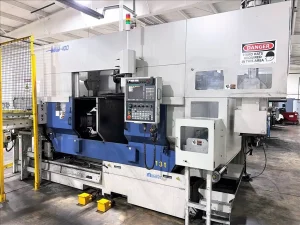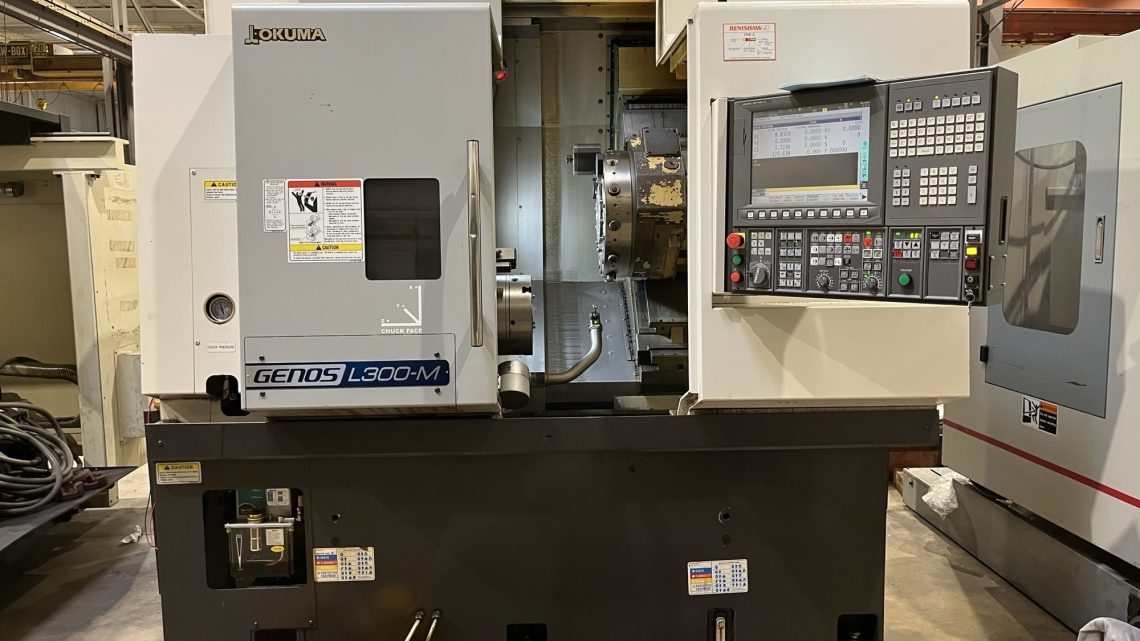
What Should I Pay Attention To When Buying a Second-Hand / used Okuma Genos I-300MY?
Buying a second-hand Okuma Genos I-300MY (or a model in the GENOS L/MY/MYW family) can be a very good investment, but you’ll want to check a lot of things carefully so you know you’re getting one that will serve you well. Below are the things I would pay attention to, and some specific tips for Okuma GENOS machines, based on what I found. If you want, I can also help you build a checklist for inspections onsite or before purchase.
Key Specifications & What You Should Know
First, it helps to know what the machine is supposed to be capable of, so you can check whether what you’re looking at meets or falls short of those.
From sources:
- The Okuma GENOS L300/MY/W models have a maximum turning diameter around 300 mm (≈ 11.8-12 in).
- Spindle speeds of about 3,000 rpm for many models; higher in some “MYW” / live-tooling variants.
- X/Z travel (i.e. cross travel / longitudinal) is significant; and there are variants with Y-axis, sub-spindle, live tooling etc.
Knowing what variant you want (do you need live tooling? sub spindle? Y-axis? W axis?) is important, because each adds complexity, cost of maintenance, etc.
What to Check / Inspect Before Buying
Here are the major areas you want to inspect (or have inspected) closely, specially for a machine like the GENOS series.
| Area | What to Look For / Test | Why It Matters / What Can Go Wrong |
|---|---|---|
| Machine History & Usage | Ask for cutting hours, idle hours, maintenance records, what materials were run (steel, aluminum, etc), how many shifts, type of work (heavy roughing vs fine finish). | A machine that was run hard, in harsh conditions, or without good maintenance may have more wear, need more parts replaced, etc. GENOS machines are robust, but still wear components like any CNC. |
| Spindle / Bearings | Run spindle at multiple speeds; listen for unusual noise (groaning, grinding, squealing); check for vibration; check for heating up; inspect the spindle nose (for wear or damage); check whether bearings have been replaced or overhauled. | Spindle repairs or bearing replacements are expensive. A spindle in bad condition reduces precision and machining quality. |
| Guideways / Ways / Ball Screws | Check for: smooth motion with no binding; any scoring or rust on ways; backlash in ball screws; how well lubrication works; check whether covers/caps are intact; check wear on linear rails or saddle. | These impact accuracy, surface finish, repeatability. If ways are worn, part dimensions may drift, finishes suffer. |
| Turret / Live Tooling / C-Axis / Y-Axis / Subspindle | If the machine has live tooling or a subspindle or Y-axis, test that those features work: run live tools at working RPM, check response, alignment; check turret indexing accuracy, tool change speed and reliability; check subspindle alignment & runout. | These features add cost & complexity and are failure points; misalignment in subspindle, bad runout, or failing live tooling can degrade parts quality and increase downtime. |
| Coolant & Lubrication Systems | Inspect coolant pump, coolant quality (cleanliness, presence of sludge, water/oil separation), coolant lines, leaks; check lubrication system (way lubrication, spindle lubrication), whether the oil/lubricant used has been changed on schedule. | Poor coolant or lubrication leads to faster wear, overheating, damage to bearings or ways. Sludge or corrosion is a red flag. |
| Control System & Software | Identify which CNC control (e.g. Okuma OSP series, P300LA, etc); check software version; check whether it’s supported; look for any modifications; test the interface, display, buttons; check error histories; check compatibility with your CAM/CAD tools; check for missing licenses or features. | If the control is outdated or broken, integration or repair may be difficult / costly; some features (live tooling, subspindle, etc.) depend on software. |
| Electrical / Drives / Motors | Inspect wiring; check whether motors/drives are overheating; check servo motors & encoders; inspect for loose connections; examine the state of the VFDs (if any), cables, fan operation etc. | Electrical problems often cause hidden failures; drives failure or motor failure costs can be high. |
| Physical Condition & Visual Inspection | Look for signs of damage or neglect: rust, corrosion, dents, cracked welds; condition of covers and guards; cleanliness; condition of chuck (jaws, insert seats), alignment of tailstock (if any), condition of chuck, collets; check for oil leaks; check whether chips cleaning is well managed; inspect the chip conveyor. | A clean, well-cared machine is likely better maintained. Physical damage may lead to alignment issues or hidden structural damage. |
| Accuracy & Repeatability Tests | If possible, run test parts: turning, facing, threading; measure with calipers/CMM; check repeatability of operations over time; check geometric tolerances (cylindricity, taper, runout). | To verify whether the machine meets the tolerances you need; small misalignments can ruin work; repeatability is important for production. |
| Spindle Bore / Bar Capacity / Chuck | Inspect whether the spindle through-bore is clean; spindle nose condition; chuck condition; whether chuck mounting is correct; check collets or other workholding; check whether chuck size / type suits your work. | A worn spindle bore or nose leads to poor workholding; chucks can have damage. If the bore is small or damaged, you may not be able to pass stock through. |
| Support / Parts Availability | How easy is it to get spare parts for that variant; is there a local distributor or service center; cost of parts (turret, bearings, motors, tool holders etc); availability of consumables. | If parts are hard to get, or only from very far, downtime or repair cost will be high. Okuma is a big brand, so generally parts are available, but specific live tooling or subspindle stuff may be less common. |
| Operating / Power Requirements & Facility Fit | Check what power the machine needs (voltage, three-phase, amps); cooling water; compressed air; floor load; space and foundation requirements; extraction (for chip, coolant mist); ventilation; operator access. | If your facility doesn’t meet these, you’ll incur extra cost installing the infrastructure. Also the machine must physically fit, with access for maintenance. |
Issues Specific to Okuma GENOS / MY / MYW Machines
Aside from the general CNC lathe concerns, some things are more likely or more important for the GENOS L /MY /MYW line:
- Live tooling and subspindle alignment & wear
Models with live tooling (MYW etc.) or sub-spindles have more moving parts; the alignment between the main spindle and subspindle is critical. If misaligned, parts may have steps, poor concentricity. Excessive runout or backlash in the C-axis or live tool spindles will degrade performance. - Y-axis and W-axis maintenance
The Y or W axes (if present) are relatively more complex; the seals, ways, bearings may suffer if not maintained. If the machine has been using these, check for wear or play. - Tool turret condition, especially for live tools
Because many GENOS machines are used for multitasking (e.g. milling live tools, etc.), the live tool spindles and associated motor / wiring / cooling must be checked. Live tools often suffer from overheating, tool life issues. - Coolant system & chip control
For machines doing a lot of metal cutting, chips and coolant are continuously in play; chip accumulation, coolant leaks or subsystem neglect can cause damage to slideways, ways, or the base. Check the integrity of splash guards, chip excluders, chip conveyors, coolant filtration. - Control & software version, updates
Okuma’s OSP-P300 etc have various firmware/software options. Sometimes “cheaper” used machines are sold with limited software, or older firmware lacking features you need. Also check that any optional software / functions (e.g. rigid tap, helical cutting, tool wear monitoring, etc.) are included and functional. - Thermal stability
The GENOS L/MY machines are precision machines, especially in modern versions GENOS-L-e etc. Temperature changes affect accuracy. Check if the environment in which the machine was used was well-controlled; whether any “machining-navi” or thermal compensation features are used.
Red Flags
When inspecting, these are warning signs that could either disqualify a machine or at least require you to negotiate heavily or budget for repair:
- Very high cutting hours with no maintenance history.
- Spindle noise, vibration, or excessive heat under light load.
- Excessive backlash, or looseness, in axes.
- Significant wear on guideways (scoring, pits) or signs of rust.
- Turret issues: slow indexing, missed tool changes, misalignment.
- Live tooling spindles with poor coolant supply, overheating, or high runout.
- Missing parts or “option” features indicated but not installed or non-functional.
- Cracks in machine bed or body, or structural damage.
- Electrical issues: arcing, worn or frayed wires, replaced parts with questionable replacements.
- Outdated control that cannot be upgraded, or software no longer supported