22/09/2025
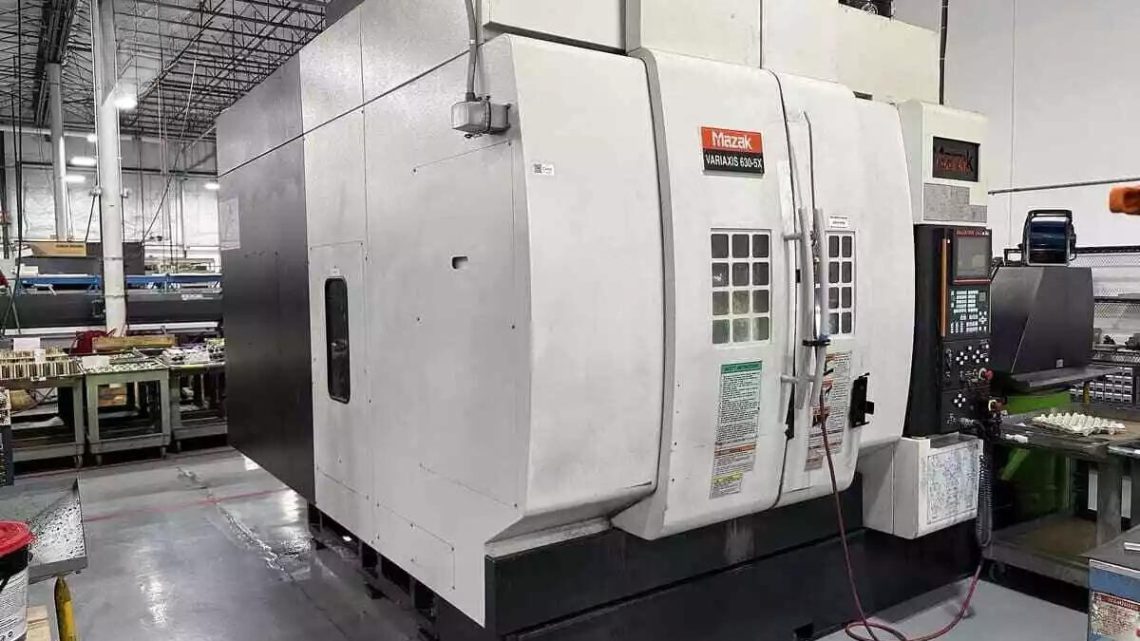
What Should I Pay Attention To When Buying a Second-Hand / used Mazak Variaxis 630-5X CNC 5-Axis Vertical Machining Center?
Here’s a checklist of what to check, test, and ask when buying a second-hand Mazak Variaxis 630-5X (or similar Variaxis 630 with 5-axis) vertical machining centre. These machines are high-value, complex, and many subsystems must be in good condition to justify the price. I’ll cover typical specs, known issues, and what to verify in detail.
What the Variaxis 630-5X Should Be / Typical Specs to Confirm
Before buying, ensure the machine’s claimed specs match what you need. Some of the baseline specs you should verify:
- X, Y, Z travels (look up what model year / sub-version this Variaxis 630 is)
- Table (work-table) size and load capacity
- Rotary axes (A-axis tilt, C-axis slew): speed, torque, positioning resolution, clamping rigidity
- Spindle speed & power; whether it’s high-speed version or standard
- Tool magazine / ATC: size, tool change speed, whether tool holders are part of the deal
- Control system version (Mazatrol / Fusion / 640M / etc.) and whether any software / firmware upgrades have been done
- Optional systems: workpiece probing, coolant or through spindle coolant, high pressure coolant, chip conveyor, pallet changer (if equipped)
What to Inspect & Test Thoroughly
These are the subsystems to physically inspect or test in realworking conditions:
| Subsystem | What to Check / Test | Why It Matters / What to Look Out For |
|---|---|---|
| Spindle & Bearings | • Check for spindle run-out (radial & axial) using indicators. • Run at different spindle speeds; listen for noises / vibration. • Under light cutting load, check spindle holds RPM without overheating or excess vibration. • Inspect taper: damage, wear, cleanliness. • Check whether spindle has been serviced regularly. | Bad spindle bearings or taper damage degrade surface finish, shorten tool life, reduce accuracy. Repairs are expensive. |
| Rotary Axes (A / C Mounted Table / Trunnion) | • Move A and C axes through full range; check for smooth motion, no play or backlash. • Check torque, holding/clamping rigidity, whether axes lock securely. • Alignment: verify that table centre of rotation is aligned; check for drift of rotary centre. • Check for wobble or deflection under load. | If rotary axes are worn or misaligned, 5-axis machining accuracy will suffer. Versatility reduced; chances of vibration or poor finishes increase. |
| Guideways, Ball Screws, Axis Movement (X, Y, Z) | • Move all linear axes through full travel; feel for binding, smoothness. • Check backlash and repeatability. • Inspect way covers / seals: are they intact? Are there chips, rust, or damage? • Lubrication: are ways, screws, bearings getting proper lubrication; condition of oil/grease. • Measure positional accuracy over full travel, not just center. | Wear in guides, screws, or seals causes error accumulation; sloppy motion, inconsistent cuts; higher maintenance cost. |
| Tool Changer / Tool Holders | • Check ATC operation: speed, reliability, tool station condition. • Inspect tool holders: seat, wear, balancing. • Check magazine or chain integrity; sensors for tool detection. • Are holders included; what condition are they in. | Tool change reliability is crucial for uptime. Worn holders or misfitting tools degrade accuracy and cause scrap. |
| Control System / Software | • Verify control panel / display, buttons, touchscreen if any; responsiveness. • Check error / alarm logs; recurring warnings. • Confirm software/firmware version and whether there are known bugs. • Test features you’ll need (probing, coordinate systems, 5-axis toolpath visualization). • Check that parts of the control are supported (OEM parts, service, updates). | Outdated or buggy control software can lead to unforeseen issues; parts or support may be hard to get. |
| Coolant / Chip Removal / Filtration | • Check coolant system (tank, pumps, lines, cleanliness). • If through spindle coolant (TSC) or high pressure coolant is claimed, test pressure, leaks, flow. • Chip conveyor or chip handling: are conveyors clean, functional, maintained? • Filters and coolant quality: rust, sediment, oil contamination. | Poor coolant or chip removal causes corrosion, tool wear, thermal issues; downtime; cleaning costs. |
| Accuracy & Test Machining | • Run sample jobs similar to what you plan to produce; check finish, dimensions, tolerances. • Test at various positions (center, corners, extremes of travel) to see whether positional error increases. • Heat-up behaviour: does machine drift after warming up? • Check repeatability: e.g. rough cut, rework, consistency. | Real performance is what matters; specs only tell part of the story. Machines may look good but perform poorly under load or at extremes. |
| Pallet / Work Table / Fixturing | • Inspect work table surface: flatness, wear, surface damage. • If there is a pallet changer, test its indexing, locking, repeatability. • Fixturing accessories: need to know what is included and their condition. | Good fixturing and table alignment are essential for accurate 5-axis work. Pallet issues multiply error. |
| Electrical & Wiring | • Inspect wiring, connectors, inside cabinets: signs of overheating, burnt insulation, moisture ingress. • Condition of motors, drives: noise, heat. • Check fans, cooling of electrical cabinet. • Proper grounding and power conditioning. | Electrical issues are expensive to fix and dangerous. Poor wiring or overheating can lead to failures. |
| Maintenance History / Usage | • How many hours of operation; hours of cutting vs idle. • Loads cut (material types, hardness, types of tooling). • Record of spindle rebuilds, rotary axis servicing, replacement of wear parts. • Any known crashes / collisions. • How machine has been stored / environmental conditions (humidity, dust, heat). | Good history reduces risk of hidden wear. Machines used in harsh environments or without maintenance often have many hidden issues. |
| Safety & Guards | • Emergency stop buttons, interlocks, door guards present and functional. • Guards around rotary axes / tilt / table. • Safety around chip discharge and coolant splash. • Compliance with local safety / electrical codes. | Safety is non-negotiable. Missing or broken safety features can cost you (legally, insurance, operator risk). |
| Spare Parts & Tooling Availability | • What tooling / holders come with the machine. • Are key spares still manufactured or easy to get (spindle bearings, rotary axis motors, encoders, drive boards etc.). • Cost for consumables and wear parts. • Is documentation (manuals, parts lists, diagrams) available. | Spare availability and tooling are major parts of ongoing cost. Without it, downtime can be long. |
| Footprint, Installation & Utilities | • Machine’s physical size, weight; whether your facility can support it (floor strength, crane/rigging). • Power requirements (voltage, phase, amps). • Cooling / lubrication / air supply. • Ambient temperature stability and vibration / foundation issues. | Even a great machine can underperform or be costly if installation or environment is weak. |
Known Weak Points / Issues Frequently Reported
From user forums and reviews, there are some issues that owners of Variaxis 630-5X tend to mention more often. Be sure to check these specifically:
- Limits of Z-axis travel relative to the center of rotation of the table / rotary axes; sometimes for tall fixtures or deep work, reach becomes a constraint.
- Pallet changer problems: stalling, hang ups, or failure in pallet indexing or locking.
- Software bugs: coordinate / work offset shifts, dynamic offset or compensation features behaving unexpectedly.
- Feed rate slowdowns during arc motions or complex 5-axis simultaneous moves. Sometimes machine slows more than expected on arcs or corners.
- Wear / backlash in rotary axes (A / C), or drift over time.
- Issues with high-speed machining options: specially if the machine was pushed hard.
- Maintenance / availability of parts for older control versions.