22/09/2025
What Should I Pay Attention To When Buying a Second-Hand / used Haas ST-20Y?
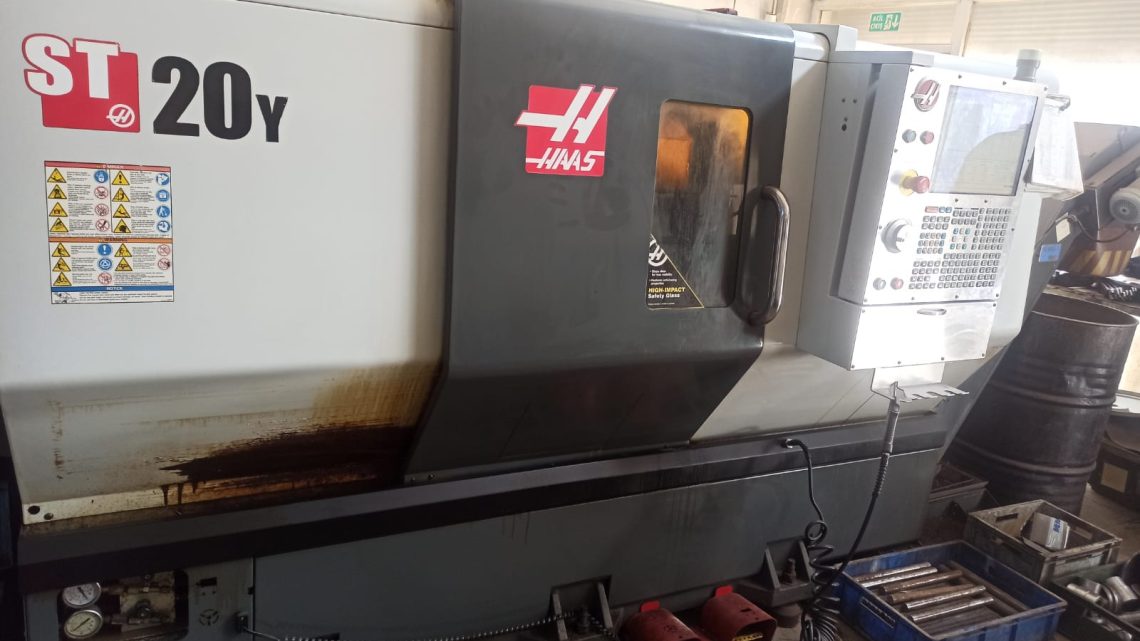
Here are key things to inspect, test, and ask about when considering a used Haas ST-20Y lathe, so you have a clearer idea of potential issues, costs, and whether the machine will meet your needs.
What the Haas ST-20Y Should Have / Specs to Know
Before evaluating, verify that the machine has the capabilities you need. Typical specs and features for the ST-20Y:
- It is a CNC lathe with Y-axis, which allows cross-machining/milling/drilling operations off the main spindle.
- Bar capacity / chuck size (confirm depending on your material/part size).
- Maximum turning diameter, turning length, swing over bed/spindle.
- Turret type (number of stations), live tooling options (do the live tools work properly?).
- Spindle speed / power.
- Rapid feed and cutting feed rates.
- Optional accessories: bar feeder, tailstock, parts catcher, chip conveyor, coolant through spindle, probes.
Knowing the above allows you to test if the machine meets what the seller claims and what you need.
What to Inspect & Test Carefully
Here are areas that often have wear, failure, or cost implications. Wherever possible, test under load / real-work conditions.
| Area | What to Check or Test | Why It Matters / What Can Go Wrong |
|---|---|---|
| Spindle & Run-out | • Measure spindle run-out (radial & axial) at the chuck / taper. • Listen for noise, vibration at various spindle speeds. • Under cutting load, check for loss of RPM, excessive vibration or heating. • Check drawbar or spindle clamp (for any looseness or slippage). | A worn or damaged spindle (or bearings) will affect surface finish, tolerance, tool life. Replacing spindle bearings or spindle rebuilds are expensive. |
| Turret / Tool Indexer | • Check tool change and turret indexing: does each station lock correctly and precisely? • Inspect gears and internal mechanism for damage or wear (especially from crashes). • Check the air supply and solenoid functions for turret clamp/unclamp. • Check sensors (proximity switches) for clamp/unclamp, tool present features. | A malfunctioning turret causes misalignment of tools, tool chatter, lost accuracy. Air leaks, failing sensors or worn gears cause mis-indexing or turret not locking securely. |
| Y-Axis & Tooling (Live Tools, Drilling/Milling Off Spindle) | • Move the Y-axis through its full travel: smooth motion, no binding. • Test live tooling (Milling/drilling tools): speed, stability, vibration. • Check alignment of Y-axis tools relative to spindle, repeatability. • Check tooling holders and inserts: condition, backlash, tool holder clamping. | If Y-axis or live tooling poorly maintained, parts will be out of tolerance, chatter, tool breakage. Clamped tool holders that loosen cause accuracy issues. |
| Axis Motions: X, Z (and Y) | • Jog axes full travel: are movements smooth, no sticking, consistent across travel. • Check backlash in each axis; test with dial or other measurement. • Inspect guideway condition and lubrication. • Check alignment between turret, spindle, tailstock (if present). | Wear in guideways or poor lubrication causes inconsistent cuts, rough finish, poor tolerances. Backlash causes dimension errors especially when direction changes. |
| Coolant / Through Spindle Coolant (TSC) / Chip Management | • If TSC is installed, check lines, pressure, seal integrity; check that coolant actually flows cleanly. • Inspect coolant system: filters, tank cleanliness, pumps, hoses. • Check chip conveyor or chip removal system. • Look for coolant leakage, rust, or signs that coolant has been neglected (bacteria, sludge). | Coolant problems degrade finish, damage spindle seals, cause rust and contaminate work. Poor chip removal leads to buildup that damages surfaces or causes jams. |
| Electrical / Control System | • Boot up machine: check control panel, buttons, screen, indicator lights. • Check alarm / error history. • Inspect wiring, connectors: any signs of overheating, fraying, corrosion. • Check limit switches, home switches, interlocks. • Check for software version; spare boards availability. | Faulty control or electronics can lead to unpredictable behavior, downtime. Hard to source parts can make repair slow or costly. |
| Bar Feeder / Tailstock (if equipped) | • If there is a bar feeder: check its alignment, feeding accuracy, sensors, whether liner fits well. • For tailstock: check alignment, quill travel, clamping, whether the quill is tight or loose. | Misfeeds or misaligned feed cause shape/tolerance issues. Tailstock problems lead to taper or run-out in longer workpieces. |
| Workholdings, Chucks, Collets, Tool Holders | • Inspect chucks: wear, jaw condition, how well they grip. • Check collets, holders, whether they seat properly. • Look for run-out in tool holders. • Inspect tailstock center / live tooling collet tapers. | Poor or worn work-holding causes vibration, inaccuracy, and can damage tools and spindle nose. |
| Accuracy / Test Machining | • Run a sample job similar to the parts you plan to make; measure finished dimensions and tolerances. • Do tests over full travel, both light and heavier cuts. • Check surface finish. • Check repeatability (e.g. do the same part twice). • After warm-up, re-check to see if accuracy drifts. | The machine may look good visually but fail under load. Knowing how it behaves in “production conditions” helps you see real performance. |
| Condition & Cleanliness | • Check for rust, corrosion, particularly near guideways, spindle housing, bed. • Check lubrication systems: are way/oil lines working; any leaks. • Clean of chips, coolant pools, dirt. • Guards and covers present and in good condition. | A dirty neglected machine almost always indicates hidden wear or that maintenance has been ignored. |
| Maintenance & Usage History | • Ask for hours of operation, especially under cutting / production use. • Ask what materials were machined (metric tons, hardness etc). • Maintenance records: when spindle bearings replaced, turret maintenance, guideway lube, coolant system maintenance. • Any crash history or overloads. • Has machine had long idle periods? | Machines with good documented maintenance tend to have fewer surprises. Crash damage often leads to misalignments that are costly to fix. Idle machines may have seal / lubrication problems. |
| Safety & Guards | • Emergency stop buttons working. • Guards / interlocks present. • Tool change safety, door interlocks. • Electrical safety grounding. | Safety compliance is required; missing safety features can cost you (legally, insurance, operator risk). |
| Physical Installation & Fit | • Make sure your facility provides required power (voltage, phase, amperage). • Check floor strength, levelness; machine should be properly leveled. • Crane / rigging for moving machine; accessibility. • Cooling or ventilation, especially if TSC, chip coolant. | Even a good machine may underperform or cost more if not properly installed or if utilities or environment are not suitable. |
Known Problem Areas / Common Issues for ST-20Y
From user reports and technical notes, here are issues people often run into with ST-20Y machines:
- Turret indexing issues: gears, internal piston, clamp/unclamp sensors failing or misaligned.
- Spindle belt noise or whine at higher RPMs, especially after some years; sometimes people report loud spindle noises.
- Wear or drift in tool holders or live tooling due to misuse or poor maintenance.
- Loss of cut quality under larger Y-axis movements if machine is not rigid or if maintenance is poor.
- Bar feeder alignment, liner wear, feed accuracy issues.
- Problems in control software or sensors; limit/home switch drift, or air supply issues affecting pneumatic/hydraulic components (e.g. for turret clamp).
- Coolant / TSC seal leaks or contamination.