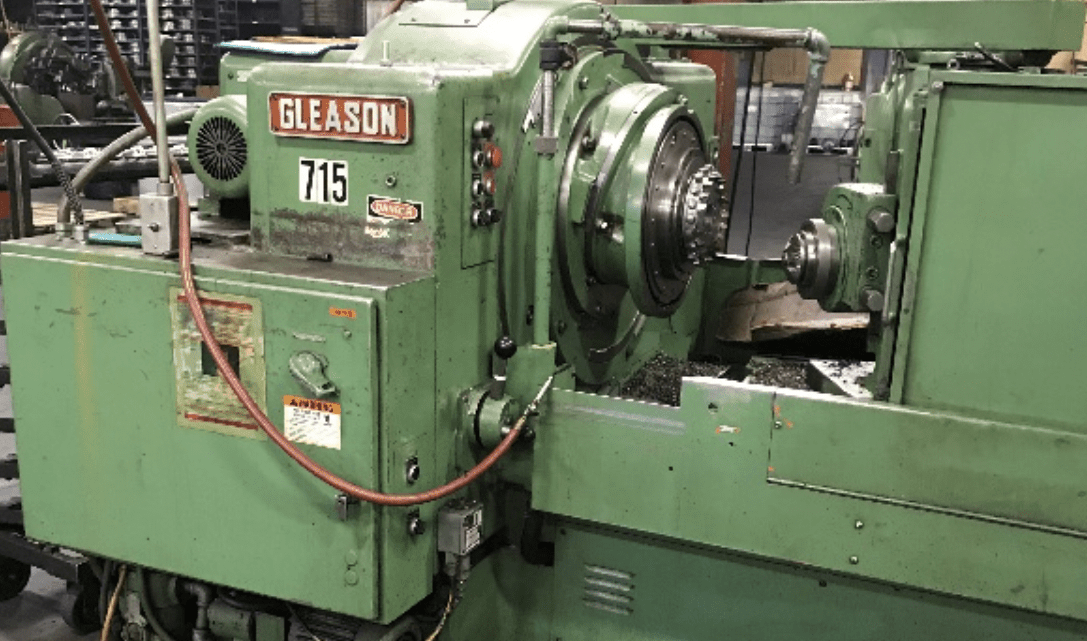
What Should I Pay Attention To When Buying a Second-Hand / used Gleason 116 Hypoid?
If you’re thinking of buying a Gleason 116 Hypoid (Spiral Bevel / Hypoid Gear Generator), that’s a serious and specialized machine. There are many points to check because small wear or misalignment leads to bad gear tooth patterns, excessive noise, or large repair costs. Below is a detailed guide of what to examine, what to ask, and what to watch out for.
What a Gleason 116 Hypoid Generator Does (Baseline Specs)
Having a clear idea of what this machine should be capable of will help you see whether the used one is still up to spec.
Here are some typical capabilities and features:
- It can generate hypoid, spiral bevel, and zerol bevel gears up to ~18-inch (~457 mm) pitch diameter.
- Cone distance (distance from work center to cutter spindle, angle settings) can often go from negative offsets to positive, allowing a range of offset, work head angles, etc.
- It uses change gears, fixture tooling, work heads, cutter arbors, etc. These setups are heavy, precise, and specialized.
Knowing this, you can compare what the seller claims vs what the machine still offers.
What to Inspect / Test
Here’s what you must check, preferably in person, to determine condition and the likelihood of future cost / downtime.
| Area | What to Examine / Test | Why It Matters |
|---|---|---|
| Mechanical condition & alignment | • Check the alignment of the work-head, cutter spindle, and the fixture. Use test gauges / indicators to see if the gear generator is true over the full range of travel. • Test for wear in the guideways, mating surfaces, columns, slides. • Inspect spindle taper, work head taper, arbor fittings for wear, gouges, corrosion. • Check backlash in all drive systems (gearboxes, indexing cams, etc.). | If any wear or misalignment exists, tooth geometry will be off; hypoid and bevel gears are very sensitive to slight errors. Backlash or worn taper reduces precision, increases vibration and noise. |
| Spindle / Cutter & Arbor | • Run the spindle / arbor: check run-out (radial / axial) using test‐bar or dial indicator. • Listen for bearing noise. Feel if there is vibration. • Check if arbor mountings, cutter holders are tight and true. • Check overloads / cooling (if available for spindle) ; is the spindle still rigid under load? | Worn spindle bearings or arbor mis-fit will degrade finish and accuracy. Because cutters are heavy and precision is high, the arbor and spindle need to be in excellent shape. |
| Change Gears, Fixtures, Tooling | • All required change gears should be present, correctly indexed, and without excessive wear. • Fixtures (work holding devices) should be straight, clean, secure. • Cutter arbors, cutter holders, cutter‐tooth sets: condition, sharpness, availability. • Manuals, setup drawings / summaries if available. | These are often expensive to replace or refurbish; missing or worn tooling/setup means extra cost. Also, setups affect speed of changeover & precision. |
| Cams / Indexing & Motion Mechanisms | • The cam / indexing systems (for generation / finishing cycles) should move smoothly. • Check whether the machine has any looseness or slop in cam followers, guides. • Check hydraulic / pneumatic clamping (if used) and whether job clamp / unclamp works correctly. • All motion surfaces should be lubricated properly and free from corrosion or metal chips. | To generate correct tooth surfaces, the motion needs to be precise and smoothly controlled. Any slop or vibration will produce errors in tooth contact patterns. |
| Control / Summaries / Settings / Documentation | • Check whether the machine has the correct setup summaries (offsets, angles, etc.), and whether these match expected values for your gear specs. • Manuals (operation, maintenance), spare parts lists. • Calibration or test reports, if any. • Verify whether any electrical / control parts are aging: wiring, sensors, limit switches. | Without proper documentation and correct setup data, recalibrating or re-setting for new gear jobs is much harder. Aging electrical parts can fail unexpectedly. |
| Operational Test | • If possible, run a test job: cut a bevel/hypoid gear, check tooth profile, check noise / backlash, measure surface finish. • Run through full range: different gear pitches, diameters, offsets. • Check how the generator behaves under load: does temperature rise, any excess vibration, any drop in accuracy. • Check whether it holds pattern / accuracy across the specified cone distances. | Seeing actual production behavior under real conditions tells you more than just static inspection; many problems only manifest under load. |
| Wear & Maintenance History | • Ask for records of major overhauls (spindle bearing replacement, repairs to guideways, cam restorer work). • How often lubricants / oils were changed; whether coolant / chips were cleaned frequently. • Whether the machine was used in harsh conditions (e.g. humid, dusty, or not temperature-controlled). • Whether any crashes or incidents (tool collisions, overloaded jobs) occurred. | Maintenance is key. Neglected machines may look okay, but suffer internal damage (wear, misalignment). Previous abuse can reduce life drastically. |
| Parts Availability & Support | • Are spare parts for cutters, arbors, change gears, bearings, etc., still available? • Are consumables (cutters, insert blades) in production / obtainable? • Is there technical support, and are there technicians / service people familiar with Gleason 116 in your region? | Even if the machine is good, if you can’t get parts or service, downtime will cost you more in the long run. |
| Safety, Utilities, Size & Transport | • Is the machine base solid, free of cracks, properly leveled? • Does the machine require special foundation or mounting? • What is power requirement, coolant / lubrication systems condition? • Transport: this is large, precise, heavy. Moving it may require disassembly, rigging, re-alignment. • Safety guards, emergency stops, guards for rotating cutters, chip control. | Correct installation and utilities are essential for safe, precise operation. Transport & installation can add a lot to cost; need to factor that in. |
Red Flags to Watch Out For
These issues are often seen with older, used Gleason 116s or similar bevel/hypoid gear generators:
- Worn spindle bearings causing chatter or poor finish.
- Excessive wear or scoring on guideways, especially where the work head moves; also corrosion from chips / coolant splash.
- Missing or damaged change gears or tooling — sometimes major tooling is missing or has been cannibalized.
- Difficulty in obtaining accurate summaries / setup for rare gear pairs; older machines might have lost documentation.
- Wear or damage to the arbor taper, cutter holding surfaces — often from misuse.
- Hydraulic or mechanical clamping that no longer holds properly or leaks.
- Excessive backlash or looseness in cams, gear trains or indexing mechanisms.
- Electrical / sensor failures (limit switches, angle sensors) or aged wiring.
- Poor lubrication or signs of neglect: dried up lubricant, rust, chips lodging in lubrication paths.
- Misalignment of work head or cutter head, which may produce poor gear tooth contact patterns (leading to noise or premature failure of gears made).
Questions to Ask the Seller
Here are some good questions to get answers / documentation before or during inspection:
- What is the machine’s serial number and manufacture date?
- What gear types / sizes has it been used on (how often, what kind of pitches, what offsets, etc.)?
- Can I see maintenance / service history: spindle bearings replaced, guideway work, lubrication schedule, coolant changes?
- Are all change gears, cutter arbors, fixtures included and in good condition?
- Has the machine had any crashes / collisions / over-loads or any repair?
- Does it still produce known gear jobs / any test cuts? Can I inspect or get a sample piece made?
- What parts are currently worn and likely to need replacement? (Spindle, bearings, arbor, cam followers, gears in transmission etc.)
- Are there original manuals, summaries (setup sheets), parts-list, drawings?
- What are the power, utilities, foundation requirements? What condition is the machine in now (is it under power)?
- What is transport cost, installation / alignment cost? Will the seller assist or allow inspection under operation?