21/09/2025
What Should I Pay Attention To When Buying a Second-Hand / used Akira Seiki JR?
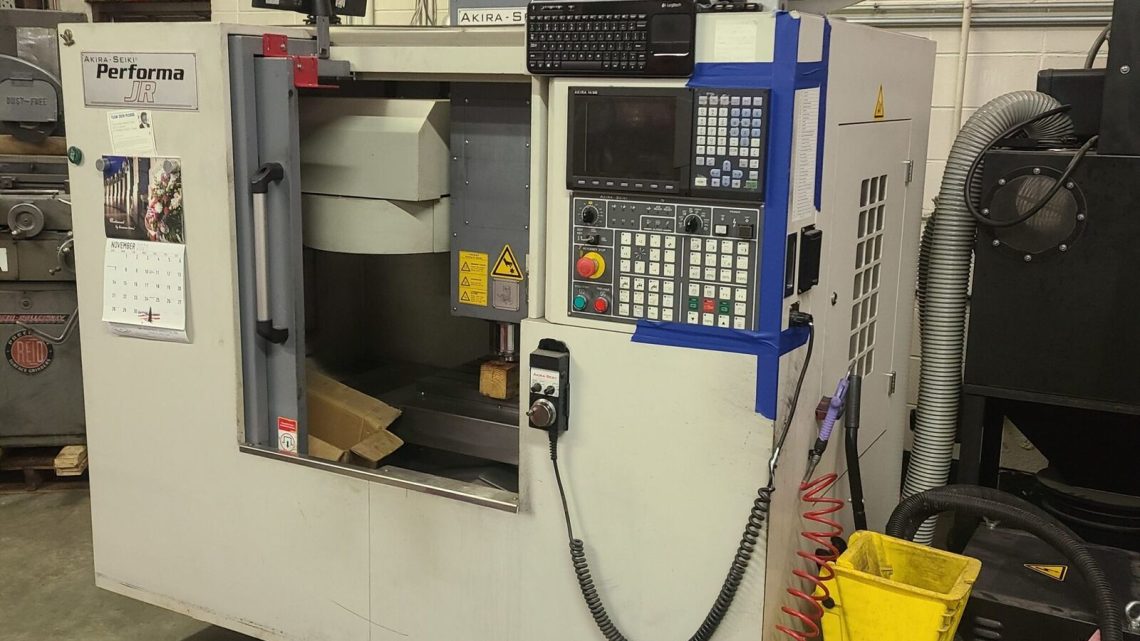
Here are many things to check when buying a second-hand Akira Seiki JR (or similar Akira Seiki VMC / machining centre) so you make a good investment and avoid surprise repair costs.
What to Know Up Front
These are the typical specs or features of the Akira Seiki JR machines (and what you should have in mind):
- JR is a vertical machining center (VMC), often with Mitsubishi / Akira-Mits control, often CAT-40 spindle taper.
- Spindle speeds can vary (6000-9000 RPM or more) depending on model.
- Travel ranges (X/Y/Z axes) differ by year/model; check that the travel suits your part sizes.
Key Areas to Inspect
Here are what you should inspect and test when evaluating a used Akira Seiki JR.
- Spindle Condition
- Test spindle run-out (radial & axial) with a test bar or dial indicator.
- Listen for bearing noise when spindle is turned by hand (if possible) or under low power.
- Inspect the spindle taper for wear, nicks, corrosion. A worn taper reduces accuracy and tool life.
- Check drawbar mechanism, grippers, and retention system. These parts tend to wear. Northland Tool notes that worn tool-change parts (grippers, drawbars, Belleville washers etc.) cause trouble.
- Tool Changer / Tool Magazine
- If ATC (Automatic Tool Changer) exists, test that it works smoothly, without hangups.
- Look for damage in the tool changer arms, slots.
- Check for parameter issues: sometimes tool change problems occur if control parameters are lost.
- Accuracy & Movement of Axes
- Move each axis through full travel; check for smooth motion, no binding, sticking, or backlash beyond acceptable limits.
- Check ways and guide rails for wear, pits, rust. Vertical machines often suffer from chips accumulating or coolant damage on columns or ways.
- Measure squareness of table vs. spindle, and whether axes are properly aligned.
- Control System & Electronics
- Is the control (CNC / PLC) original? Are there upgrades / modifications?
- Check all control functions: look for error codes, test override functions, offsets, parameter storage.
- Check whether spare parts & support are still available for that control version.
- Inspect wiring, connectors, circuit boards for signs of overheating, corrosion, or damage.
- Hydraulics / Coolant / Lubrication
- Coolant system: pump operation, coolant cleanliness, hoses, leaks, coolant tank condition.
- Lubrication system (way lube, spindle, axis) should be functional; check oil levels, condition of lubricants.
- Cleanliness: chips, metal dust etc. not properly cleaned can cause damage.
- Spindle Motor and Drive / Power Electronics
- Test spindle under running load if possible: listen for unusual noise, vibration.
- Look at motor drive electronics, VFD or servo drives: fan condition, heat dissipation, cooling, indicator lights.
- Power supply compatibility: voltage, phases, frequency.
- Overall Structure and finishing
- Machine base, column, table – check for cracks, distortions, rust.
- Table surface: flatness, wear, straightness; T-slots condition.
- Enclosure condition: doors, guards, chip removal features.
- Maintenance History & Usage
- Ask for usage hours, major past repairs.
- Was it used in harsh environment (coolant mist, high humidity, dust)?
- Has the spindle or axes ever had a crash? Evidence of crashes (collision damage) is a big red flag.
- Safety Features
- Emergency stop works.
- Door interlocks, protective guards in place.
- Are there any safety upgrades required by regulation in your region?
- Test Cut / Trial Job
- If possible, run a test job under load, make parts you’d actually produce, then measure tolerances, inspect surface finish, tool life etc.
- Check repeatability: move to a position, retract, return, see how close you come.
Common Weak Points & Known Issues
From sources and user reports, some things that often go wrong with Akira Seiki machines:
- Spindle bearings fail or degrade, often due to contamination or wear. Rear radial bearings sometimes wear to “catastrophic failure.”
- Tool changer parts (grippers, drawbar, retention nuts etc.) wear out. These are important for accuracy, tooling costs.
- Control parameter loss (especially after power loss, control module issues) can mess up operations like tool change, limits.
- Limit switches can get dirty / misaligned; along with belts (on some older models), these degrade performance. Users recommend keeping limit switches clean.
- Taper of spindle and drawbar retention nut can be damaged from misuse / crashes.
Questions to Ask the Seller
To uncover important information, you can ask:
- What are the total run hours, and what kind of jobs has it been doing (heavy roughing / light finishing)?
- When were the spindle bearings last replaced, if ever?
- When was the last full maintenance done (lubrication, coolant change, etc.)?
- Has it had any collisions / crashes (spindle vs table, tool change accidents)?
- Are there any known control / parameter issues? Has firmware or control system been modified?
- Which spare parts are available locally (in your country) and what costs are like for major parts (spindle, motor, ATC etc.)?
- Is the machine under power now so you can test it? Can you run a test part?