19/08/2025
What is Wood Processing Equipment LOGS Feeding Line?
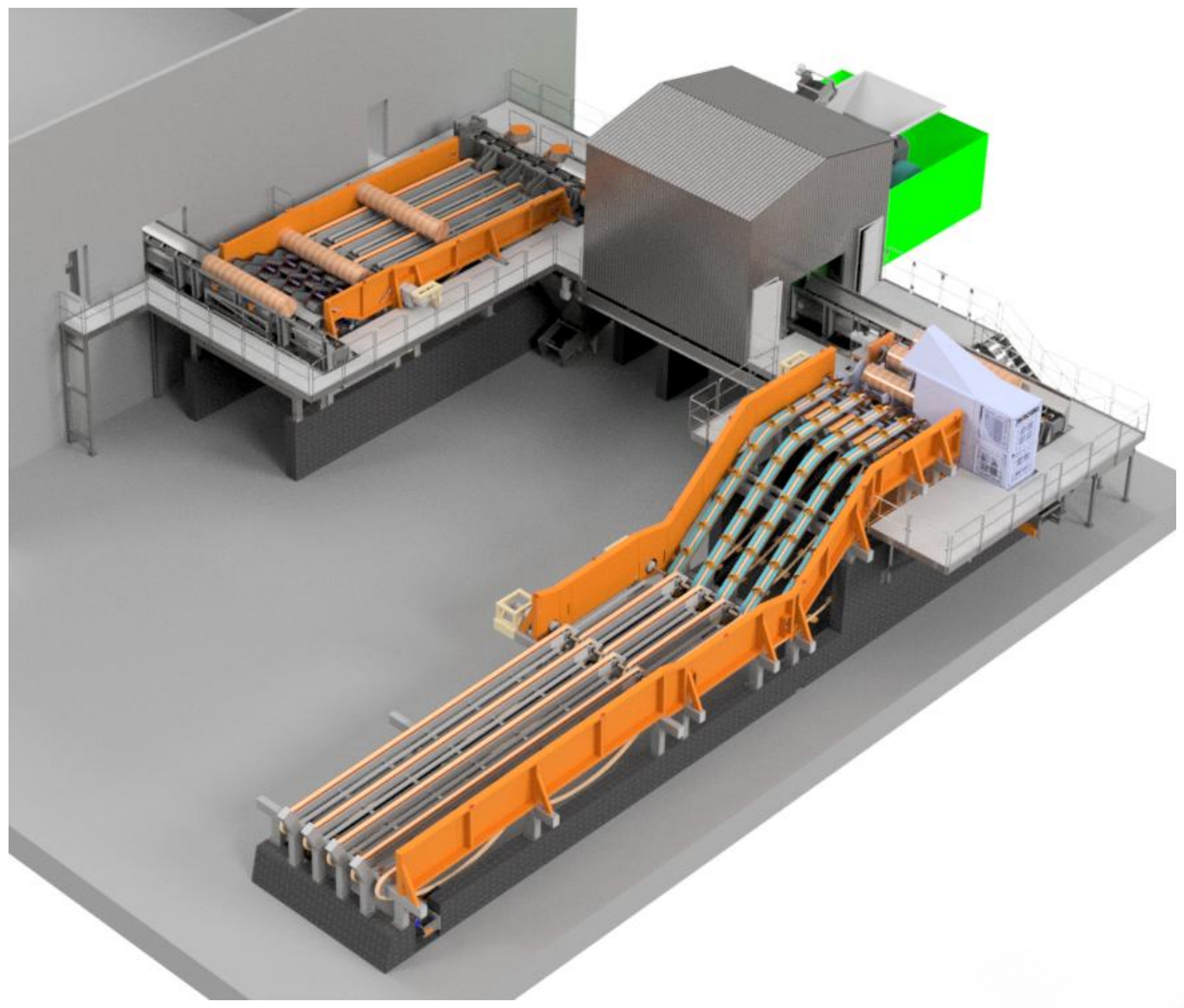
What is a LOGS Feeding Line?
A logs feeding line is the front-end material-handling system of a sawmill or veneer/plywood plant that meters whole logs from bulk storage to the first processing machine (debarker, chipper-canter, bandsaw, veneer lathe, etc.). It converts a random, stacked flow of timber into a single, correctly oriented, centered, and paced stream at a defined pitch and speed.
Core Functional Modules
- Infeed deck / unscrambler
- Heavy welded steel frame with chain/slat/bunk decks.
- Hydraulically or electrically driven step feeders, singulators, and kick-off arms separate intertwined logs.
- Anti-rollback dogs and hold-downs control rolling.
- Primary conveyors
- Sharp chain (spiked chain) or V-chain troughs for positive traction on bark.
- Typical chain sizes: 81X/81XH/81XHH with hardened wear rails (AR400/Hardox).
- Speed range: ~40–120 m/min (variable by VFD).
- Metering & pitch control
- Lugged chains, stop-and-go indexers, or starwheels establish pitch (center-to-center distance between logs).
- Example throughput:
throughput ≈ line speed / pitch.
If speed = 85 m/min and pitch ≈ 3.5 m → ≈ 24 logs/min.
- Measuring, centering, and rotation
- 3D laser scanners (triangulation) capture diameter, sweep/oval, and length.
- Centering rolls and rotary positioners align the log axis; servo/closed-loop drives set rotation for best sawing pattern.
- Conditioning & inspection (option-dependent)
- Metal detector (protects blades/chippers).
- Debarker/butt reducer upstream of the sawline where required.
- Wash/de-ice sprays, steam thaw tunnels in cold climates.
- Transfer to primary machine
- Skewed rollcases or chain transfers deliver the log on centerline, with programmable acceleration ramps to avoid bounce.
- Waste handling
- Bark, ice, and debris fall to belt or scraper conveyors leading to bins or chippers; chutes are lined with wear plate.
- Safety & guarding
- Fenced perimeters, interlocked gates, e-stops, pull cords; safety PLC monitoring.
Controls & Automation
- PLC + HMI with recipe sets (species, diameter classes, target products).
- VFDs/servo drives synchronize chains, rolls, and indexers; master speed reference with line encoders.
- Sensors: photoeyes, proxes, load cells/torque limits, laser distance, and full 3D scanners on optimized lines.
- Data hooks for OEE, alarms, energy use, and traceability.
Mechanical Design & Utilities
- Construction: heavy structural steel, hot-dip galvanized or epoxy-coated; contact/wear parts in AR400/Hardox; spherical-roller bearings with auto-lubrication.
- Drives: electric (common) or hydraulic (for high-shock actuators).
- Power: typically 60–120 kW installed for a mid/large line (motors + hydraulics + auxiliaries).
- Environment: −10 to +30 °C is standard; add cold-weather packages (low-temp gear oils, heaters) below this.
Performance Parameters (typical)
- Log envelope: length 2.5–6.0 m; diameter 120–600 mm; allowable sweep/curvature ≈ 5%.
- Throughput: 15–40 logs/min depending on species, diameter mix, and pitch.
- Working height: 3–5 m to clear waste conveyors and give service access.
Integration Points
- Upstream: log yard, crane or wheel-loader feeds the deck.
- Downstream: debarker → chipper-canter/bandsaw or veneer lathe.
- Controls integrate via fieldbus (Profinet/EtherNet-IP) with the mill’s optimizer; scanner data can drive automatic rotation and cut-pattern optimization.
Engineering/Selection Checklist
- Define diameter and length distributions and max sweep; this sets deck geometry, chain selection, and centering force.
- Specify target logs/min and allowable giveaway/pitch (bigger pitch = lower jam risk but less throughput).
- Decide on metal detection, debarking upstream vs. downstream, and cold-weather options.
- Require maintenance access (walkways, lifting points), auto-lube, and guarded clean-outs above waste conveyors.
- Include FAT/SAT with your real log mix to validate singulation, scanner accuracy, and jam-recovery logic.
Bottom line
A logs feeding line is a high-inertia, precisely controlled conveying and singulation system that turns random piles of timber into a scanned, centered, and consistently spaced flow—at the right height and speed—so the downstream sawline runs safely, accurately, and at peak OEE.