05/07/2025
What is Ultrasonic Aluminum Metal Melting Equipment?
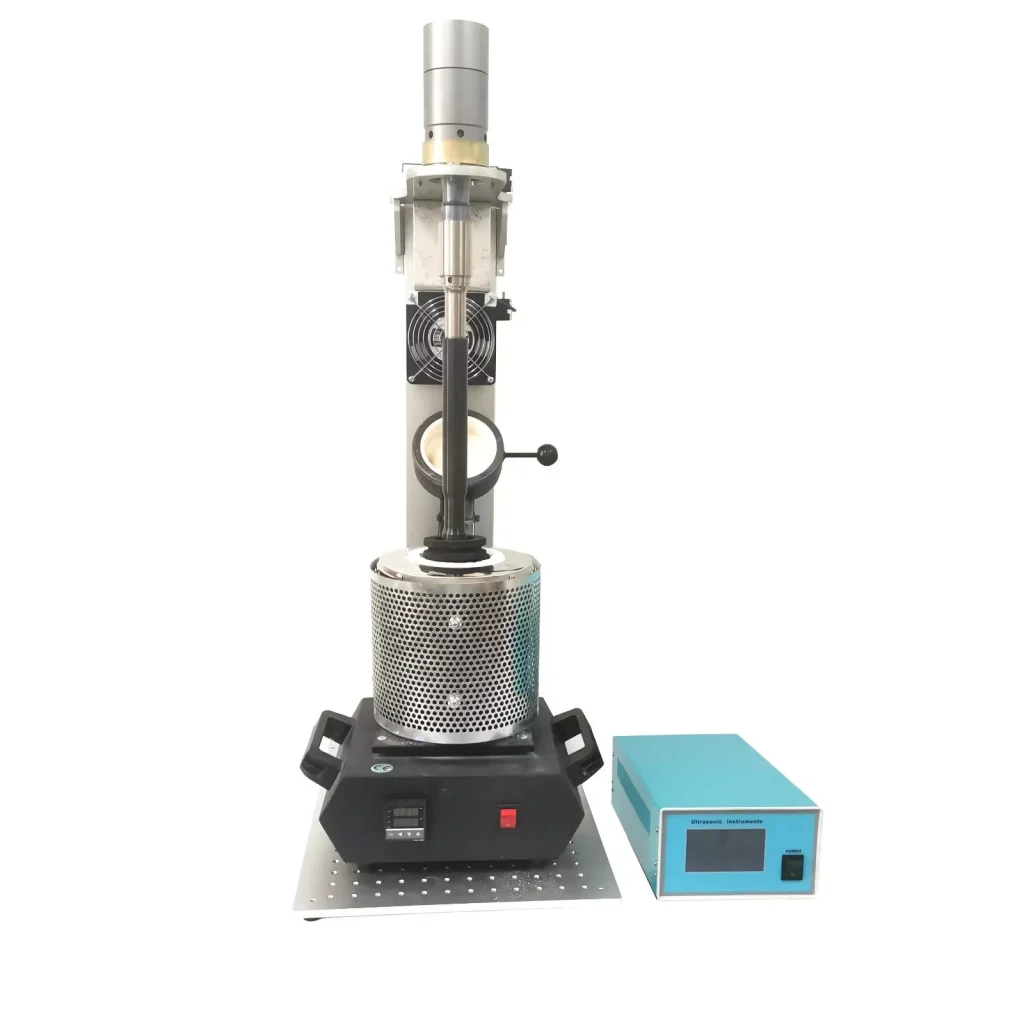
Ultrasonic Aluminum Metal Melting Equipment is a high-tech industrial device that uses ultrasonic energy to assist in melting, refining, or processing aluminum and aluminum alloys. This technology enhances traditional melting processes by improving efficiency, reducing oxidation, and promoting uniform mixing.
🔧 Technical Explanation
🔹 1. Core Technology: Ultrasonic Vibration
- The equipment integrates ultrasonic transducers and sonotrodes (horns) into the melting chamber.
- These devices generate high-frequency mechanical vibrations—typically in the range of 20 kHz to 40 kHz.
- When applied to molten aluminum, these vibrations agitate the liquid metal at a microscopic level.
🔹 2. Key Functions
| Function | Technical Impact |
|---|---|
| Degassing | Ultrasonic waves help release hydrogen gas and other inclusions by forming cavitation bubbles that rise to the surface. |
| Grain Refinement | Vibration disrupts dendritic growth, resulting in finer and more uniform grain structures during solidification. |
| Homogenization | Promotes better alloying and mixing by uniformly distributing alloying elements or nanoparticles. |
| Filtration Enhancement | Improves filtration of non-metallic inclusions in melt by breaking up agglomerates. |
🔹 3. Key Components
- Melting Chamber or Furnace: Where aluminum is melted—can be induction or resistance-based.
- Ultrasonic Generator: Converts electrical power to high-frequency signal.
- Ultrasonic Transducer: Converts electrical signal into mechanical vibration.
- Sonotrode: Titanium or ceramic probe inserted into molten metal to transmit ultrasonic waves.
- Temperature Control System: Ensures the aluminum remains within the optimal melting range (typically ~660°C).
⚙️ Applications
- Aluminum die casting
- Aerospace and automotive aluminum alloy production
- Aluminum recycling and refining
- Nano-composite material production (by dispersing nano particles in molten aluminum)
✅ Advantages Over Traditional Methods
- Lower gas porosity in castings
- Improved microstructure and mechanical strength
- Reduced use of flux and refining agents
- Enhanced material properties (especially for high-performance alloys)
🧪 Example Use Case
In aluminum alloy casting, ultrasonic treatment before pouring leads to:
- Better fluidity of molten metal
- Lower rejection rate due to reduced defects
- Higher consistency in mechanical properties across the part