What is Solder Paste Inspection with 3D imaging?
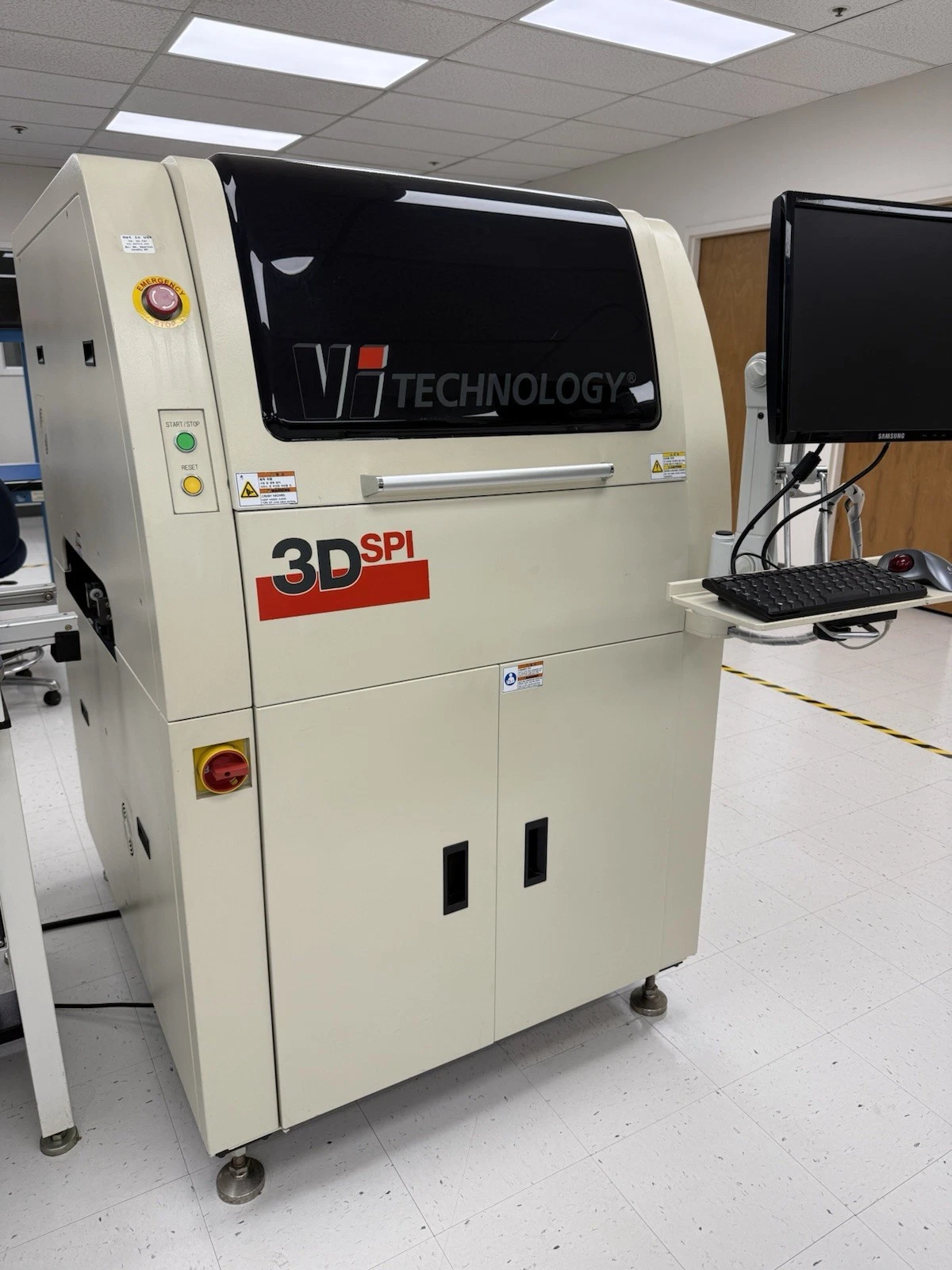
Solder Paste Inspection (SPI) with 3D imaging is a quality control process used in electronics manufacturing to ensure the accuracy and consistency of solder paste deposits on printed circuit boards (PCBs) before component placement and reflow soldering. It leverages advanced 3D imaging technologies to measure and analyze the physical characteristics of solder paste deposits with high precision. Below is a technical explanation of the process:What is Solder Paste Inspection?Solder paste, a mixture of tiny solder particles and flux, is applied to PCB pads to create electrical and mechanical connections between components and the board during soldering. SPI verifies that the solder paste is applied correctly in terms of volume, area, height, shape, and alignment. Incorrect solder paste application can lead to defects like insufficient solder joints, bridges, or tombstoning, affecting the reliability of the final product.Traditional 2D SPI systems use cameras to capture top-down images and analyze solder paste based on grayscale or color contrast. However, these systems are limited in measuring height and volume, which are critical for ensuring robust solder joints. 3D SPI overcomes these limitations by providing detailed three-dimensional data.How 3D Imaging Works in SPI3D SPI systems use advanced optical and computational techniques to reconstruct the three-dimensional geometry of solder paste deposits. The key components and processes include:
- Imaging Technology:
- Structured Light Projection: Many 3D SPI systems use structured light (e.g., fringe patterns or laser stripes) projected onto the PCB. A high-resolution camera captures the distortion of these patterns caused by the height and shape of the solder paste. By analyzing the distortion using triangulation principles, the system calculates the 3D structure.
- Laser Scanning: Some systems employ laser-based triangulation, where a laser beam scans the surface, and a camera detects the reflected light to measure height and position.
- Confocal Microscopy: Less common but used in high-precision systems, this method uses a pinhole to filter light, capturing sharp images at different focal planes to build a 3D model.
- Phase Shift Interferometry: This technique projects sinusoidal patterns and analyzes phase shifts to create high-resolution 3D maps of the solder paste.
- Data Acquisition:
- The system captures multiple images or scans at different angles or phases to generate a point cloud or height map of the solder paste deposits.
- High-speed cameras and advanced optics ensure rapid data collection, critical for high-throughput production lines.
- Data Processing:
- Algorithms process the raw data to reconstruct a 3D model of each solder paste deposit. Techniques like triangulation, phase unwrapping, or stereo vision are used to calculate spatial coordinates (x, y, z).
- The system measures key parameters:
- Volume: The total amount of solder paste, critical for ensuring sufficient material for a reliable joint.
- Height: The peak height of the deposit, which affects joint strength.
- Area: The footprint of the solder paste on the pad.
- Shape: The profile and uniformity of the deposit, identifying irregularities like slumping or bridging.
- Position/Offset: Alignment of the deposit relative to the pad, ensuring it matches the PCB design.
- Defect Detection:
- The system compares measured parameters against predefined tolerances (based on design specifications or industry standards like IPC-A-610).
- Common defects detected include:
- Insufficient or excessive solder paste volume.
- Misalignment or offset deposits.
- Bridging between pads.
- Irregular shapes or voids.
- Statistical process control (SPC) tools analyze trends across multiple boards to identify systemic issues in the stencil printing process.
- Output and Feedback:
- The system generates detailed reports, including 3D visualizations, measurement data, and pass/fail results.
- Real-time feedback is provided to the production line, allowing operators to adjust the stencil printer (e.g., stencil alignment, pressure, or cleaning) to correct issues.
- Some advanced systems integrate with automated optical inspection (AOI) and reflow ovens for closed-loop process control.
Key Advantages of 3D SPI Over 2D SPI
- Height and Volume Measurement: 3D SPI accurately measures the z-axis (height), enabling precise volume calculations, which 2D systems cannot do reliably.
- Improved Accuracy: 3D imaging reduces false positives/negatives by distinguishing between actual defects and optical artifacts (e.g., shadows or reflections).
- Robust Defect Detection: Detects complex defects like slumping or uneven deposits that 2D systems may miss.
- Process Optimization: Provides detailed data for fine-tuning stencil printing parameters, reducing defects and improving yield.
Technical Specifications (Typical)
- Resolution: Sub-micron z-axis resolution (e.g., 1–5 µm) and x-y resolution (e.g., 10–20 µm).
- Speed: Capable of inspecting thousands of pads per second, suitable for high-speed SMT lines.
- Field of View: Adjustable, typically covering entire PCBs (e.g., 50 mm x 50 mm to 510 mm x 510 mm).
- Software: Advanced algorithms for 3D reconstruction, defect classification, and SPC analysis.
- Lighting: Multi-angle, multi-color LED or laser sources to enhance contrast and accuracy.
Applications
- Surface Mount Technology (SMT): Ensures quality in high-volume PCB assembly for consumer electronics, automotive, and medical devices.
- Miniaturization: Critical for modern PCBs with fine-pitch components (e.g., 01005 chips or 0.4 mm BGA packages), where precise solder paste application is essential.
- High-Reliability Industries: Aerospace, defense, and medical, where solder joint reliability is non-negotiable.
Challenges
- Cost: 3D SPI systems are more expensive than 2D systems due to advanced optics and processing requirements.
- Complexity: Requires skilled operators and calibration to ensure accuracy.
- Speed vs. Accuracy Trade-off: High-resolution 3D imaging can slow down inspection in ultra-high-speed lines unless optimized.
Conclusion3D SPI with imaging is a critical technology in modern electronics manufacturing, providing precise, non-contact measurement of solder paste deposits to ensure high-quality PCB assembly. By leveraging structured light, laser scanning, or confocal techniques, it offers superior defect detection and process control compared to 2D systems, making it indispensable for high-reliability and fine-pitch applications.