What is 1600 Double Shaft Shredder Machine?
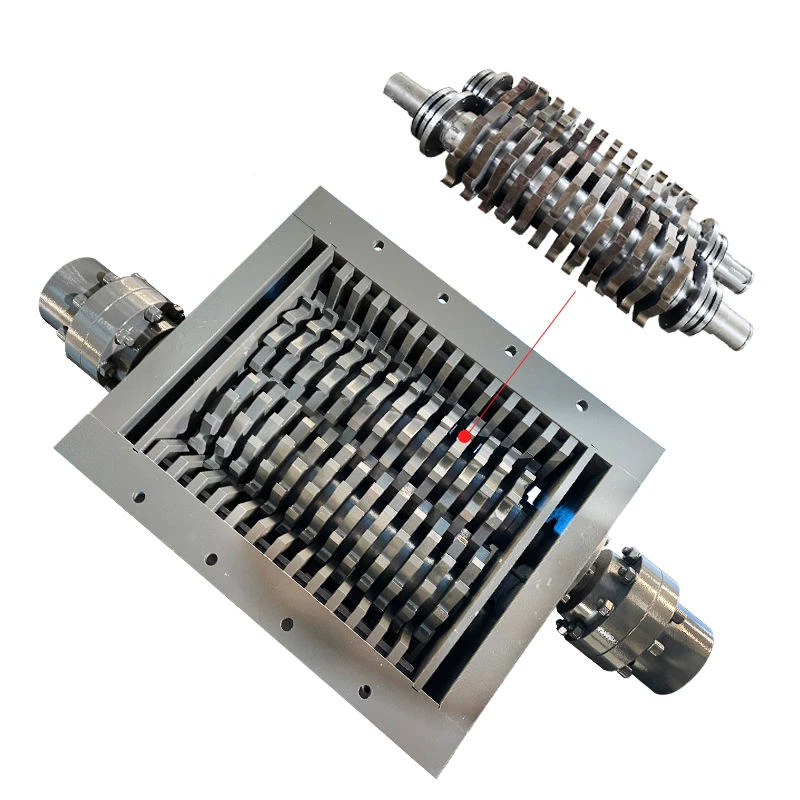
A 1600 double shaft shredder machine refers to a heavy-duty industrial shredder model typically characterized by a working width (or rotor length) of approximately 1600 mm (about 5.25 feet). This dimension indicates the machine’s capacity to process materials across a wider feed area, making it suitable for high-volume applications in waste management, recycling, and material processing industries. The “double shaft” (also known as twin-shaft or dual-shaft) design is a core feature, distinguishing it from single-shaft shredders. These machines are engineered for primary size reduction of bulky, tough, or heterogeneous materials, such as end-of-life tires (ELTs), pallets, scrap metal, plastics, wood, electronic waste, and municipal solid waste (MSW). Specific models like the Forrec TX 1600 are optimized for ELT processing, achieving throughputs of at least 5 tons per hour while emphasizing clean cuts and low operating costs.Double shaft shredders operate on the principle of low-speed, high-torque shearing, using two counter-rotating shafts equipped with interlocking blades to tear, cut, and shear materials into strips or chips. Unlike high-speed grinders, they generate less heat, dust, and noise, making them ideal for processing durable or contaminated waste without excessive wear or fire risks. The “1600” designation often appears in models from manufacturers like Forrec, Vecoplan, or similar, where it denotes the chamber or rotor width, enabling efficient handling of larger input volumes compared to smaller models (e.g., 1000 mm width).Technical Explanation1. Core Design and Components
- Shafts and Rotors: The machine features two parallel, counter-rotating shafts (typically made from high-strength alloy steel for durability). Each shaft is fitted with multiple cutter disks or blades, arranged in a staggered or interlocking pattern to create a scissor-like shearing action. For a 1600 mm model, the rotors can span up to 1600 mm in length, allowing for a feed opening wide enough to accommodate bulky items (e.g., whole tires or pallets up to 1.5–2 meters in diameter/width). Blades are often modular, with replaceable inserts (e.g., carbide-tipped for wear resistance), and can be customized for specific materials—such as hooked blades for tough fibers or flat edges for metals.
- Drive System:
- Dual Drive Configuration: Many models use two independent electric motors (e.g., 2 x 9–15 kW or higher, depending on the variant), each connected to a gearbox for the respective shaft. This provides high torque (often 10,000–50,000 Nm per shaft) at low speeds (20–50 RPM), ensuring the machine can handle jams without stalling. Frequency converters allow variable speed control for optimizing throughput.
- Single Drive Option: Some compact versions (e.g., Harden TS series) use a single motor with a central gearbox to synchronize both shafts, reducing complexity but potentially limiting torque distribution.
- Hydraulic Variants: Heavy-duty models (e.g., Harden TDH series) may incorporate hydraulic drives for even higher torque in demanding applications, though electric is more common for energy efficiency.
- Chamber and Feeding Mechanism: The shredding chamber is a robust, enclosed hopper (often 1600 mm wide x 1000–2000 mm long) made from high-tensile steel to withstand impacts. Material is gravity-fed or pushed via an optional hydraulic ram/pusher for hollow or oversized items. No screen is typically used in double shaft designs (unlike single-shaft shredders), allowing variable output sizes without restricting flow.
- Safety and Control Features: Equipped with overload protection (auto-reverse to clear jams), emergency stops, and interlocks. PLC-based controls monitor torque, temperature, and vibration, with options for remote monitoring via systems like Vecoplan’s Smart Center.
2. Operating Principle
- Shearing Mechanism: The two shafts rotate in opposite directions at low speeds, creating a “hook-and-pull” action. Blades on one shaft intermesh with those on the other, gripping and tearing material progressively. For example, in the Forrec TX 1600, the blade system ensures “precise characteristics in terms of production and clean cut,” producing uniform strips (25–76 mm wide, depending on blade spacing) without excessive pulverization.
- Process Flow:
- Material enters the hopper and contacts the rotating blades.
- The counter-rotation shears the material into smaller pieces via compressive and tensile forces.
- Output falls through the bottom discharge, often directly to a conveyor for secondary processing (e.g., combined with a single-shaft fine shredder like Vecoplan VHZ 1600 to boost throughput by 50%).
- Torque sensors detect overloads, reversing shafts if needed to prevent damage.
- Key Technical Parameters (Typical for 1600 mm Models):ParameterValue/RangeNotesRotor Length1600 mmDetermines feed width for bulky materials.Shaft Diameter200–400 mmLarger for heavier-duty models.Motor Power2 x 7.5–22 kW (total 15–44 kW)Scalable; e.g., Vecoplan VPC 1600 uses 2 x 9.2 kW.Torque per Shaft20,000–40,000 NmEnables processing of high-strength materials like tires.Rotation Speed20–50 RPMLow speed reduces energy use and wear.Throughput Capacity3–10 tons/hourVaries by material; e.g., 5+ tons/hour for ELTs in TX 1600.Blade Quantity20–40 per shaft (e.g., 2 x 16 heads)Modular for easy replacement.Output Size25–100 mm strips/chipsUniformity controlled by blade design.Weight5–15 tonsDepends on frame reinforcements.
3. Advantages and Applications
- Technical Advantages:
- High Torque Efficiency: The dual-shaft setup delivers superior torque compared to single-shaft models, excelling at initial breakdown of tough materials without a pusher ram or screen, which simplifies maintenance and reduces downtime.
- Versatility: Handles diverse, contaminated feeds (e.g., MSW, e-waste) with low energy consumption (e.g., via gearboxes for each shaft in Stokkermill D-HD series).
- Durability and Low Maintenance: Blades are interchangeable, and the low-speed operation minimizes heat buildup, extending component life. Features like integral speed reduction bearing pedestals (in Harden models) enhance reliability.
- Scalability: A 1600 mm model can integrate with downstream equipment for complete recycling lines, e.g., increasing output by 50% when paired with fine shredders.
- Applications:
- Waste Recycling: Primary shredding of ELTs (e.g., TX 1600 for clean tire chips), wood pallets (Vecoplan VPC 1600), plastics, and metals.
- Industrial Use: Volumetric reduction in manufacturing (e.g., scrap barrels) or energy recovery (e.g., RDF production from MSW).
- Limitations: Best for coarse shredding; finer particle sizes require secondary machines. Not ideal for very soft or fibrous materials without blade customization.
In summary, the 1600 double shaft shredder is a robust, torque-driven machine optimized for efficient, low-maintenance processing of large-scale waste streams. Its technical prowess lies in the counter-rotating shear system, which balances power, safety, and output quality for sustainable recycling operations.