What is Portable & Mobile Hardness Testing Device?
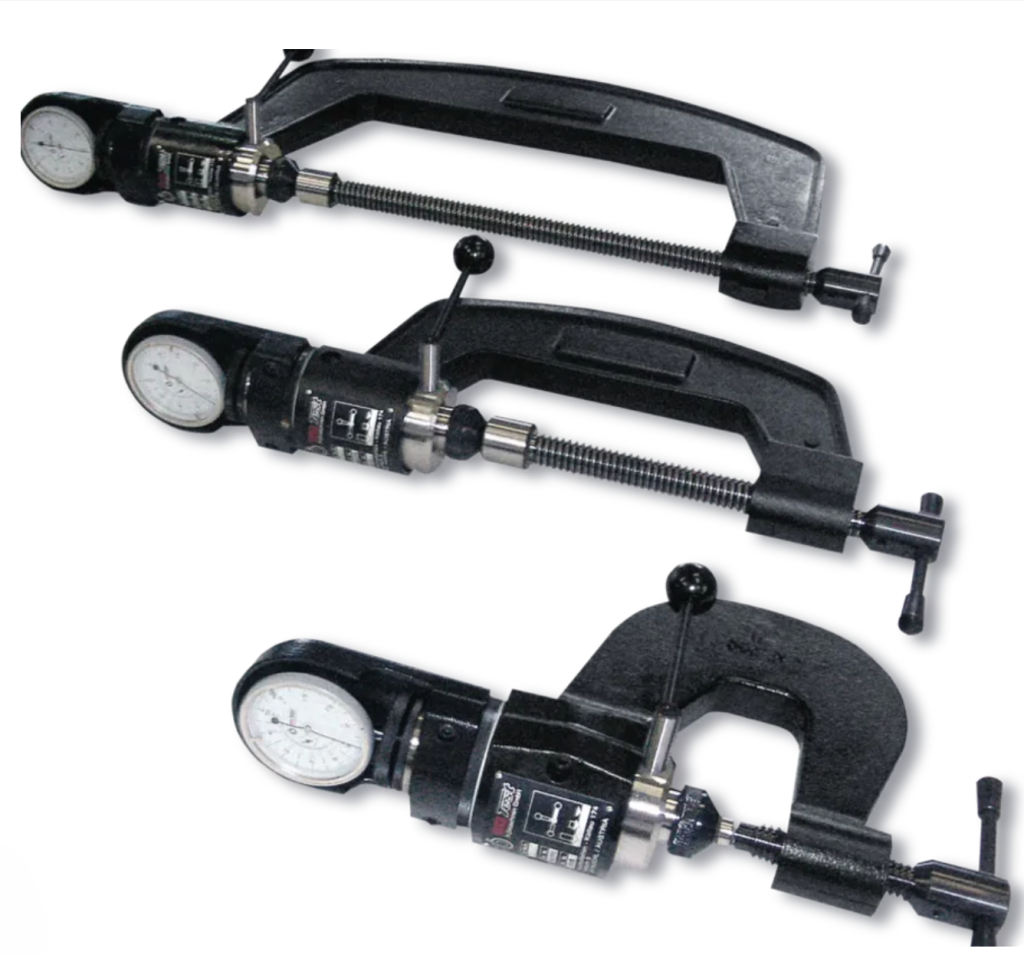
A Portable & Mobile Hardness Testing Device is a compact, lightweight instrument designed to measure the hardness of materials, primarily metals, in a non-destructive or minimally invasive manner. These devices are used in the metalworking and measuring sectors to assess material properties such as strength, wear resistance, and suitability for specific applications. They are particularly valuable for on-site testing, where large or immovable components cannot be easily transported to a laboratory.Below is a technical explanation tailored to the metalworking and measuring sector:What is Hardness Testing?Hardness is a material’s resistance to deformation, typically measured by indentation, scratching, or rebound. In metalworking, hardness testing helps evaluate material quality, heat treatment effectiveness, and compliance with standards (e.g., ASTM, ISO). Portable hardness testers enable this testing in field conditions, such as manufacturing floors, construction sites, or during maintenance inspections.Types of Portable & Mobile Hardness Testing DevicesPortable hardness testers employ various methods, each suited to specific applications in metalworking. The main types include:
- Leeb (Rebound) Hardness Testers:
- Principle: A spring-loaded impact body (tungsten carbide or diamond-tipped) is propelled against the test surface. The device measures the rebound velocity relative to the impact velocity, calculating hardness using the Leeb Hardness (HL) scale.
- Technical Details:
- Impact energy: Typically 11 N-mm (e.g., D-type impact device).
- Hardness scales: Convertible to Vickers (HV), Rockwell (HRB/HRC), Brinell (HB), or Shore (HS).
- Suitable for large, coarse-grained metals (e.g., steel, cast iron).
- Minimum surface preparation required; works on rough surfaces.
- Limitations: Less accurate for thin or small parts (<5 mm thickness) unless using specialized probes (e.g., G-type for heavier components).
- Applications: Forgings, heavy machinery, and large castings.
- Ultrasonic Contact Impedance (UCI) Testers:
- Principle: A diamond indenter vibrates at an ultrasonic frequency (typically 70 kHz) and is pressed into the material. The change in frequency due to contact impedance correlates with hardness.
- Technical Details:
- Load: Adjustable, typically 1–10 N (e.g., 1 kgf, 5 kgf).
- Hardness scales: Primarily Vickers (HV), convertible to other scales.
- High precision for thin or small parts (down to 1 mm thickness).
- Requires smooth surfaces (Ra < 1.6 µm for best accuracy).
- Calibration: Often uses reference blocks for specific materials.
- Applications: Hardened surfaces, thin coatings, small precision parts (e.g., gears, tools).
- Portable Rockwell Testers:
- Principle: Similar to benchtop Rockwell testers, these apply a minor load followed by a major load using a diamond or ball indenter, measuring indentation depth.
- Technical Details:
- Loads: Typically 15–150 kgf, adapted for portability (e.g., manual or motorized systems).
- Scales: HRA, HRB, HRC, etc.
- Requires stable positioning (often with a clamp or magnetic base).
- Surface preparation: Polished or ground surfaces (Ra < 0.8 µm).
- Applications: Quality control of heat-treated components, large metal structures.
- Brinell Optical Scanners:
- Principle: A portable device applies a static load (e.g., 3000 kgf for large parts) using a ball indenter, and an optical system (camera or scanner) measures the indentation diameter.
- Technical Details:
- Load application: Hydraulic or mechanical systems.
- Scales: Brinell (HB).
- Requires surface preparation for clear indentation visibility.
- Often paired with digital imaging for automated measurement.
- Applications: Heavy forgings, welds, and large-scale metal components.
Key Technical Features
- Portability: Devices weigh 0.5–5 kg, often battery-operated, with ergonomic designs for one-handed operation.
- Data Output: Digital displays with USB/Bluetooth connectivity for data logging and integration with quality control systems.
- Calibration: Devices are calibrated to standards (e.g., ASTM E18 for Rockwell, E140 for conversions) using certified test blocks.
- Material Versatility: Support for various metals (steel, aluminum, titanium, etc.) with adjustable settings for material-specific properties (e.g., Young’s modulus for UCI).
- Environmental Robustness: IP54–IP67 ratings for dust/moisture resistance, suitable for harsh industrial environments.
Advantages in Metalworking and Measuring
- On-Site Testing: Eliminates the need to cut or transport samples, critical for large components like pipelines, turbines, or aerospace parts.
- Non-Destructive: Minimal surface damage (especially with Leeb and UCI methods), preserving component integrity.
- Speed: Results in seconds, enabling rapid quality checks during production or maintenance.
- Versatility: Convertible hardness scales allow compliance with multiple standards (e.g., ISO 6506 for Brinell, ISO 6508 for Rockwell).
Limitations
- Surface Sensitivity: Most methods require specific surface finishes (e.g., UCI needs Ra < 1.6 µm).
- Material Constraints: Accuracy varies with material thickness, microstructure, or coating presence.
- Operator Skill: Proper probe alignment and calibration are critical for reliable results.
- Scale Conversion Errors: Conversions between scales (e.g., HL to HRC) can introduce inaccuracies, especially for non-ferrous metals.
Applications in Metalworking
- Quality Control: Verifying hardness of heat-treated parts (e.g., quenched steel, case-hardened gears).
- Maintenance: Assessing wear or fatigue in components like pipelines, rail tracks, or turbine blades.
- Weld Inspection: Checking hardness of weld zones and heat-affected zones (HAZ) to ensure structural integrity.
- Material Selection: Confirming material properties for specific applications (e.g., tool steel for cutting tools).
Example Devices
- Leeb: Equotip 550, Proceq Portable Hardness Tester.
- UCI: MIC 10 (Krautkramer), TIV Hardness Tester.
- Rockwell: PHR Series (Phase II), Hardmatic Portable.
- Brinell: TeleBrineller, KING Portable Brinell Tester.
Standards and Compliance
- ASTM E10 (Brinell), E18 (Rockwell), E110 (Leeb), ISO 6506–6508.
- Devices often include software for compliance with industry standards and traceability.