What is PIPE NOTCHER Machine?
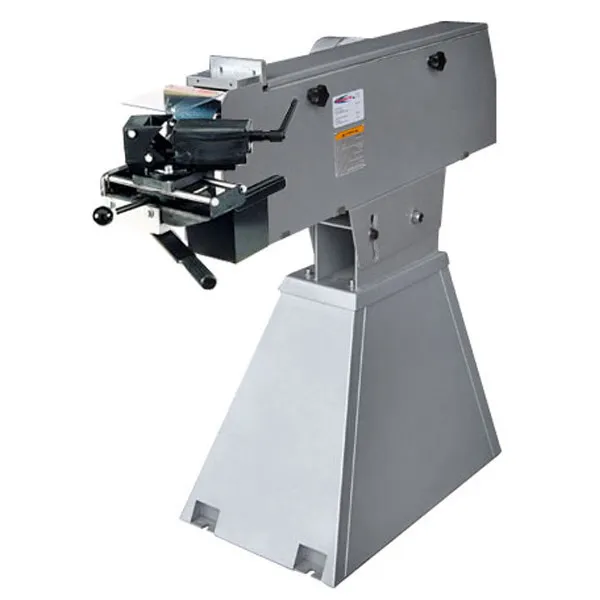
A pipe notcher machine, also commonly referred to as a tube notcher or tubing notcher, is a specialized fabrication tool designed to create precise, saddle-shaped or angled cutouts (notches) in the ends of pipes or tubes. This process, known as notching or coping, removes material from the outer edges of the pipe to allow for seamless, gap-free joints when connecting tubes of the same or different diameters at various angles (typically 0° to 60° or more). In the sheet metal sector, where pipes and tubes are often formed from sheet metal stock (e.g., via roll forming or bending), pipe notchers are essential for applications like structural frameworks, HVAC ducting, handrails, and automotive exhaust systems. Unlike general sheet metal notchers that focus on flat corners or edges, pipe notchers are optimized for cylindrical profiles, ensuring tight fits that minimize welding filler material, reduce distortion, and improve joint strength.The machine addresses a key challenge in sheet metal fabrication: joining curved surfaces without misalignment. Without notching, pipes would require excessive grinding or filler during welding, leading to weak joints and higher production times. Pipe notchers provide a cost-effective, repeatable solution that enhances precision and efficiency in high-volume or custom manufacturing environments.Technical Explanation for the Sheet Metal SectorIn the sheet metal industry, pipes and tubes are typically produced from materials like mild steel, stainless steel, aluminum, brass, titanium, or copper sheets that are rolled and welded into cylindrical forms. These materials range in thickness from 0.5 mm to several millimeters (e.g., 16-14 gauge for structural applications). Pipe notchers operate on principles of material removal through mechanical shearing, punching, abrasion, or milling, tailored to the ductility and hardness of sheet metal-derived tubes. The process ensures compliance with tolerances as tight as ±0.5 mm for joint fit-up, which is critical for load-bearing structures under standards like ASME or ISO for welding.Key Technical Components and OperationA typical pipe notcher consists of the following core elements:
- Workpiece Holder/Clamping System: A vise or fixture (often with ACME-threaded lead screws for precise adjustment) secures the pipe, allowing rotation and alignment. Cam locks or hydraulic clamps prevent slippage during operation, accommodating tube diameters from 1/2 inch to 6 inches (12-150 mm) and wall thicknesses up to 0.25 inches (6 mm).
- Cutting Mechanism: This varies by machine type and determines the cutting force, speed, and finish quality:
- Punch Press or Hydraulic Notcher: Uses a hardened punch and die set to shear material vertically from the pipe’s edge. Force requirements range from 5-50 tons, depending on material yield strength (e.g., 250-500 MPa for mild steel). The punch follows a contoured die matching the receiving tube’s curvature, creating a saddle notch. Cycle time: 5-20 seconds per notch.
- Abrasive Belt or Grinder Notcher: Employs a rotating abrasive belt (e.g., zirconia alumina, 80-120 grit) driven by a 1-5 HP motor at 1,000-3,000 SFPM (surface feet per minute). This grinds away material progressively, ideal for harder alloys like stainless steel (up to 1,200 MPa tensile strength). Heat generation is managed via coolant or air blast to prevent work hardening or warping in thin sheet metal tubes.
- Drill Press-Mounted or Hole Saw Notcher: A bushing or arbor holds a hole saw (bi-metal or carbide-tipped, 1-4 inches diameter) powered by a 1/2-1 HP drill at 250-500 RPM. The pipe is fed into the saw at an adjustable angle (0-60°), removing material in a semi-circular path. This is low-cost for low-volume work but less precise for thick walls.
- Electric or CNC Variants: Advanced models use servo motors for automated angle setting (up to 225° in some designs) and PLC controls for repeatability. Plasma or laser integration (for thicker sheets >3 mm) uses high-velocity gas (e.g., 45-60 PSI argon) and electric arc to melt material at 20-100 IPM (inches per minute), offering burr-free edges but requiring fume extraction.
- Angle Adjustment Mechanism: Pivoting arms or digital readouts allow precise notching angles, calculated via trigonometry: For a T-joint, the notch angle θ = arcsin(D2 / D1), where D1 is the host pipe diameter and D2 is the inserting pipe diameter. This ensures a flush fit without gaps >0.1 mm.
- Drive System: Manual (lever/crank), electric (1-3 phase, 110-480V), or hydraulic (up to 3,000 PSI pressure). Speed control prevents overheating, which can alter sheet metal’s microstructure (e.g., grain growth in aluminum).
The operation sequence involves:
- Setup: Measure and mark the pipe end. Clamp the workpiece in the fixture and align to the desired angle using protractors or digital encoders.
- Material Removal: Activate the cutter to progressively notch the pipe wall. For punching, the ram descends at 10-50 IPM; for abrasion, the belt contacts tangentially to the curve.
- Finishing: Deburr edges with integrated tools or secondary grinding to achieve Ra < 3.2 μm surface roughness for welding prep.
- Quality Check: Verify fit-up against the mating tube; tolerances ensure <5% overlap for full penetration welds.
Types of Pipe Notchers in Sheet Metal Applications
| Type | Mechanism | Capacity (Typical) | Advantages | Disadvantages | Sheet Metal Sector Use Cases |
|---|---|---|---|---|---|
| Manual/Hole Saw | Drill-powered rotary saw | Tubes: 0.5-3″ dia., 0.03-0.12″ wall | Low cost, portable; easy for prototypes | Slow for production; burrs require cleanup | Custom handrails, furniture frames from rolled sheet steel/aluminum |
| Hydraulic/Punch | Shearing punch & die | Tubes: 1-4″ dia., up to 0.25″ wall | High force for thick sheets; fast cycles | Limited to straight notches; high initial cost | HVAC ducting, structural joints in stainless steel |
| Abrasive Belt | Grinding belt | Tubes: 0.75-6″ dia., various alloys | Versatile angles; handles irregular shapes | Generates heat/dust; slower for thin walls | Automotive exhausts, marine railings from titanium/brass sheets |
| Electric/CNC | Motorized milling/plasma | Tubes: 0.5-5″ dia., automated | Precise, repeatable; multi-axis control | Requires programming/skilled setup | High-volume fabrication like roll cages or architectural facades |
Relevance to Sheet Metal SectorIn sheet metal processing, pipe notchers bridge flat sheet forming (e.g., via press brakes) and tubular assembly. They are vital for sectors like construction (gates/fences), automotive (frames/exhausts), and HVAC (ventilation pipes), where tubes from 14-18 gauge sheet metal must form airtight or load-bearing joints. Benefits include 30-50% reduction in welding time, improved aesthetics (no visible gaps), and compliance with safety standards (e.g., AWS D1.1 for welds). For thin sheets (<1 mm), low-force models prevent cracking; for thicker ones, plasma variants minimize distortion. Maintenance involves sharpening cutters (every 500-1,000 cycles) and lubrication to extend tool life to 10,000+ operations.Overall, pipe notchers enhance productivity by enabling precise, weld-ready joints, making them indispensable for efficient sheet metal tube fabrication.