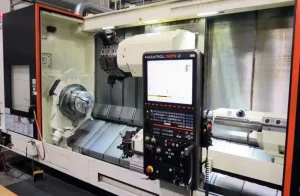
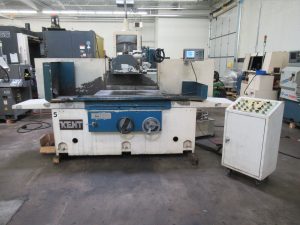
What is Live Centers used for counter-clamping workpieces on Turning and Grinding machines?
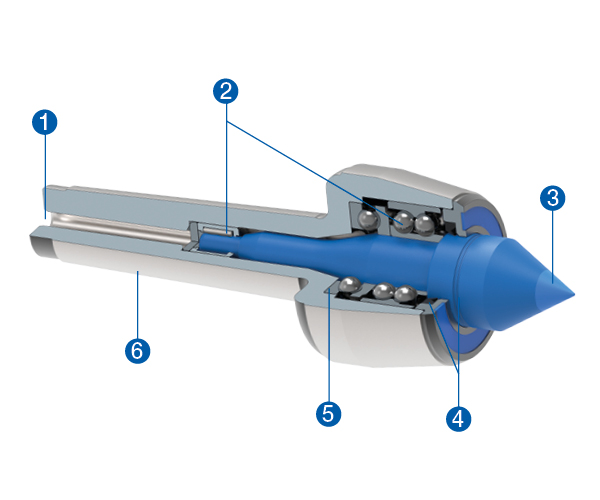
Live centers are precision tools used in machining processes, particularly on turning and grinding machines, to support and counter-clamp workpieces during rotation. They are essential for ensuring accuracy, stability, and safety in operations involving long or heavy workpieces. Below is a technical explanation of their function, design, and application:Purpose of Live CentersLive centers are mounted in the tailstock of a lathe or grinding machine to provide support at the non-driven end of a workpiece. Unlike dead centers, which are stationary, live centers rotate with the workpiece, reducing friction, heat, and wear. Their primary functions include:
- Counter-Clamping: Live centers apply axial force to secure the workpiece against the chuck or drive center at the headstock, ensuring it remains stable during machining.
- Support for Long Workpieces: They prevent deflection or bending in long, slender workpieces under cutting forces, maintaining dimensional accuracy.
- Rotational Stability: By rotating with the workpiece, live centers minimize friction and heat buildup, which could otherwise cause thermal expansion or surface damage.
- Precision Alignment: They ensure concentricity and alignment, critical for achieving tight tolerances in turning and grinding operations.
Technical Design of Live CentersLive centers are engineered for high precision and durability, with key components including:
- Shank: The part that fits into the tailstock, typically with a Morse taper (e.g., MT2, MT3) for secure mounting.
- Rotating Spindle: The business end that contacts the workpiece, mounted on high-precision bearings (e.g., ball or roller bearings) to allow smooth rotation.
- Center Point: A hardened, conical tip (usually 60° included angle) that engages with a center hole drilled in the workpiece. Some live centers offer interchangeable tips for versatility (e.g., bull-nose tips for tubes or extended points for deep holes).
- Bearings: High-quality bearings (often preloaded angular contact or tapered roller bearings) ensure low runout (typically <0.005 mm) and smooth rotation at high speeds.
- Sealing System: Protects bearings from coolant, chips, and debris, ensuring longevity in harsh machining environments.
- Body: Robust housing that withstands axial and radial loads, often made from hardened steel or tool steel.
Applications in Turning and Grinding
- Turning (Lathe Operations):
- Workpiece Support: In turning, live centers are used to support long workpieces (e.g., shafts, rods) to prevent bending under cutting forces from tools like carbide inserts.
- High-Speed Operations: The rotating spindle allows for higher spindle speeds without excessive heat or wear, unlike dead centers, which require lubrication.
- Precision Machining: Ensures concentricity for parts requiring tight tolerances, such as automotive axles or aerospace components.
- Grinding:
- Cylindrical Grinding: Live centers support workpieces during external or internal grinding, where precision is paramount (e.g., tolerances <0.001 mm).
- Vibration Damping: The rotating center reduces vibrations caused by grinding wheel contact, improving surface finish and dimensional accuracy.
- Heavy-Duty Grinding: Specialized live centers with reinforced bearings handle high axial loads in heavy-duty grinding applications.
Technical Advantages
- Reduced Friction: The rotating spindle minimizes friction, allowing for higher RPMs (up to 10,000 RPM in some models) and reducing wear on the workpiece and center.
- High Load Capacity: Modern live centers can handle axial loads up to several tons, depending on the design, making them suitable for heavy workpieces.
- Low Runout: Precision bearings ensure minimal radial and axial runout, critical for high-accuracy machining.
- Versatility: Interchangeable tips and modular designs allow live centers to accommodate various workpiece geometries, such as hollow tubes, solid shafts, or irregularly shaped parts.
Types of Live Centers
- Standard Live Centers: General-purpose centers with a 60° point for most turning and grinding applications.
- Heavy-Duty Live Centers: Designed for high axial loads and large workpieces, often with larger bearings and reinforced bodies.
- High-Speed Live Centers: Optimized for high RPMs, with low-friction bearings and enhanced cooling mechanisms.
- Extended Point Live Centers: Used for workpieces with deep or inaccessible center holes.
- Bull-Nose Live Centers: Feature a wider contact area for clamping hollow workpieces like pipes or tubes.
Operational Considerations
- Center Hole Preparation: The workpiece must have a properly drilled and chamfered center hole (typically 60°) to ensure proper engagement with the live center.
- Lubrication and Maintenance: While live centers require less lubrication than dead centers, periodic maintenance of bearings and seals is necessary to ensure longevity.
- Tailstock Pressure: Proper axial force must be applied to avoid slippage or excessive pressure, which could damage the workpiece or center.
- Speed and Load Limits: Each live center has a maximum RPM and load rating, which must not be exceeded to prevent bearing failure or runout.
ConclusionLive centers are critical for counter-clamping workpieces in turning and grinding machines, providing rotational support, stability, and precision. Their rotating design reduces friction and wear, enabling high-speed, high-accuracy machining of long or heavy workpieces. By selecting the appropriate live center type and maintaining proper setup, machinists can achieve superior concentricity, surface finish, and dimensional accuracy in a wide range of applications.