11/07/2025
What is High Precision Flip-chip Die Bonder?
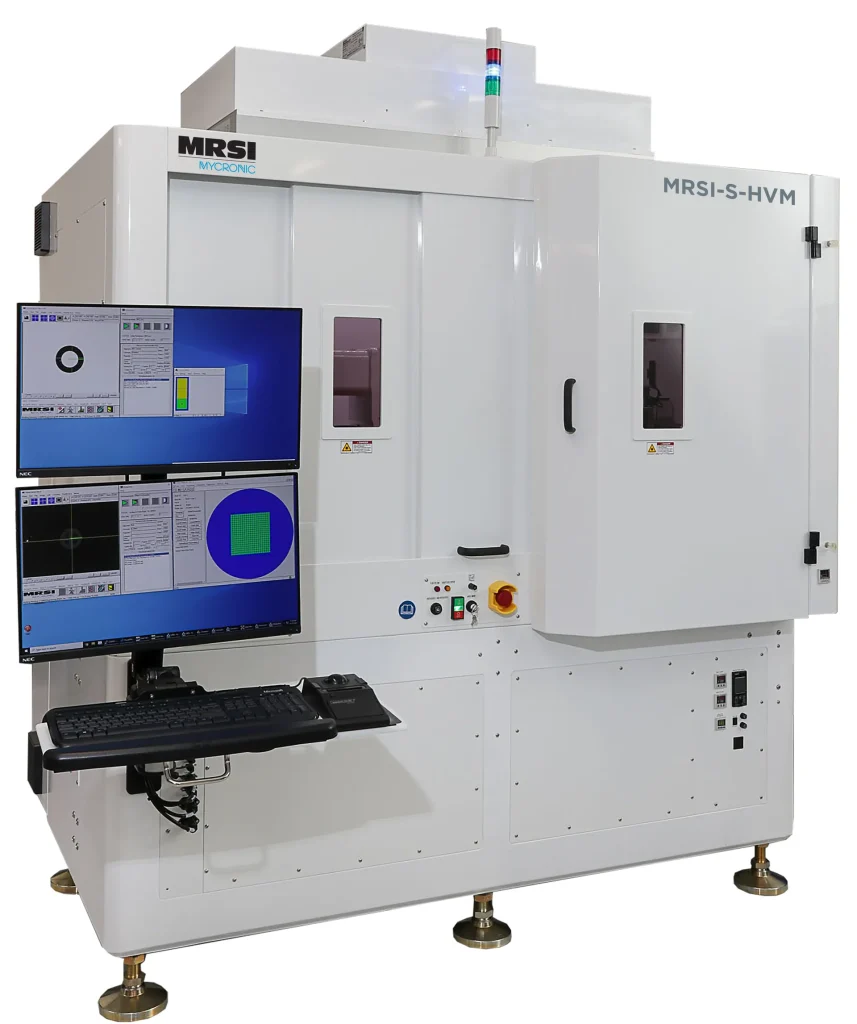
A High Precision Flip-Chip Die Bonder is a semiconductor assembly machine designed to accurately place and bond bare dies (semiconductor chips) onto a substrate or package in a flip-chip orientation, where the active side of the die faces downward toward the substrate. Here’s a technical breakdown:
🔧 Definition and Function
A flip-chip die bonder places and aligns a semiconductor die face-down onto a substrate, wafer, or lead frame using high-precision vision systems and micro-positioning stages. It bonds the die using metal bumps (e.g., solder, gold, copper) instead of traditional wire bonding.
🧠 Key Components & Technologies
| Component | Function |
|---|---|
| Pick-and-Place Head | Picks up dies from a wafer and places them on the target substrate. Equipped with sub-micron movement control. |
| Vision Alignment System | Uses cameras and pattern recognition to align die and substrate with sub-micron accuracy. |
| Z-Axis Control & Bond Head | Controls vertical movement for precise placement and bonding pressure. |
| Heating Stage or Reflow System | Bonds the die by melting solder bumps or thermocompression bonding depending on the process. |
| Force & Displacement Sensors | Monitor bonding pressure, die position, and deformation to ensure gentle and accurate bonding. |
📐 Flip-Chip Bonding Process
- Wafer Preparation: Dies are prepared with pre-formed solder or gold bumps.
- Die Pick-up: The bonder picks up the die using a vacuum tool.
- Alignment: Optical systems align the die bumps with substrate pads.
- Placement & Bonding: The die is placed and bonded using:
- Thermocompression (heat + pressure)
- Reflow (melting solder)
- Ultrasonic bonding (vibration energy)
- Cooling and Inspection: The assembly is cooled, and quality control is applied using AOI or X-ray.
🎯 Precision Metrics
- Placement Accuracy: ±0.5 µm to ±2 µm
- Bonding Force Range: Typically 10 mN to several Newtons
- Temperature Range: Up to 400°C depending on solder type
🏭 Applications
- High-frequency RF chips
- Microprocessors (CPU/GPU)
- LED and optoelectronics
- MEMS sensors
- Advanced packaging (2.5D, 3D ICs)
✅ Advantages of Flip-Chip Die Bonding
- Higher I/O density than wire bonding
- Lower parasitics (inductance, resistance)
- Improved thermal & electrical performance
- Compact form factor suitable for high-speed, high-power applications