09/07/2025
What Is an Industrial Rubber Granulator?
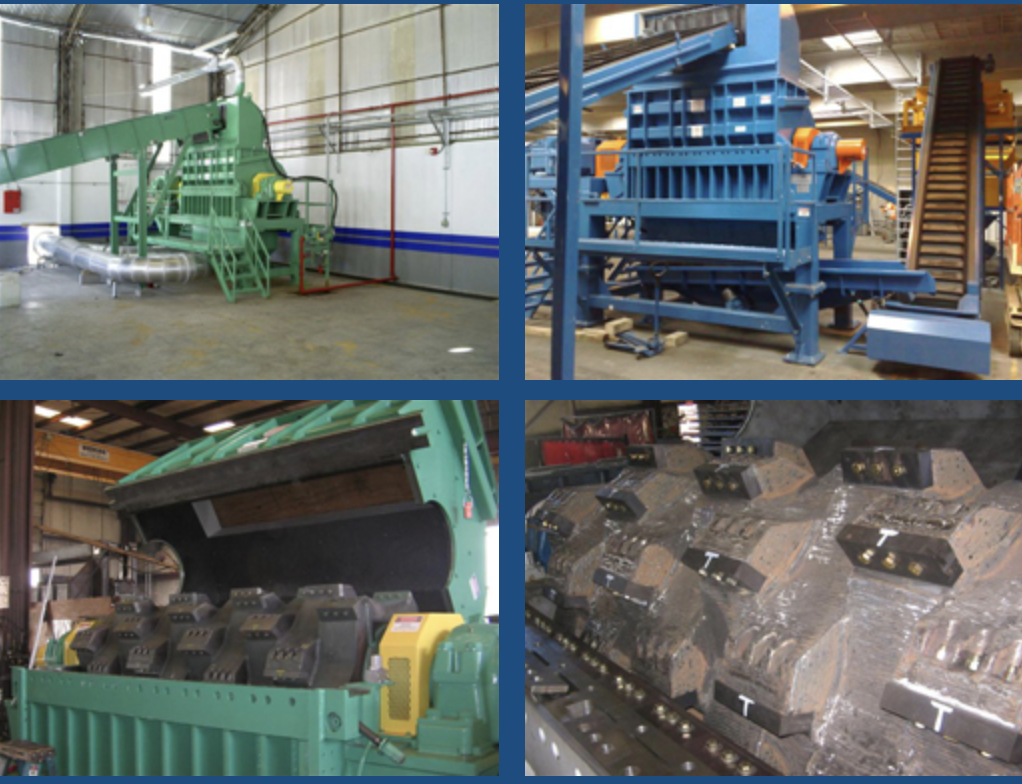
An industrial rubber granulator is a heavy-duty machine designed to mechanically reduce rubber materials into uniform granules of specified sizes. It plays a critical role in the rubber recycling and reprocessing industry, especially for end-of-life tires (ELTs) and industrial rubber waste.
⚙️ Core Function:
To shred, cut, and granulate rubber materials—such as tires, conveyor belts, or rubber sheets—into small, uniformly-sized particles that are easier to process, transport, or reuse.
🔧 Technical Components and Working Principle:
- Feed System:
- Rubber materials are fed into the granulator via a conveyor or hopper.
- Pre-shredded or chunked rubber is usually preferred to avoid overloading.
- Cutting Chamber:
- Contains rotating knives (rotors) and fixed knives (stators).
- The rotor spins at high speed, forcing the rubber against the stators to shear it down into smaller granules.
- Screening System:
- A screen with specific mesh size is placed beneath the cutting area.
- Only rubber particles smaller than the screen holes pass through, ensuring uniform granule size (typically 1–10 mm).
- Drive System:
- Powered by electric motors or hydraulics.
- Heavy-duty gearboxes and belts transmit power to the rotor.
- Cooling System:
- Optional air or water cooling is used to manage frictional heat generated during high-speed cutting, which can melt or deform rubber.
📐 Typical Technical Specs (May Vary by Model):
| Feature | Description |
|---|---|
| Input size | Up to 300 mm pre-shredded chunks |
| Output size | 1–10 mm granules (adjustable) |
| Rotor speed | ~500–1000 RPM |
| Capacity | 500–5000 kg/hour |
| Power requirement | 45–200 kW |
| Knife material | Hardened steel / tungsten carbide |
🧪 Applications of Rubber Granules:
- Asphalt mixtures (rubberized asphalt)
- Playground and sports surfaces
- Molding and extrusion raw materials
- Shock-absorbing mats
- Tire-derived fuel (TDF)
✅ Advantages:
- Enables recycling of non-biodegradable rubber
- Produces consistent granule sizes for further processing
- Reduces volume for transport and storage
- High throughput and automation potential