What is Differential Direct Roll Coater (DDRC)
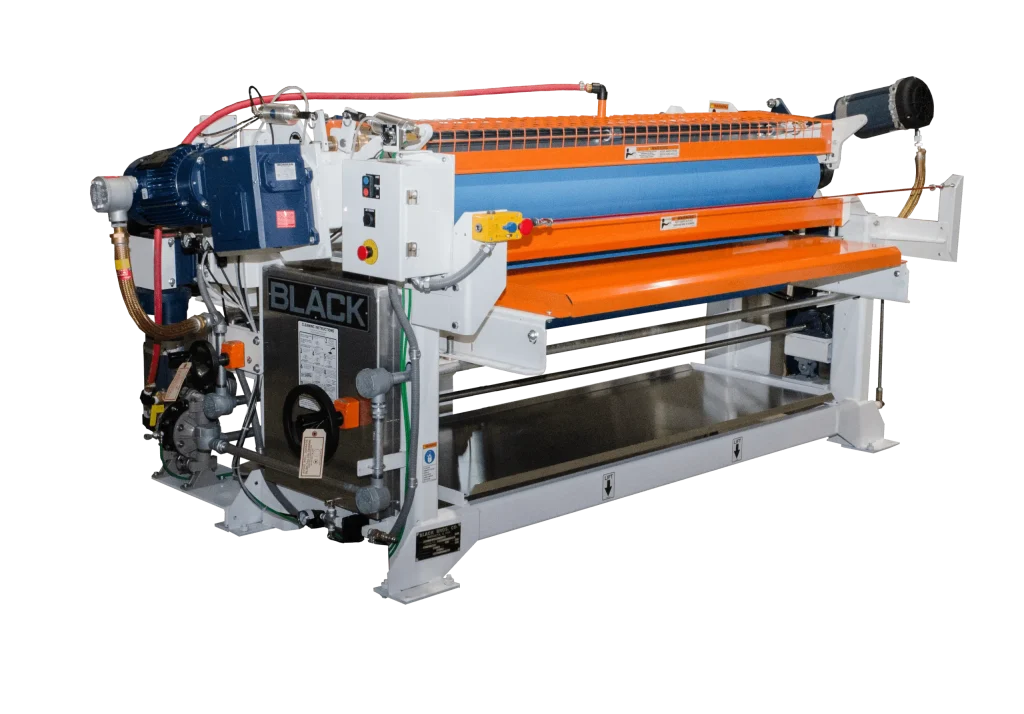
A Differential Direct Roll Coater (DDRC) is an advanced roll coating machine designed to apply a precise, uniform layer of liquid coating—such as paints, adhesives, varnishes, or UV-curable coatings—onto flat substrates like wood, metal, plastic, or paper. The “differential” aspect refers to the independent control of roll speeds, which allows for finer control over coating thickness and finish quality compared to standard direct roll coaters. Below is a technical explanation of the DDRC, its components, working principles, and key features.Technical Overview of DDRCA DDRC is a type of roll coater that applies coating directly to a substrate using a series of rollers, with the distinguishing feature of having independently driven rolls operating at different speeds or directions. This differential speed control enhances the precision and smoothness of the coating application, making it suitable for a wide range of substrates and coating materials, including water-based, solvent-based, and UV-curable coatings.Key Components
- Applicator Roll:
- The primary roll that transfers the coating material directly onto the substrate.
- Typically covered with a rubber or elastomeric material, with the durometer (hardness) selected based on the coating type and substrate properties.
- Rotates in the same direction as the substrate’s travel (direct coating).
- Surface texture and material affect coating transfer efficiency and uniformity.
- Doctor Roll (Metering Roll):
- Controls the thickness of the coating film on the applicator roll by metering the amount of coating material.
- Rotates at a variable speed, often in the opposite direction (reverse) or at a different speed than the applicator roll, creating a shearing action that smooths the coating film.
- The gap between the doctor roll and applicator roll (nip gap) is adjustable to precisely control coating thickness.
- Conveyor System:
- Transports the substrate through the coater, ensuring consistent contact with the applicator roll.
- Often a conveyor belt or roller mechanism, with speed adjustable to match production requirements.
- Coating Reservoir and Delivery System:
- Supplies the coating material to the applicator roll, either via a pan in which the roll is partially immersed or through an enclosed feed system (e.g., slot-die or pump-driven).
- Ensures continuous and uniform coating supply to prevent defects.
- Backup Roll:
- Supports the substrate from the opposite side of the applicator roll, maintaining proper tension and alignment for uniform coating application.
- Typically made of steel or a hard material to provide stability.
- Control Systems:
- Advanced DDRCs feature independent variable speed drives (e.g., servo motors) for each roll, allowing precise control of roll speeds and directions.
- May include sensors for real-time monitoring of coating thickness, nip gap, and conveyor speed.
- Automated systems for adjusting pressure, gap, and coating flow.
Working Principle
- Coating Pickup:
- The applicator roll picks up the coating material from the reservoir or feed system, forming a thin film on its surface.
- The doctor roll, positioned close to the applicator roll, meters the coating by removing excess material and smoothing the film. The speed and direction of the doctor roll relative to the applicator roll create a shearing effect, which refines the coating layer’s thickness and uniformity.
- Coating Transfer:
- The substrate, carried by the conveyor or backup roll, passes under the applicator roll, which transfers the metered coating film directly onto the substrate’s surface.
- The applicator roll rotates in the same direction as the substrate’s travel, ensuring efficient transfer with minimal disruption.
- Thickness Control:
- Coating thickness is controlled by:
- Nip gap: The distance between the applicator and doctor rolls.
- Speed differential: The relative speeds of the applicator and doctor rolls. A faster or reverse-rotating doctor roll increases shear, reducing coating thickness and improving smoothness.
- Conveyor speed: Faster substrate movement results in thinner coatings, while slower speeds allow thicker coatings.
- The differential speed control distinguishes DDRCs from standard direct roll coaters, which typically have rolls rotating at the same speed.
- Coating thickness is controlled by:
- Post-Coating:
- After coating, the substrate may pass through a drying or curing system (e.g., hot air, infrared, or UV curing) to solidify the coating.
- Some DDRCs include additional smoothing bars or rollers to further enhance surface uniformity.
Technical Advantages
- Precision and Uniformity: Independent speed control of the applicator and doctor rolls allows for precise adjustment of coating thickness, achieving smooth, consistent finishes even with high-viscosity coatings.
- Versatility: Suitable for a wide range of substrates (wood, metal, plastic, paper) and coating types (water-based, solvent-based, UV-curable, adhesives).
- High Transfer Efficiency: Direct application minimizes coating waste, achieving near 100% transfer efficiency.
- Flexibility: Adjustable roll speeds, nip gaps, and conveyor speeds accommodate various coating viscosities and substrate thicknesses.
- Smooth Finishes: The shearing action of the differential doctor roll reduces defects like streaks, ribbing, or uneven patterns, making DDRCs ideal for high-quality finishes.
- Scalability: Available in various widths (from 6” to 144”) to suit different production scales, from small labs to large industrial lines.
Applications DDRCs are widely used in industries such as:
- Woodworking: Applying stains, varnishes, or protective coatings to panels and furniture.
- Metal Fabrication: Coating aluminum siding, steel coils, or automotive parts.
- Electronics: Applying insulating or protective layers to circuit boards.
- Packaging: Coating paper or plastic films with adhesives or barrier layers.
- Automotive: Applying paints or protective coatings to metal components.
Potential Challenges and Solutions
- Coating Defects:
- Ribbing: Caused by improper speed ratios or nip gap settings. Solution: Adjust the doctor roll speed or increase the nip gap to stabilize the coating film.
- Cascading: Occurs when excessive coating causes uneven flow. Solution: Reduce coating supply or adjust roll speeds.
- Streaks: Result from debris or improper cleaning. Solution: Regular maintenance and cleaning of rolls.
- Maintenance: Rollers must be cleaned regularly to prevent buildup, which can cause uneven coatings. Removable rollers or automated cleaning systems simplify maintenance.
- Material Compatibility: The applicator roll’s durometer and surface texture must match the coating and substrate to avoid defects.
Comparison with Other Roll Coaters
- Direct Roll Coater (DRC): All rolls rotate at the same speed and direction, limiting thickness control compared to DDRC.
- Reverse Roll Coater (RRC): The applicator roll rotates opposite to the substrate’s travel, suitable for thicker coatings or filling surface defects but less common for direct application.
- Precision Roll Coater (PRC): Uses an engraved doctor roll for highly uniform coatings, often for specialized applications.
- Gravure Coater: Employs engraved rolls to apply precise patterns, better suited for thin films or patterned coatings.