26/05/2025
What is Diamond Cut Alloy Wheel Lathe?

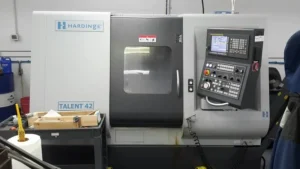
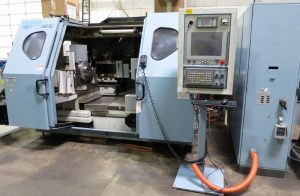
A Diamond Cut Alloy Wheel Lathe is a specialized CNC (Computer Numerical Control) lathe designed for the refinishing of alloy wheels, particularly those with diamond-cut finishes. It uses a diamond-tipped cutting tool to remove a very thin layer of material from the wheel’s face, producing a mirror-like, reflective surface.
🔧 Technical Explanation
🛠️ 1. Function
The machine restores damaged alloy wheels (typically from kerb rash, corrosion, or aging) by precisely machining the face to create a high-gloss, two-tone finish. The result mimics the original factory look of diamond-cut wheels.
🧩 2. Main Components
| Component | Description |
|---|---|
| CNC Control Unit | Controls spindle and toolpath motion for repeatable, precision cuts |
| High-Torque Spindle | Rotates the wheel at controlled RPM (usually 100–300 RPM) |
| Diamond-Tipped Cutter | Performs high-precision surface cuts with minimal surface distortion |
| Laser Scanner / Probe | Maps the face of the wheel for automatic toolpath generation |
| Mounting Chuck or Flange | Holds wheels securely and ensures perfect concentricity |
| Protective Enclosure | Shields the operator and environment from debris |
⚙️ 3. Machining Process Overview
- Wheel Mounting:
The alloy wheel is clamped into the lathe using a precision chuck or custom flange adaptor. - Profiling (Optional):
A laser scanner or mechanical probe traces the profile of the wheel to map its geometry. - CNC Path Generation:
The scanned data is used to create a toolpath that exactly matches the wheel’s contour. - Diamond Cutting:
The diamond-tipped tool moves across the wheel surface, removing just 0.1–0.3 mm of material. - Inspection & Finishing:
The machined surface is inspected, and a clear protective lacquer is often applied to prevent oxidation.
🧠 4. Technical Benefits
- Surface Finish: Achieves a bright, glossy metallic effect due to diamond cutting precision.
- Accuracy: CNC control ensures repeatability down to ±0.01 mm.
- Efficiency: A full cycle can be completed in 5–15 minutes per wheel.
- Automation: Some models allow automatic profiling and cutting with minimal user input.
🏁 5. Typical Use Cases
- Auto body and wheel repair shops
- Dealership service centers
- Alloy wheel refurbishment centers
- OEM and aftermarket wheel manufacturers