29/08/2025
What is Clay Milling Machine Designed for Prototyping Future-oriented Modeling Processes?
What it is
A clay milling machine is a studio-safe CNC gantry (or column-arm) built specifically to cut and re-cut styling clay and foam when you’re developing full-scale or scaled prototypes—cars, bikes, consumer products, even aircraft interiors. Think of it as a precision router that’s optimized for low cutting forces, long reach, fast surface updates, and clean chips instead of coolant.
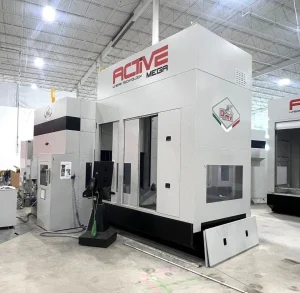
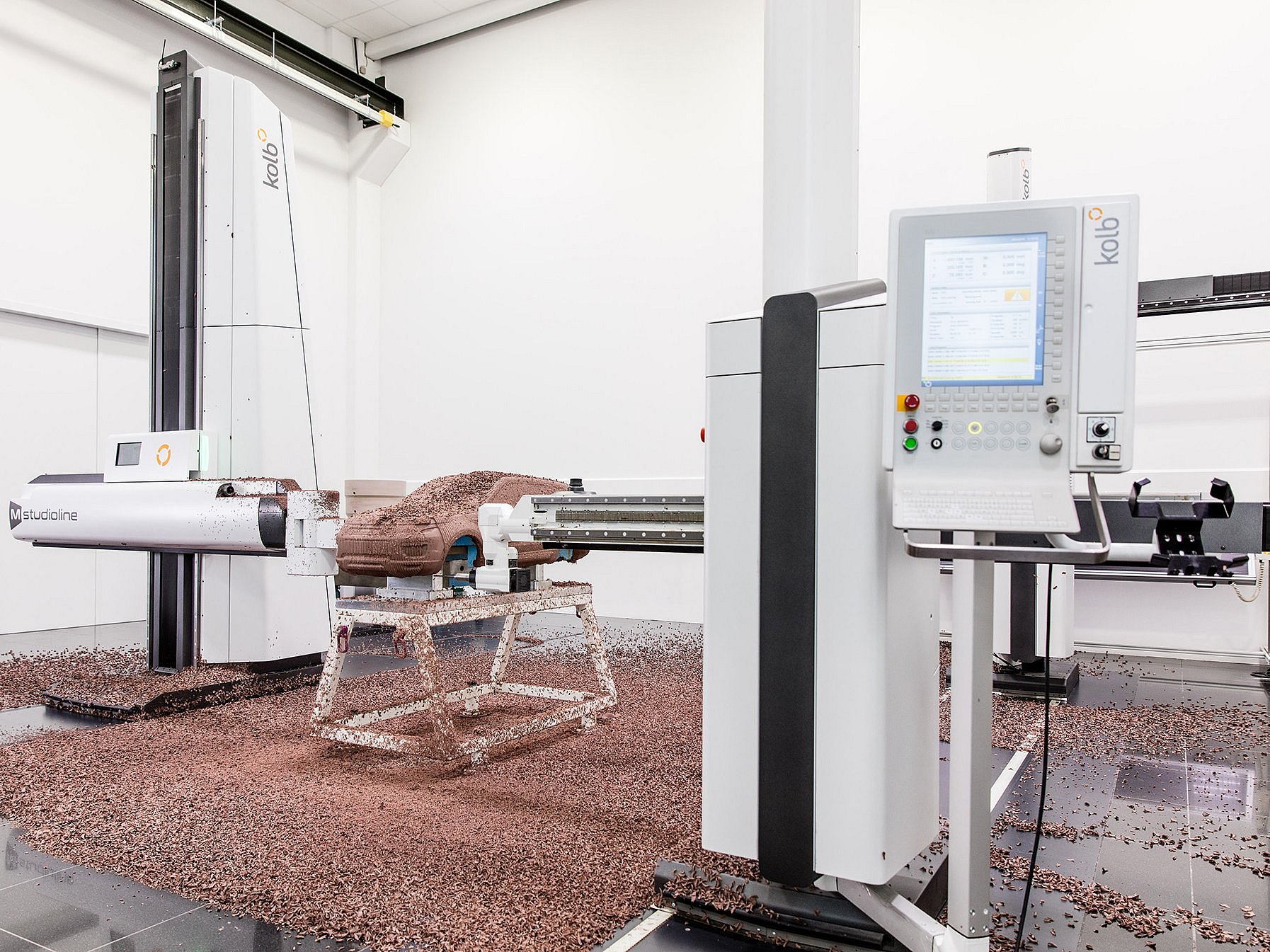
Core hardware (what you see in the photo)
- Gantry/column axes (X/Y/Z) with long travels to reach all around a model on a buck or turntable. Linear guides + ballscrews or linear motors, absolute encoders.
- Clay head / spindle (often 1–3 kW) with heated tool nose so the clay cuts like butter and doesn’t smear. Takes ball-nose, bull-nose or fly-cut tools.
- Optional A/B rotary on the head for 5-axis swarf/undercuts; otherwise 3+2.
- Studio HMI: big pendant with jog wheel, teach-in, and quick offsets for “modeler on the floor” use.
- Fixturing: turntable or T-slot plate to mount the armature/buck.
- Dust/chip handling: dry extraction hood, no coolant. (All those brown chips on the floor are styling-clay swarf.)
- Safety: light curtains/laser scanners so people can work around the model.
How it’s used (workflow)
- Rough-in: Import CAD/CAS (Alias, Catia, NX), auto-generate roughing passes to hog clay/foam.
- Finish: Tight step-overs with a ball-nose to get uniform skin quality for surfacing checks.
- Hand model: Studio sculptors add/chase lines with rakes.
- Re-scan: On-machine probe or external scanner captures the touched-up surface.
- Re-mill: Differences to CAD are milled back in minutes. This “mill–hand–scan–mill” loop is why it’s perfect for future-oriented, iterative modeling.
Why not a regular CNC?
- Heated tooling + low-rpm torque avoids smearing/tearing clay.
- Long reach, tall Z, and open workspace so people can walk around the model.
- Quiet, dry, clean—no coolant, shop grit, or oily fog in a design studio.
- Teach-in & jog: modelers can nudge, record paths, and blend by eye without a CAM expert standing by.
Typical specs (ballpark)
- Work envelope: from ~3×2×1.2 m up to full-vehicle 8×3×2 m.
- Accuracy/Repeatability: ±0.05–0.15 mm over local areas (good enough for Class-A inspection in studio).
- Feedrates: 10–20 m/min contouring; rapid 30–60 m/min.
- Materials: styling clay (oil/wax base), PU/PIR foams, tooling boards.
Useful options
- Automatic tool changer, length probe, and warm-up bake cycle for tools.
- Integrated scanning (laser line or touch probe) for live compare to CAD.
- 5-axis head for deep undercuts and door openings.
- Turntable synchronized as a C-axis for continuous milling around a car.
Bottom line
It’s a purpose-built CNC for design studios: fast to iterate, gentle on clay, accurate enough to trust surface decisions, and open/clean so sculptors and engineers can co-create around the physical model.