What is Box & Pan Hand Brakes?
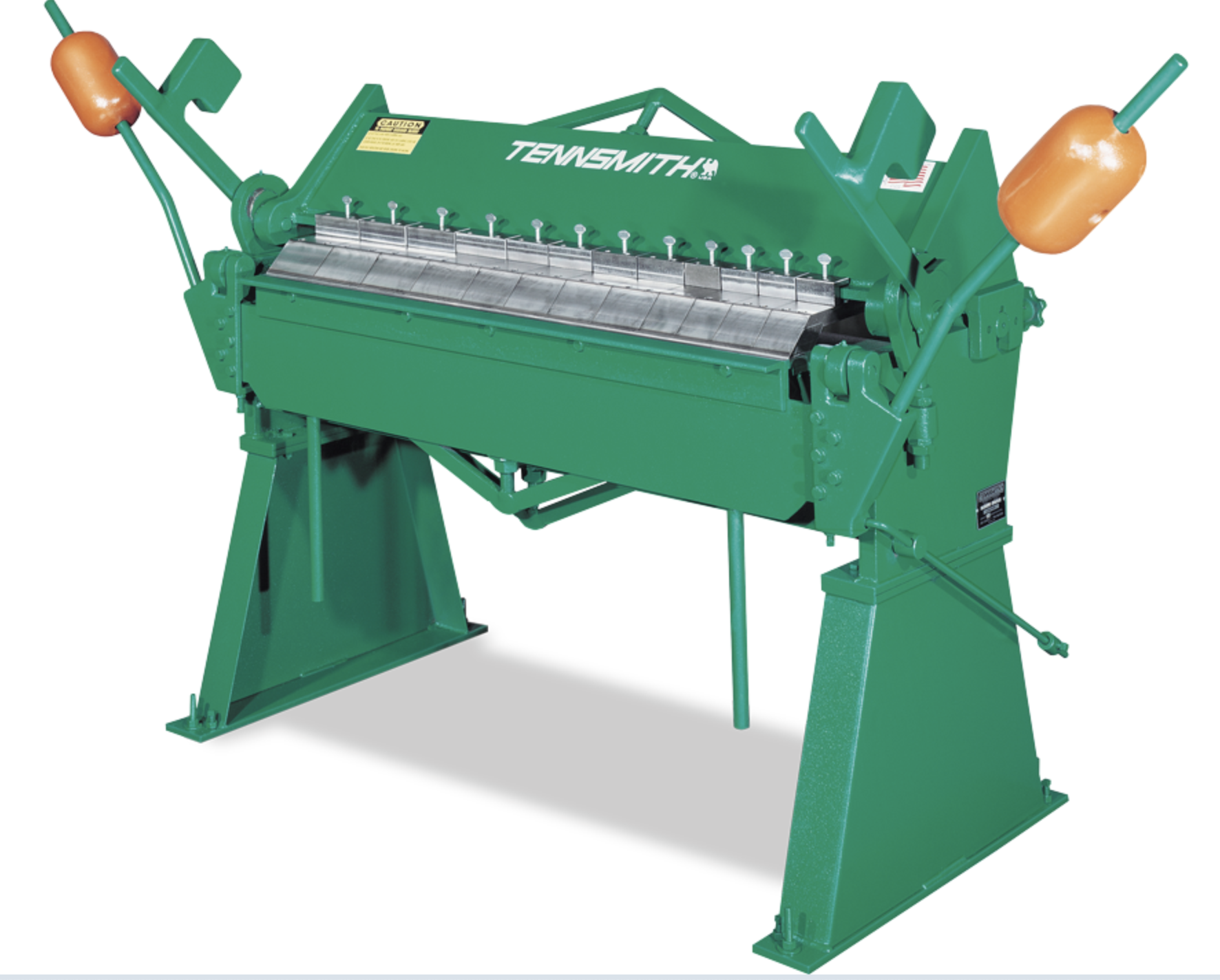
A Box and Pan Hand Brake is a manually operated sheet metal bending machine used to form precise bends and folds in sheet metal, particularly for creating box-shaped or complex structures with side walls or flanges. Unlike standard press brakes, box and pan brakes feature removable fingers (segmented upper clamping bars) that allow for greater versatility in bending shapes like boxes, trays, or pans with upturned edges on all sides. Below is a technical explanation of its components, operation, and applications:Components
- Frame: A robust structure, typically made of cast iron or steel, that provides stability and supports the bending forces.
- Bed: The flat surface where the sheet metal is placed for bending. It’s usually precision-ground to ensure accuracy.
- Clamping Bar (Leaf): The upper part that clamps the sheet metal against the bed to hold it securely during bending. In box and pan brakes, this bar is segmented into removable fingers of varying widths.
- Fingers: Interchangeable, segmented pieces attached to the clamping bar. These allow bending around side walls or complex shapes by adjusting the width of the clamping surface.
- Bending Wing (Apron): A hinged component that pivots upward to bend the sheet metal over the edge of the bed. It’s operated manually via a handle.
- Counterweights: Often included to assist in lifting the bending wing, reducing operator effort during repetitive tasks.
- Adjustment Mechanisms: Screws or stops to adjust the clamping pressure, bend angle, and alignment for precision.
Operation
- Setup: The operator selects and installs the appropriate fingers on the clamping bar based on the desired bend width and shape. The fingers’ widths vary (e.g., 2”, 3”, 6”) to accommodate different box or pan dimensions.
- Material Placement: The sheet metal is positioned on the bed, aligned with the edge of the fingers. Stops or guides may be used for repeatability.
- Clamping: The clamping bar is lowered (manually via a lever or cam mechanism) to secure the sheet metal against the bed, ensuring it doesn’t shift during bending.
- Bending: The operator lifts the bending wing using the handle, causing the sheet metal to bend upward around the edge of the fingers. The angle of the bend (up to 135° or more, depending on the machine) is controlled by the extent of the wing’s rotation.
- Release and Repeat: The clamping bar is raised, the sheet is repositioned or removed, and the process is repeated for additional bends.
Technical Specifications
- Capacity: Typically handles sheet metal thicknesses from 16 gauge (0.06” or 1.5mm) to 24 gauge (0.024” or 0.6mm), though heavy-duty models can manage thicker materials.
- Bending Length: Common lengths range from 24” to 96” (610mm to 2438mm), depending on the machine’s size.
- Finger Sizes: Vary in width (e.g., 2”, 3”, 4”, 6”) to allow flexibility in forming boxes or pans of different dimensions.
- Bend Angle: Most models allow bends up to 90° or 135°, with some offering adjustable stops for precise angles.
- Material Compatibility: Works with metals like aluminum, mild steel, stainless steel, and copper, within the machine’s capacity limits.
Advantages
- Versatility: The removable fingers enable bending of complex shapes, such as boxes with side walls, which standard brakes cannot achieve without custom tooling.
- Precision: Adjustable stops and segmented fingers ensure accurate, repeatable bends.
- Portability: Hand brakes are compact and don’t require power, making them suitable for small workshops or on-site use.
- Cost-Effective: No need for hydraulic or pneumatic systems, reducing maintenance and operational costs.
Limitations
- Manual Operation: Requires physical effort, limiting efficiency for high-volume production.
- Material Thickness: Not suitable for very thick or heavy-gauge metals, which require powered press brakes.
- Operator Skill: Precision depends on the operator’s experience, especially for complex bends.
Applications
- HVAC: Fabricating ductwork, trays, and enclosures.
- Automotive: Creating custom panels or brackets.
- Metal Fabrication: Forming boxes, pans, or enclosures for electrical or industrial applications.
- Sign Making: Bending metal for signage frames or letters.
Example WorkflowTo create a rectangular metal tray (12” x 8” x 2” deep):
- Select fingers totaling 12” in width (e.g., two 6” fingers).
- Clamp the sheet metal, aligning it to form the first 2” side wall.
- Bend to 90° using the bending wing.
- Rotate the sheet, re-clamp, and bend the opposite side.
- Adjust fingers (e.g., to 8” width) for the remaining sides, accounting for the already-formed walls, and complete the bends.
ConclusionA box and pan hand brake is a versatile, manually operated tool ideal for small-scale sheet metal fabrication, particularly for box-like structures. Its segmented fingers and simple design make it a staple in workshops requiring precise, custom bends without the need for powered machinery. For further details or specific models, I can search for additional information if needed.