What is Advanced Packaging Technologies and Chiplet Designs?
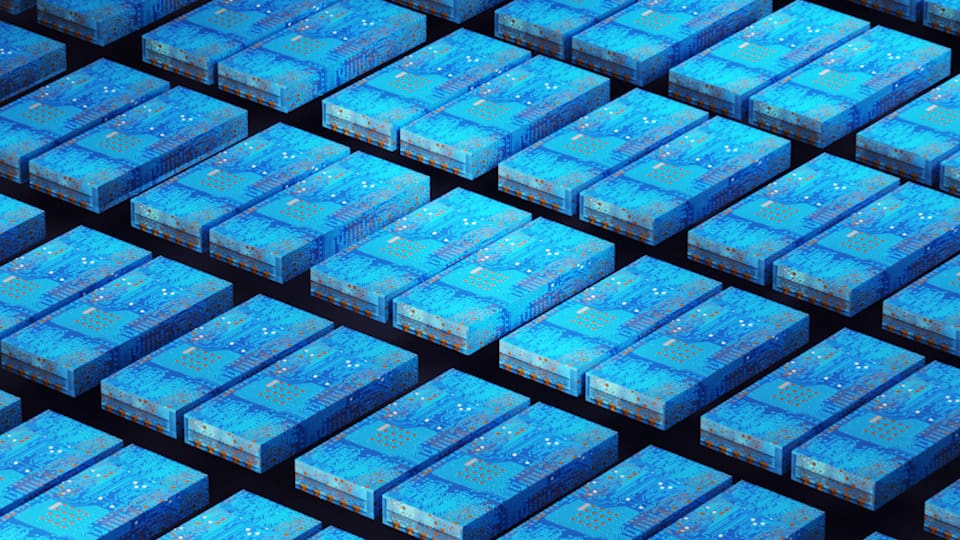
Advanced packaging technologies and chiplet designs are pivotal innovations in semiconductor manufacturing, addressing the limitations of traditional monolithic chip designs by enabling higher performance, efficiency, and scalability. Below is a technical explanation of both concepts:
Advanced Packaging TechnologiesAdvanced packaging refers to a set of techniques used to encase and interconnect semiconductor dies (chips) in ways that enhance performance, reduce power consumption, improve thermal management, and enable greater functionality within a smaller footprint. Unlike traditional packaging, which primarily focuses on protecting the die and providing basic electrical connections, advanced packaging integrates multiple components, optimizes interconnects, and supports heterogeneous integration.Key Features of Advanced Packaging
- Heterogeneous Integration: Combines different types of chips (e.g., logic, memory, analog, RF) made with different process nodes or materials into a single package. This allows for optimized performance and cost by tailoring each component to its specific function.
- High-Density Interconnects: Uses advanced interconnect technologies (e.g., microbumps, through-silicon vias (TSVs), or Redistribution Layers (RDL)) to achieve faster and more efficient communication between components.
- Smaller Form Factor: Enables compact designs for applications like mobile devices, AI accelerators, and high-performance computing (HPC).
- Improved Power and Thermal Efficiency: Advanced packaging reduces signal path lengths, lowering power consumption, and incorporates better thermal management solutions like integrated heat spreaders or microfluidic cooling.
Key Advanced Packaging Techniques
- 2.5D Packaging:
- Structure: Multiple dies are placed side-by-side on a silicon interposer, a thin layer with high-density interconnects (e.g., TSVs or copper traces).
- Interconnects: The interposer connects dies to each other and to the substrate, offering high bandwidth and low latency.
- Examples: High Bandwidth Memory (HBM) stacked on an interposer alongside a GPU/CPU, as seen in AMD’s Fiji GPU or NVIDIA’s H100.
- Advantages: High interconnect density, supports heterogeneous integration.
- Challenges: Higher cost due to interposer fabrication and complexity.
- 3D Packaging:
- Structure: Dies are vertically stacked and interconnected using TSVs or direct bonding (e.g., hybrid bonding).
- Interconnects: TSVs or copper-to-copper bonding provide ultra-high-density connections with minimal latency.
- Examples: 3D-stacked DRAM (e.g., HBM3), Intel’s Foveros technology, or TSMC’s SoIC (System on Integrated Chips).
- Advantages: Extremely compact, high bandwidth, reduced power consumption due to shorter interconnects.
- Challenges: Thermal management, yield issues in stacking, and complex manufacturing.
- Fan-Out Wafer-Level Packaging (FOWLP):
- Structure: Dies are embedded in a molded compound, and a Redistribution Layer (RDL) provides interconnects without a traditional substrate.
- Examples: Apple’s A-series chips, TSMC’s InFO (Integrated Fan-Out).
- Advantages: Thin profile, cost-effective for certain applications, supports high I/O density.
- Challenges: Limited scalability for very high-performance applications.
- System-in-Package (SiP):
- Structure: Multiple dies (e.g., processor, memory, sensors) are integrated into a single package with a substrate or interposer.
- Examples: Wearable devices, IoT modules.
- Advantages: High integration flexibility, supports diverse components.
- Challenges: Larger footprint compared to 2.5D/3D solutions.
- Hybrid Bonding:
- Structure: Direct copper-to-copper bonding between dies or wafers, achieving ultra-fine pitch (e.g., <10 µm).
- Examples: TSMC’s SoIC, Intel’s Foveros Direct.
- Advantages: Extremely high bandwidth, low power, and compact design.
- Challenges: Requires precise alignment, high manufacturing cost.
Applications
- High-Performance Computing (HPC): AI accelerators, GPUs, and CPUs (e.g., AMD EPYC, NVIDIA H100).
- Mobile Devices: Compact, power-efficient SoCs (e.g., Apple M1/M2).
- Automotive: ADAS and autonomous driving systems requiring robust, multi-chip integration.
- Networking: High-bandwidth routers and switches.
Chiplet DesignsChiplets are modular, self-contained semiconductor dies designed to perform specific functions (e.g., compute, memory, I/O) that are combined within a single package using advanced packaging techniques. Unlike monolithic chips, where all components are integrated into a single die, chiplet designs break down the system into smaller, specialized dies, improving yield, flexibility, and cost-efficiency.Key Features of Chiplet Designs
- Modularity: Each chiplet is a standalone functional unit (e.g., CPU core, GPU core, memory controller) that can be designed, manufactured, and tested independently.
- Heterogeneous Integration: Chiplets can be fabricated using different process nodes (e.g., 5nm for compute, 12nm for I/O) or materials (e.g., silicon for logic, GaAs for RF).
- Interconnect Standards: Chiplets communicate via standardized interfaces like UCIe (Universal Chiplet Interconnect Express), AIB (Advanced Interface Bus), or proprietary protocols (e.g., AMD’s Infinity Fabric).
- Scalability: Chiplet designs allow for easy scaling by adding more chiplets (e.g., more CPU cores or memory) without redesigning the entire chip.
Technical Aspects of Chiplet Designs
- Architecture:
- A chiplet-based system consists of multiple dies, each optimized for a specific task (e.g., compute, I/O, analog, memory).
- Example: AMD’s EPYC processors use multiple CPU chiplets connected via Infinity Fabric to a central I/O die.
- Interconnect Technologies:
- UCIe (Universal Chiplet Interconnect Express): An open standard for high-speed, low-latency chiplet-to-chiplet communication, supporting PCIe-like protocols.
- Die-to-Die Interconnects: Use microbumps, TSVs, or hybrid bonding for high-bandwidth, low-latency connections.
- Bandwidth: Modern chiplet interconnects achieve tens of GB/s per link (e.g., HBM3 offers up to 3 TB/s).
- Manufacturing:
- Yield Improvement: Smaller chiplets have higher manufacturing yields than large monolithic dies, reducing costs for complex designs.
- Process Node Flexibility: Chiplets can be fabricated on different nodes (e.g., 3nm for compute, 7nm for I/O), optimizing cost and performance.
- Testing: Each chiplet can be tested individually before integration, reducing the risk of defective packages.
- Design Considerations:
- Power Delivery: Requires robust power distribution networks to supply multiple chiplets.
- Thermal Management: Stacked or densely packed chiplets generate significant heat, necessitating advanced cooling solutions.
- Latency: Inter-chiplet communication introduces slight latency compared to monolithic designs, mitigated by high-speed interconnects.
Advantages of Chiplet Designs
- Cost Efficiency: Smaller dies improve yield and allow cost-optimized process nodes for non-critical components.
- Flexibility: Enables mix-and-match designs for different applications (e.g., AMD’s Ryzen and EPYC share chiplet designs).
- Scalability: Easily add more chiplets for increased performance or functionality.
- Time-to-Market: Reusing validated chiplets reduces design and validation time.
Challenges of Chiplet Designs
- Interconnect Complexity: High-speed, low-latency interconnects require precise engineering and increase package complexity.
- Thermal Management: Densely packed chiplets generate significant heat, requiring advanced cooling.
- Standardization: Lack of universal standards (though UCIe is addressing this) can limit interoperability.
- Software Optimization: Software must be designed to handle distributed compute across chiplets.
Examples of Chiplet-Based Systems
- AMD Ryzen/EPYC: Uses multiple CPU chiplets connected via Infinity Fabric to a central I/O die.
- Intel Ponte Vecchio: A GPU for HPC/AI with 47 chiplets, including compute, HBM, and I/O tiles, using Foveros and EMIB.
- Apple M1 Ultra: Combines two M1 Max chiplets using Apple’s UltraFusion interconnect for doubled performance.
Relationship Between Advanced Packaging and ChipletsAdvanced packaging is the enabling technology for chiplet designs. Techniques like 2.5D/3D packaging, hybrid bonding, and FOWLP provide the high-density, low-latency interconnects needed to integrate multiple chiplets into a functional system. Chiplets, in turn, drive the demand for advanced packaging by requiring compact, efficient, and high-performance integration solutions.Example Workflow
- Design Phase: Engineers design individual chiplets for specific tasks (e.g., CPU cores, AI accelerators, memory controllers).
- Fabrication: Chiplets are manufactured using appropriate process nodes (e.g., 5nm for compute, 12nm for I/O).
- Packaging: Chiplets are integrated using 2.5D (interposer) or 3D (stacking) packaging with interconnects like UCIe or hybrid bonding.
- Testing: The package is tested for functionality, power, and thermal performance.
- Deployment: The final chip is integrated into a device (e.g., server, smartphone, GPU).
Industry Trends and Future Directions
- UCIe Adoption: The Universal Chiplet Interconnect Express standard is gaining traction, enabling interoperable chiplet ecosystems across vendors.
- 3D Stacking: Increasing use of 3D stacking (e.g., TSMC’s SoIC, Intel’s Foveros) for ultra-high-density integration.
- AI and HPC: Chiplets and advanced packaging are critical for AI accelerators and HPC systems requiring massive compute and memory bandwidth.
- Cost Optimization: Continued focus on reducing packaging costs through innovations like fan-out and hybrid bonding.
- Sustainability: Efforts to reduce power consumption and improve thermal efficiency in chiplet-based systems.
ConclusionAdvanced packaging technologies and chiplet designs are transforming the semiconductor industry by enabling modular, high-performance, and cost-efficient systems. Advanced packaging provides the physical and electrical infrastructure (e.g., 2.5D/3D interconnects, hybrid bonding) to integrate chiplets, which are specialized, modular dies tailored for specific functions. Together, they address the scaling challenges of Moore’s Law, offering flexibility, scalability, and performance for applications ranging from AI and HPC to mobile and automotive systems.