What is a Servo Motor?
A servo motor is a rotary actuator or linear actuator that allows for precise control of angular or linear position, velocity, and acceleration. It consists of a suitable motor coupled to a sensor for position feedback. This motor is typically used in applications that require high precision and quick response, such as robotics, CNC machinery, and automated manufacturing.
Components of a Servo Motor
- Motor:
- The core component that generates motion.
- Types include DC motors, AC motors, and brushless motors.
- Feedback Device:
- Typically an encoder or resolver.
- Provides real-time data on the position, speed, and sometimes acceleration of the motor.
- Controller:
- Receives input from an external source (like a CNC controller or PLC).
- Compares the feedback data with the desired position and sends corrective commands to the motor.
- Drive Circuitry:
- Amplifies the control signals and provides the necessary power to the motor.
Working Principle
A servo motor operates on the principle of closed-loop control, where the actual position of the motor is continuously monitored and adjusted to match the desired position. Here’s a simplified explanation of how it works:
- Command Signal:
- The controller sends a command signal that specifies the desired position, speed, or torque.
- Motor Movement:
- The motor drive circuitry receives this command and supplies the appropriate current to the motor to achieve the desired motion.
- Feedback Signal:
- The feedback device (encoder or resolver) monitors the actual position and speed of the motor.
- Error Correction:
- The feedback signal is sent back to the controller, which compares it with the command signal.
- If there is a discrepancy (error), the controller adjusts the command to the motor to correct the position or speed.
Types of Servo Motors
- DC Servo Motors:
- Provide high torque at low speeds.
- Have a simpler control mechanism but require maintenance due to brushes and commutators.
- AC Servo Motors:
- Typically used in applications requiring high-speed operation and efficiency.
- More durable and require less maintenance compared to DC servo motors.
- Brushless Servo Motors:
- Use electronic commutation instead of brushes.
- Offer higher efficiency, reliability, and require minimal maintenance.
- Common in modern industrial applications due to their long lifespan and high performance.
Applications
Servo motors are widely used in various applications requiring precision control. Some common applications include:
- Robotics:
- For precise control of robotic arms and joints.
- CNC Machinery:
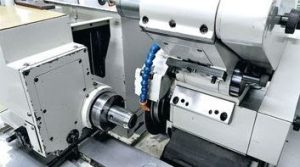
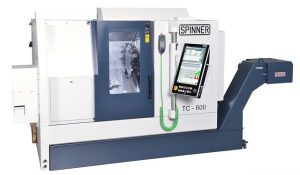
- To control the movement of cutting tools and workpieces with high accuracy.
- Automated Manufacturing:
- For controlling conveyor belts, assembly lines, and pick-and-place machines.
- Aerospace:
- In flight control systems to adjust control surfaces.
- Automotive:
- For applications like power steering, throttle control, and advanced driver assistance systems (ADAS).
Advantages of Servo Motors
- Precision: Offers high accuracy in position, speed, and torque control.
- Speed: Capable of quick response and rapid acceleration.
- Efficiency: High efficiency and performance, especially in brushless variants.
- Durability: Long operational life with minimal maintenance, particularly in brushless types.
- Control: Superior control capabilities with advanced feedback mechanisms.
Summary
A servo motor is an essential component in systems requiring precise control of movement. Its ability to offer accurate position, speed, and torque control makes it invaluable in a wide range of industrial and commercial applications. Understanding its components, working principles, and types can help in selecting the right servo motor for specific needs and applications.