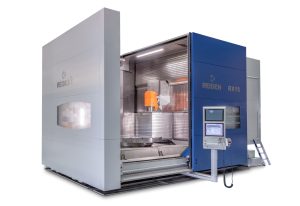
What is a Duplex Cantilevered Slitter Rewinder?
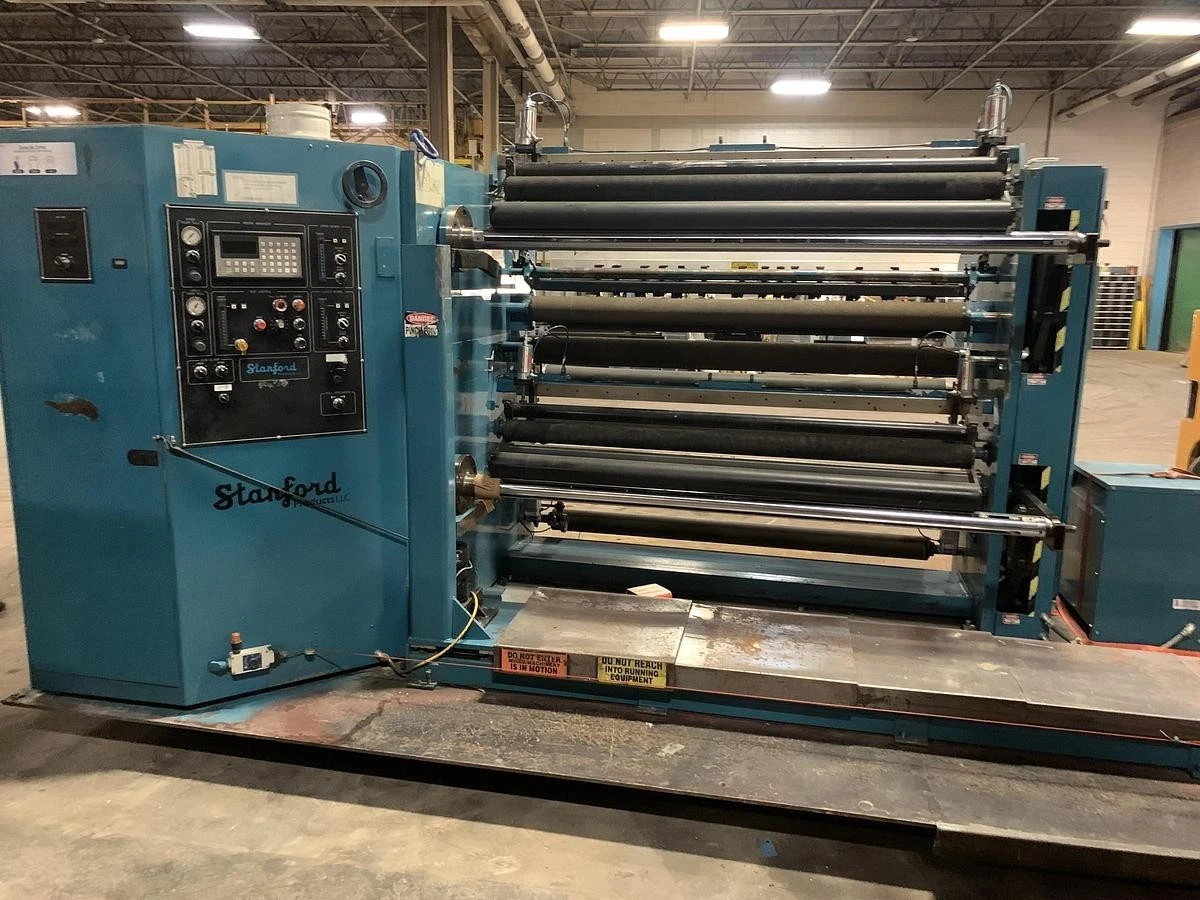
What it does:
Takes a wide master roll of film/foil/paper, cuts it into narrow strips (slits), and rewinds those strips onto two separate shafts to make tight, clean finished rolls.
Why “duplex” and “cantilevered”?
- Duplex = two independent rewind shafts (upper & lower).
- Cantilevered = each shaft is supported from one side only, so you slide cores/finished rolls on and off fast, with easy knife access. Perfect for frequent changeovers.
Main sections (what you see on the machine)
- Unwind stand – Holds the big parent roll; brake or drive keeps web tension steady. Often has a splice table and web clamp.
- Nip/infeed – Pulls the web at line speed and isolates upstream tension changes.
- Edge guide – Keeps the web aligned to the knives (ultrasonic/IR sensor + steering frame).
- Slitting head – The cutting tools:
- Shear knives (male/female circular): clean edges, most common.
- Razor (in-air or in-groove): simple, cheap, for thin films.
- Score/Crush: for foams/laminates; more dust.
Knives sit on a bar; positions can be manual or automatic.
- Spreading & lay-on – Bowed/expander roll removes wrinkles; lay-on rollers control roll hardness.
- Duplex rewinds (cantilevered) – Two center-driven shafts. Often differential (slip) shafts so each slit can take the tension it needs—no telescoping even if widths/thicknesses vary.
Controls: PLC + HMI with recipes; closed-loop tension using load cells or a dancer. Taper tension increases hardness as roll diameter grows. Drives are AC vector/servo.
What it’s good at
- Fast core/knife changeovers (one-side access).
- Short runs, many SKUs, frequent width changes.
- Narrow/medium web widths (rough guide: 500–1600 mm) and finished roll ODs up to ~600–1000 mm depending on model.
Trade-offs:
Cantilever shafts deflect more than through-shafts, so it’s not the pick for extremely wide/heavy rolls or ultra-hard build at very high speeds. For very heavy duty consider a drum (center-surface) winder.
Typical numbers (vary by builder)
- Speed: 300–800 m/min (razor usually lower)
- Min slit width: ~10–12 mm with shear; wider with score
- Cores: 3″ / 6″
- Materials: BOPP, PET, PE, PVC, paper, foil, label stock, laminates, nonwovens
Operator’s view — how you run it
- Load parent roll, thread the web, clamp at splice table.
- Set knife positions to required slit map.
- Choose taper and lay-on pressure for the material.
- Start slow, check edges and roll build, then ramp to speed.
- When target OD is reached, stop or auto-push-off, label rolls, reload cores.
Get good rolls by: correct knife overlap/side-load (shear), proper spreading, and right taper tension. Use differential shafts if slit lanes behave differently.
Common defects & fixes
- Wrinkles / baggy lanes: add spreading, check guide alignment, match infeed/outfeed draws.
- Ragged edges / dust: wrong knife type or setup; sharpen/replace, set overlap.
- Telescoping / starring: too low taper or lay-on pressure; no differential shaft.
- Core crush: taper too high or soft cores; reduce lay-on/increase core quality.
- Static: fit ion bars, ensure good grounding (films especially).
Buying a used machine? Check these
- Tension control: load cells read correctly; dancer seals/airwork OK.
- Rewind shafts: differential rings free and even; no wobble; air chucks hold pressure.
- Knives & anvil: wear, runout, and bar straightness.
- Guiding & sensors: center properly; no drift.
- Drives/inverters: healthy fans/caps; encoder counts stable.
- Frame geometry: no bent side frames; cantilever bearings tight; minimal shaft sag.
- Safety: guards, e-stops, web clamps, light curtains as required.
Bottom line
A Duplex Cantilevered Slitter Rewinder is a two-shaft, one-side-supported slitting line built for speedy changeovers and clean, stable rolls. With the right knives, guiding, spreading, and tension control, it will run a wide range of films, foils, and papers reliably—with minimal setup time.