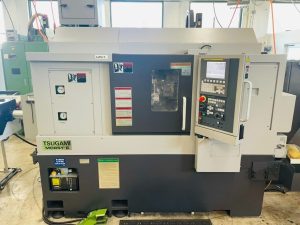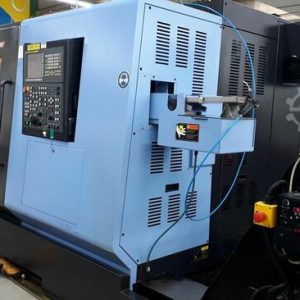
What Industry Experts Recommend Before Purchasing a Pre-Owned / Second-Hand / used Doosan Puma TT1800SY?
Here’s a thorough guide, based on what experts recommend, for inspecting and evaluating a pre-owned / used Doosan Puma TT1800SY multi-turret, twin-spindle turning center (lathe) before purchase. I include expected specs, common weak points, red flags, and a detailed inspection checklist.
What the Doosan Puma TT1800SY Is / Key Spec Benchmarks
Knowing the baseline specs is essential so you can spot exaggeration or bad condition. These are typical values & features to confirm.
| Spec | Typical for TT1800SY |
|---|---|
| Spindles / Turrets | Dual-spindle (left & right), dual turrets (upper & lower). |
| Chuck size / Swing / Bar capacity | 8-inch chuck, ~230 mm swing / ~230 mm turning diameter. Bar capacity ~65 mm (≈2.6 in). |
| Travels | ‒ X1 ~ 165 mm (≈6.5″) ‒ X2 ~ 190 mm (≈7.5″) ‒ Z1 ~ 700 mm (≈27.6″) ‒ Z2 ~ 720 mm (≈28.3″) ‒ Y axis (upper turret) ≈ ±50 mm (≈ ±2.0″) ‒ A axis travel ≈ 770 mm (≈30.3″) for some variants. |
| Speeds / Rapid Traverses | X rapid ~20 m/min; Z rapid ~40 m/min; Y rapid slower (≈7.5 m/min) for Y axis. Spindle speed up to ~5,000 rpm. |
| Spindle Power / Torque | ~22 kW (~29.5 hp) on primary spindle; ~15-20 kW on right spindle in many units. Torque ~208 N·m on main spindle. |
| Tooling | Turrets with ~12 tool stations each; live tooling / milling ability; BMT-55 tooling; C-axis indexing; Y-axis on upper turret in SY variant. |
| Weight / Size | About 8,800 kg (~19,400 lbs); machine footprint roughly ~ 3.9 m × 2.1 m × 2.1 m depending on options. |
What Experts Recommend Checking / Common Weaknesses
Based on user feedback, forums, technical bulletins, and what people say when buying used TT1800SY machines, here are the items you should inspect closely. These are typical wear points or areas where issues tend to arise.
| Area | What to Check / Ask About | Why It’s Important / What Can Go Wrong |
|---|---|---|
| Dual Spindles & Synchronization | ‒ Both spindles: run them idle and under load. ‒ Check alignment between the two spindles. ‒ Inspect spindles for run-out, vibration, heat. ‒ Check whether automatic synchronization (if used) works well. | Misalignment or problems here lead to poor parts, scrap when doing simultaneous or alternating spindle operations. Spindle bearing wear is expensive. |
| Turret Systems (Upper & Lower) | ‒ Check turret indexing accuracy and speed. ‒ Turret locking / rigidity: any play or backlash. ‒ Check for wear in turret guideways or couplers. ‒ Live tooling on turret: check RPM, motor condition, tools mounting / stability. | Rapid tool changes, heavy loads, and live tools stress the turret; wear degrades precision. Also, mis-indexed or loose turrets cause chatter or bad finishes. |
| Y-Axis (Upper Turret) | ‒ If the machine has the Y-axis (SY variant), move the Y with load; check for smoothness, backlash, positional accuracy. ‒ Inspect guideways (box or LM guides) for wear or corrosion; lubrication. | The Y-axis introduces more complexity. Bad Y-axis leads to mis-cuts in side milling, other multi-face operations. |
| Axes / Guideways / Ball Screws / LM Rails | ‒ Travel each axis (X, Z, Y) through full travel manually; check for binding, uneven resistance, rough spots. ‒ Measure backlash in X, Z, Y axes. ‒ Inspect way covers; check for ingress of chips / coolant. ‒ Specifically check roller LM guideways on Z and A axes (if present). ‒ Temperature drift: run machine, let it heat up, see whether dimensions drift. | Worn screws or guideways degrade accuracy and increase scrap. Also leads to more vibration, poorer surface finish. Poor lubrication accelerates wear. |
| Sub-Spindle & Part Unloading / Catching | ‒ Sub-spindle alignment to main spindle. ‒ Chuck condition on sub spindle. ‒ Part removal or catcher system reliability. ‒ Condition of ejectors, draw tubes, tailstock (if used). | Misalignment or poor sub-spindle leads to bad backside machining, poor finish or mismatch, increased rejects. Unreliable part removal hurts productivity. |
| Control / CNC / Software | ‒ Check which control is installed (Fanuc 31i Model-B is common in newer ones). ‒ Review error log history; see frequent alarms. ‒ Check software version, parameter backup, availability of updates. ‒ Test dual-path operation (turrets and spindles) if used; ensure functioning when switching between paths. ‒ Check C-axis indexing accuracy. | Modern features need good software support; control glitches or limitations (buggy dual-path, alarm issues) reduce throughput. C-axis precision is crucial especially for milling / live tool paths. |
| Mechanical & Structural Integrity | ‒ Check machine frame for damage or distortion (e.g., from crash or incorrect moving). ‒ Turret faces, spindle nose, tool holder seats for damage. ‒ Condition of guards, covers; cleanliness. ‒ Look for signs of misuse (dents, gouges, welds, repairs). | Structural damage can lead to misalignment, vibration, premature wear. Cosmetic issues can indicate neglect. |
| Coolant / Lubrication / Auxiliary Systems | ‒ Inspect coolant tank, pumps, filters; test coolant delivery to live tools, spindles, turrets. ‒ Lubrication system: is it automatic? Is it maintained? Are lines clean, hoses in good state? ‒ Chip conveyor / chip control; guard effectiveness; coolant mist / splash. | Poor auxiliary systems lead to overheating, corrosion, high wear, more downtime. Chips or coolant in unwanted areas degrade guideway and bearing life. |
| Production Test / Accuracy Under Load | ‒ Perform sample production jobs, especially those like what you intend to run: turning + milling + sub-spindle if applicable. ‒ Test parts for dimensional accuracy and surface finish. ‒ Warm up the machine and repeat tests to check thermal change. ‒ Check consistency of tool changes / cycle times. | Even if idle specs look okay, real performance shows issues with rigidity, thermal drift, tool change time, production consistency. |
| Maintenance / Hour Meter / Usage History | ‒ Ask for total hours, spindle hours, live tool usage if separate, Y-axis usage. ‒ What materials were processed (soft vs abrasive vs hard). ‒ Any crash history, repairs, rebuilds. ‒ How the machine has been maintained: oil changes, filter changes, cleanliness. ‒ Whether replacement parts are OEM. | A thoroughly recorded history helps anticipate future repairs; use of substandard parts or poor maintenance causes early failures. |
| Spare Parts Availability & Support | ‒ Availability of tool holders, live tool heads, spindle bearings, LM/roller guide parts, control boards, sensors. ‒ Whether service / parts support is good locally. ‒ Availability of manuals, parts catalogs. ‒ Whether software updates or patches are still supported. | Getting parts or service late or at high cost kills ROI. Good support reduces downtime and keeps the machine productive. |
Red Flags / Warning Signs
Watch out for these in particular — they often represent hidden cost or risk:
- Turrets (especially the upper turret) showing play or misalignment; movement in X or Y when they should be rigid. Forum users report “upper turret move approx .005 in X” in some used units.
- Alignment issues: repeated downtime for alignment or calibration. From user reports: alignment drift over time.
- Control issues: inability to import or export parameter data, limited support for dual‐path / dual spindles, clipping in software. Some user threads mention limitations or missing features.
- Excessive vibration or heat from spindles, or uneven performance between left and right spindle.
- Wear or damage on spindle nose bores or tool holder mounts.
- Poor or inconsistent live-tooling performance.
- Poor coolant or lubrication condition; leaks, contamination.
- Parts catcher or part unloader issues. If parts aren’t reliably removed, production suffers.
- Missing documentation or manuals. Lack of backup software or parameter histories.
- Electrical / control cabinet issues: water ingress, wiring problems, sensor failures.
On-Site / Due Diligence Checklist
Here’s a detailed checklist you (or your inspector) can take along when evaluating a specific machine. Use it to ask the right questions, test, and judge the condition.
| Checklist Item | What to Do / Observe |
|---|---|
| Verify Model, Serial & Options | Confirm the model is TT1800SY (or variant), serial number, build year. Ensure options: twin spindles, twin turrets, live tooling (if needed), Y-axis, sub-spindle, bar feeder, C-axis etc. |
| Travel vs Spec | Jog each axis (X1, X2, Z1, Z2, Y, A if applicable) through full travel. Confirm travels match spec. Check rapid traverse speeds if possible. |
| Spindle(s) Test | Run each spindle at low, medium, high rpm. Monitor for noise, heat, vibration. Test run-out on taper / bore. Compare left vs right for difference. |
| Turret Test & Indexing | Index upper & lower turrets; observe speed, accuracy. Load heavy tools; test for play when turret locked. Live tool turret: see how stable under real milling or drilling. |
| Y-Axis Operation | If machine has Y axis, test movement under load; inspect way surfaces; check backlash. |
| Sub-Spindle & Part Ejection | Check alignment of sub-spindle to main. Test the part ejector / catcher. Chuck condition. See whether part transfer (if used) works cleanly. |
| Control & Software Functionality | Turn on control; review control version, parameter backups, alarm log. Test multi-path or multi-spindle switching, tool offsets, dual-path programs. Check C-axis indexing accuracy. |
| Axis Guideways / Ball / Roller Screws | Move axes; listen / feel for roughness. Measure backlash. Inspect guides & screws for wear or damage. Inspect way covers and guards. |
| Test Cut / Production Simulation | Run sample jobs representative of your production. Check dimensions, finishes. Run after warm-up. Use live tool operations if you’ll use them. |
| Coolant / Lubrication / Auxiliary Systems | Inspect coolant condition; for filtrations, pumps, seals; check delivery to tools, spindles. Check lubrication system for axes, turrets. Check chip handling / conveyors. |
| Mechanical / Structural Check | Check spindle nose for wear. Inspect frames, covers, guards. Check for signs of past crashes or knocks. Check machine level and foundation condition. |
| Electrical & Sensors | Open control/electrical cabinets if allowed; inspect wiring, connectors, signs of overheating or moisture. Test limit switches, encoders, sensors (especially turrets/spindles). |
| History & Usage Info | Ask for total hours, spindle hours, live-tool usage, crash history, maintenance records. What types of materials were turned (abrasives, hardened, etc.). OEM vs aftermarket parts usage. |
| Utilities / Installation | Power requirements; whether your facility can give needed voltage/phase/amperage. Space & access for loading/unloading parts, maintenance. Cooling, compressed air, operator space, safety interlocks. |
| Spare Parts / Documentation | Are manuals, parts lists included? Are control & software backups available? What is availability of key wear & replacement parts (spindles, tool holders, live tool heads, motors, sensors) in your local region or via import? |
| Price vs Condition / Cost to Refurbish | Based on observations, estimate what repairs / adjustments will be needed. Factor in transport, installation, any software updates or calibrations. Compare with market value for similar condition machines. |