12/10/2025
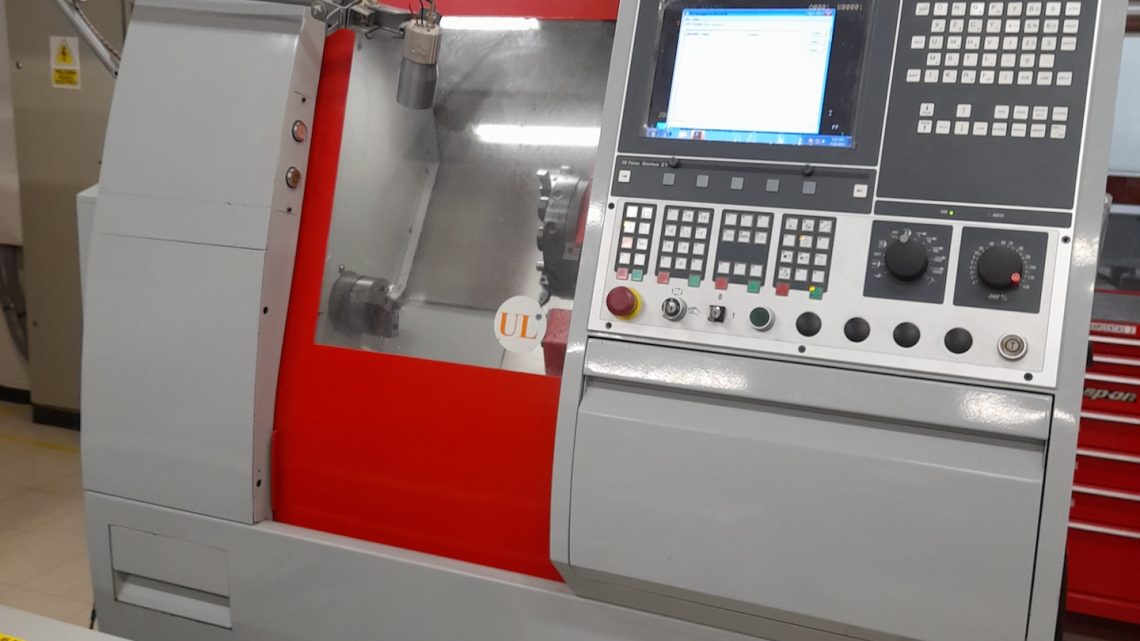
What Industry Experts Recommend Before Purchasing a Pre-Owned, Second-Hand, Surplus, Used Emco Concept TURN 155 CNC Lathe made in Austria
Known Specs, Features & Context (for the Emco Concept TURN 155)
Understanding the nominal specifications helps you spot deviations or red flags. Based on available documentation:
- The Emco Concept TURN 155 is a PC-controlled CNC lathe (used often in educational / training environments) with support for multiple controls (Siemens, Fanuc, etc.).
- Typical turning capacity: turning diameter over the bed ~ 250 mm (≈ 9.84 in) and over the cross slide ~ 85 mm.
- Z (longitudinal) travel typical ~ 300 mm.
- The machine is not a heavy-duty industrial lathe — it is comparatively compact and may have lighter construction components.
- The Concept TURN line is often used in teaching settings, so some units might have seen high cycle counts, operator mistakes, or less rigorous maintenance.
These norms let you judge whether a candidate unit is severely over-worn or modified beyond usefulness.
Expert-Recommended Inspection & Testing Checklist
Below is a domain-by-domain breakdown of what to inspect, test, and document. Use this to drive a site evaluation or pick apart seller claims.
| Domain | What to Check / Test | Key Indicators / Red Flags |
|---|---|---|
| Pre-Visit / Documentation Screening | • Ask for maintenance logs, service / repair history, alignment or calibration records, parts replaced, operator logbooks. • Request photos / videos of the machine under motion (jog, spindle running, tool changes). • Obtain the serial number, year of manufacture, and control / electronics revision. • Ask whether any retrofits or non-standard modifications have been applied. • Confirm availability of spare parts (e.g. spindle bearings, drive electronics, replacement screws, guides) for Emco machines. | If the seller refuses documentation, denies video or remote diagnostics, or claims “sold as-is, no inspection,” treat the offer as high risk. |
| Visual / Structural / Mechanical Walkaround (Power Off) | • Inspect the lathe bed, ways, saddle, cross slide, and carriage for wear, scoring, corrosion, pitting, or damage. • Examine way covers, wipers, shields, chip guards; missing or damaged covers often indicate neglect. • Check lead screws, nuts and couplings for play, backlash, wear, lubrication condition. • Inspect the spindle nose, taper, and chuck interface for damage, fretting marks, corrosion. • Check the turret or tool holder / turret (if equipped) for wear, misalignment, tool-pocket damage, slop. • Inspect coolant / lubrication systems including pumps, hoses, filters, reservoirs, valves; look for leaks, sediment, rust. • Examine external wiring, cable carriers, connectors, drag chains for insulation damage, splices, wear. • Check all covers, doors, interlocks, shields for integrity and correct fitting. | Deep gouges, rust in ways or screws, missing covers, poor cable routing, or evidence of crash repair are big red flags. Minor wear is expected; heavy wear or repair traces demand discount or rejection. |
| Power-Up & Functional / Motion Tests (No Load / Light Moves) | • Power up slowly; watch for abnormal current, voltage drop, alarm faults. • Test homing, limit switches, safety interlocks, E-stop functionality. • Jog each axis (X, Z) over full travel slowly; reverse direction and observe for backlash, stick-slip, binding, or ‘notches.’ • Repeat motions multiple times to check repeatability and consistency. • Run the spindle (no load) through its rpm range; listen for bearing noise, vibration, irregular behavior. • Cycle tool changes (turret / toolholder) if equipped; ensure smooth indexing, correct seating, no tool-binding. • Turn on coolant / pump and observe stable flow and absence of leaks, cavitation, or pump noise. • Warm-up / drift test: run the machine idle or light motion for 30–60 minutes and re-check reference positions or small offsets for drift. | Jerky motion, inconsistent return to zero, spindle vibration or bearing noise, tool-change errors or mis-indexing, coolant pump anomalies—all are red flags and may require costly repair or replacement. |
| Metrology, Accuracy & Alignment Checks | • Use precision instrumentation (dial indicators, gauge blocks, granite plate) to test: – Straightness / flatness of the carriage / cross slide over travel – Squareness of X vs Z axes, perpendicularity to bed – Spindle runout (radial & axial, if you can measure) – Repeatability: move to reference position several times and measure deviations – Return-to-zero accuracy over small displacements • If possible, cut a test part (simple turned diameter) and measure dimensional accuracy, surface finish, concentricity, and compare to expected tolerances. • Compare your measurements to any alignment or calibration certificates the seller claims. • Ask whether the control allows compensation (e.g. backlash, scaling, thermal) and whether those are already maxed out. | If measured errors are beyond your tolerance budget (e.g. too much deviation, drift, or cumulative error), the machine may need refurbishment. If compensation ranges are exhausted, you won’t be able to “tune” it further. |
| Control / Electronics / Drives | • Open the control / electrical cabinets and inspect for cleanliness, signs of coolant ingress, corrosion, burnt wiring, or damage. • Check servo drives / amplifiers, motion modules, fault logs, module statuses. • Test that axes respond to commands, no delays or error codes, stable feedback. • Inspect encoder / feedback wiring, connectors, shielding. • Test HMI / control interface: ability to navigate menus, parametric screens, diagnostics, backups / restores, editing offsets. • Try program upload / download, check memory and software status. • Verify safety circuits, limit-overtravel logic, E-stop responses. • Inspect wiring harnesses and cable chains for wear, routing issues, insulation damage. | Failed or missing modules, corrupt control software, unstable encoder feedback, or nonstandard modifications without documentation are major risks. If replacement modules are rare or expensive, factor that into your cost. |
| Logistics, Installation & Commissioning | • Assess lifting / mounting points, structural integrity, whether the lathe can be safely moved / rigged. • Check whether your shop floor can support the machine (weight, anchoring, rigidity, vibration isolation). • Confirm power, coolant, chip removal, ventilation, and utilities in your site will meet requirements. • Plan for precise leveling, shimming, alignment, and a burn-in / tuning period post-install. • Bring metrology tools, reference artifacts, and spare critical items (filters, seals, fuses) to reduce downtime. | Poor rigging or misaligned installation can degrade precision irreversibly. Transport damage to precision surfaces or electronics is common without careful packaging. |
| Contractual Safeguards & Purchase Terms | • Insist on inspection & acceptance clauses: your purchase should be contingent on passing functional, geometric, and test-cut criteria. • Require the seller to permit full test cuts (with your sample parts) and accept or reject based on agreed tolerances. • Negotiate a limited warranty (e.g. 90 days) on critical subsystems (spindle, drives, axes). • Transfer of documentation: manuals, schematics, previous alignment records, software backups, parts lists. • Tie payments to milestones (delivery, installation, test acceptance). • Assign responsibility and insurance for damage during disassembly, shipping, and installation until final acceptance. • Ensure clean title, no liens, legal ownership transfer. • If possible, negotiate seller or OEM support or startup assistance. • Hold back a portion of the payment (escrow or retainer) until full acceptance. | Be wary of “as-is” clauses without inspection rights. A seller resisting functional tests or callbacks is concealing problems. |
| Red-Flag Warning Signs | • Missing or inconsistent maintenance / alignment records • Fresh paint but internal wear or mismatches in parts • Deep scoring, corrosion, or damage on bed ways, screws, slides • Jerky or inconsistent motion, jumps, drift, backlash beyond compensatable limits • Spindle noise, vibration, overheating even under no-load runs • Tool-change / turret indexing errors or slop • Control / drive modules in fault or custom, undocumented modifications • Encoder signal instability or intermittent feedback • Coolant system contamination, leaks, sludge, non-functioning pumps • Seller refusing inspection, test cuts, or third-party audit • Obsolete or scarce replacement parts for control, spindle, drives | If the number of red flags exceed your repair budget, walk away or negotiate heavily. Even a good price won’t save you from hidden failures or downtime. |
Additional Notes Specific to Emco / Educational / Training-Type Machines
Because the Concept TURN series is often used in educational environments:
- Some units may have seen heavy cyclic use, operator misuse, or inconsistent maintenance. Be especially cautious of abuse wear rather than gradual machining wear.
- The control / software may be more modular or PC-based—ensure that the control version and interface are usable, upgradable, and well-supported.
- Because parts count may be lower, some components might be modest in robustness (e.g. tool holders, clamps, covers). Don’t expect industrial heavy-duty resilience — demand good condition relative to the machine’s intended class.
- In some cases, the machine may have been “refurbished” cosmetically (paint, covers) without addressing internal mechanical or control issues — focus on internal integrity, not just external appearance.