What Do Buyers Look for Before Investing in a Pre-Owned, Used, Secondhand, Surplus CNC Equipment Before Purchase DANIPPON SCREEN RE-3100 Ellipsometric Film Thickness Measurement System
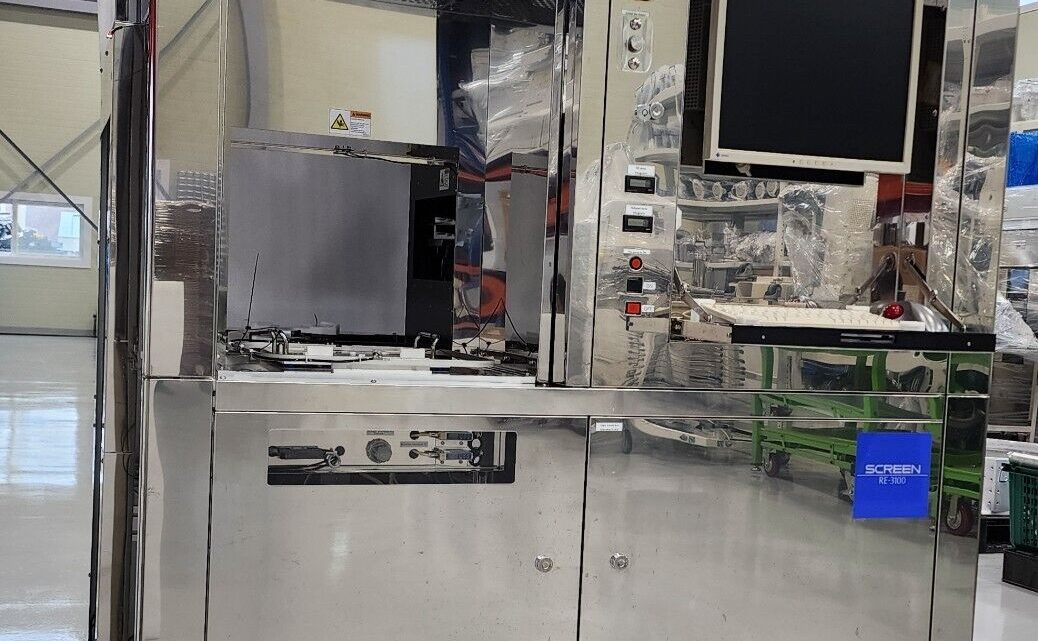
Evaluating a pre-owned / used / surplus Dainippon Screen (or Dai Nippon / SCREEN) RE-3100 ellipsometric film thickness measurement system (or equivalent ellipsometer / film metrology instrument) is quite different from inspecting a CNC machine. Because it’s a precision optical / measurement system, the biggest risks are in optics, electronics, calibration, mechanical stability, environmental sensitivity, and software / support obsolescence. Below is a detailed checklist of what buyers should look for, test, and verify before committing to such equipment.
Understanding the Instrument & Key Functionality
First, let’s clarify what your RE-3100 (or similar) would do, and which subsystems are critical:
- An ellipsometric film thickness measurement system is used to measure thin-film thickness and optical constants (refractive index, extinction coefficient) by analyzing polarization changes of light reflected from a film/substrate interface.
- Core subsystems include: light source(s), polarizer/analyzer optics, beam splitters, compensators, detectors / spectrometers, optical path alignment, mechanical scanning / stage, control electronics / motor drives, data acquisition / signal processing / software, and calibration references / standards.
- The system accuracy, repeatability, and stability depend heavily on optical alignment, cleanliness, vibration isolation, temperature stability, drift control, and software algorithms.
- Over time, optics (e.g. polarizers, beam splitters, coatings) degrade, detectors lose sensitivity, mechanical drift occurs, electronic components age, and software / firmware may become obsolete or incompatible.
Given these vulnerabilities, your evaluation must probe both the “hardware” side (optics, mechanics, electronics) and the “software / calibration / usability / support” side.
Note: I could not immediately locate a public datasheet specifically for a “RE-3100” from SCREEN / SCREEN Semiconductor Solutions (their catalog listings show a RE-3500 for film thickness measurement) so you should confirm with the seller the exact model and specifications.
Buyer’s Due-Diligence / Inspection Checklist
Below is a structured checklist, broken into major subsystems, with what to check, how to test, and red-flag signs of degradation or failure.
| Subsystem | What to Check / Test | Why It’s Important / Red-Flags to Watch For |
|---|---|---|
| Instrument History & Documentation | • Serial number, manufacture date, model variant • Operation time / usage logs (hours of operation) • Maintenance / service logs: optical alignment, calibration, repairs • Any modifications, upgrades, retrofits (e.g. replaced detectors, optics, software) • Reason for disposal / sale | Helps you understand how much “wear” the system has seen; absence of logs is a risk factor |
| Optical Subsystem (Light Source, Polarizers, Beam Optics, Detectors) | • Turn on the instrument and verify light source(s) are functional (lamp, laser diode, LEDs) • Measure output intensity / uniformity across the spectrum (if spectroscopic) vs expected values • Inspect polarizers, compensators, beam splitters, mirrors for cleanliness, coatings, scratches, dust, aging / delamination • Check alignment of optical path: is the beam correctly hitting the detectors, centered, no vignetting • Verify detector(s) or spectrometer(s): noise floor, dark current, linearity, sensitivity • Monitor signal-to-noise ratio and compare against nominal performance • Check for optical drift over time (e.g. repeated measurement of a stable reference) • Inspect any internal filters, gratings, lenses for degradation or dust | Because the instrument’s accuracy relies on pristine optics and stable alignment, any degradation here directly impacts measurement validity. Replacing optics or detectors may be expensive or impossible for older models |
| Mechanical / Stage / Sample Handling / Motion System | • Move sample stage (X, Y, Z or rotation) over full travel; check for smooth motion, no stiction, no binding • Check stage repeatability: return to same position multiple times, measure displacement • Inspect bearings, linear guides, motors, encoders, flexures, coupling mechanisms • Test sample alignment / centering routines, tilt / focus movement • Check whether drift or backlash is present • If there is a scanning stage or motorized optics mounts, verify their operation and repeatability • Check sample holders / jigs / fixture integrity, flatness, cleanliness • If there is an environmental chamber (e.g. vacuum, temperature control), test that control and seals | Mechanical inaccuracies or drift compromise the repeatability and accuracy of film thickness measurement |
| Calibration & Reference Standards | • Ask whether calibration reference wafers / standards (e.g. known thickness / refractive index standards) are supplied • Verify when last calibration was done, and by whom • Run the instrument on calibration standards and compare measured thickness vs known values • Test multiple wavelength / multiple angle / multiple polarization calibrations (if supported) • Assess calibration stability over time (repeat checks) • Check whether software supports calibration updates, drift compensation | If the instrument cannot be reliably calibrated (or baseline calibration has drifted beyond correction), its measurements are useless |
| Environmental Sensitivity / Stability / Drift | • Let the instrument reach thermal equilibrium (warm it up for hours) and then check measurement drift over time • Evaluate sensitivity to environmental changes (temperature, humidity, vibration) • Check vibration isolation, mechanical damping, enclosure integrity • Test repeatability across multiple runs over hours or days • Check whether the instrument has internal compensation for drift, temperature, or other environmental corrections | Even small optical or thermal drift in ellipsometry can lead to substantial measurement errors in thin films |
| Control Electronics, Data Acquisition & Signal Path | • Inspect the electronics / control cabinet: wiring, connectors, boards, cooling / fans, dust, corrosion • Check power supplies, stability, noise levels, grounding • Check analog/digital signal paths, noise / interference, grounding loops • Inspect control boards, data acquisition cards, ADC / DAC modules, interface boards • Check whether spare modules / redundancy exist • Verify software / firmware version compatibility, ability to upgrade / patch • Check communication interfaces (USB, Ethernet, GPIB, etc.), data throughput, error logs • Run diagnostic tests, self-checks, error reporting, status monitors | Electrical / signal path faults can be subtle yet fatal—noise, interference, data corruption all degrade measurement fidelity |
| Software, Data Processing & Usability | • Inspect the user interface, data acquisition software, analysis engine, output / reporting tools • Run test measurements, review result consistency, ability to adjust parameters • Confirm that software can handle your required film thickness ranges, materials, wavelength ranges, optical models • Check whether software is licensed, whether licenses / keys are transferable or expired • Look for compatibility with modern computers / OS, file export formats, updates • Check error handling, logging, recipe management, calibration management • Ask whether the seller can provide software backups, installation disks, license keys • Evaluate whether you or your team can modify or maintain the software (in case vendor support stops) | Even a perfect instrument is useless if software is unusable, locked, or obsolete |
| Performance / Test Measurements | • With known reference film(s), run measurements and compare thickness, optical constants against expected values • Across multiple points / multiple angles / multiple spots, check uniformity, repeatability • Vary film thickness / material types (if possible) to test dynamic range and linearity • Long run stability: repeat the same measurement over hours to see drift • Check measurement error bars, noise in data, residuals in fitting • Sensitivity test: small changes in film thickness should reflect in measured difference • Compare results between multiple measurement modes (if instrument supports them) | These tests validate whether the instrument still performs to specification in your use case |
| Support, Spare Parts & Obsolescence Risk | • How old is the instrument? Are parts (optical components, detectors, boards) still manufactured / available? • Are service engineers still available for this model / brand / location? • Are software updates, patches, support contracts still available? • Ask about spare parts inventory (e.g. extra detectors, polarizers, beam splitters, control boards) included in the sale • Check whether any critical components have already been replaced or refurbished • Ask whether calibration standards / references are replaceable or upgradable • Evaluate risk that future failure in optics / electronics leaves the system unusable | In measurement equipment, obsolescence is a killer: you need ongoing support, spares, and calibration paths |
| Physical Condition, Cleanliness & Handling | • Open covers and visually inspect optics, mirrors, mounts, interior surfaces for dust, dirt, residue, scratches • Check for signs of physical damage (bent mounts, misalignment, loose components) • Inspect doors, covers, seals, enclosures for integrity • Check the cleanliness of sample stage, holders, mechanical parts • Confirm that the instrument has been stored / used in clean, controlled environment (low dust, stable temp) • Check for signs of prior damage (optical components with repair marks, replacement modules) | Poor handling or contamination can degrade optical performance and is a warning sign of neglect |
| Installation / Environment / Utilities | • What space, isolation, vibration control, clean room / dust environment is needed? • Power supply (voltage, stability, grounding, noise) compatibility • Cooling, temperature control, humidity control requirements • Cleanliness (dust, particulate control) and air filtration • Floor stability, vibration isolation, thermal isolation • Any additional infrastructure (air, vacuum, gas, exhaust) required | Even a perfect instrument fails if the environment is unsuitable (optics drift, contamination, noise) |
| Logistics, Transport & Commissioning Risks | • How to ship optics / detectors safely (shock, vibration, humidity) • Risk of misalignment during transport — need for realignment / re-calibration onsite • Time and cost for re-commissioning, alignment, calibration, software setup • Require test substrates to be transported or available • Documentation, manuals, alignment procedures, drawing / schematics must accompany machine | The logistics risk in delicate optical systems is high — any shock or misalignment in shipping can degrade performance badly |
Red Flags & Deal-Breakers
When inspecting a candidate RE-3100 (or equivalent) system, certain problems should raise alarms (or be deal-breakers unless heavily discounted):
- Weak or non-functioning light source or extremely low signal on detectors.
- Optics component degradation: scratched / fogged / delaminated polarizers, beam splitters, mirrors, coatings.
- Detector failure or huge noise, poor linearity, or drift.
- Mechanical stage errors: binding, backlash, poor repeatability, stage drift.
- Uncalibrated, drifting performance when measuring reference standards.
- Software / license / control software missing, locked, or obsolete and not transferable.
- Electronics / control boards missing, corroded, overheated, or visibly damaged.
- Critical component obsolescence: if detectors, optics, or boards are no longer available.
- Too much dust, contamination, scratches inside optical path — suggests poor care.
- Shipping / alignment risk too high: if the system is known to be highly alignment-sensitive and transport will likely damage it.
- Seller refuses functional test, calibration tests, or cannot provide reference standards.
- No access to manuals, schematics, service documentation — making future repair difficult.