Unlock Hidden Value: What Professionals Know Before Purchasing a Used, Pre-Owned, Secondhand, Surplus MOORE No 3 JIG Grinder Coordinated Hole Grinding
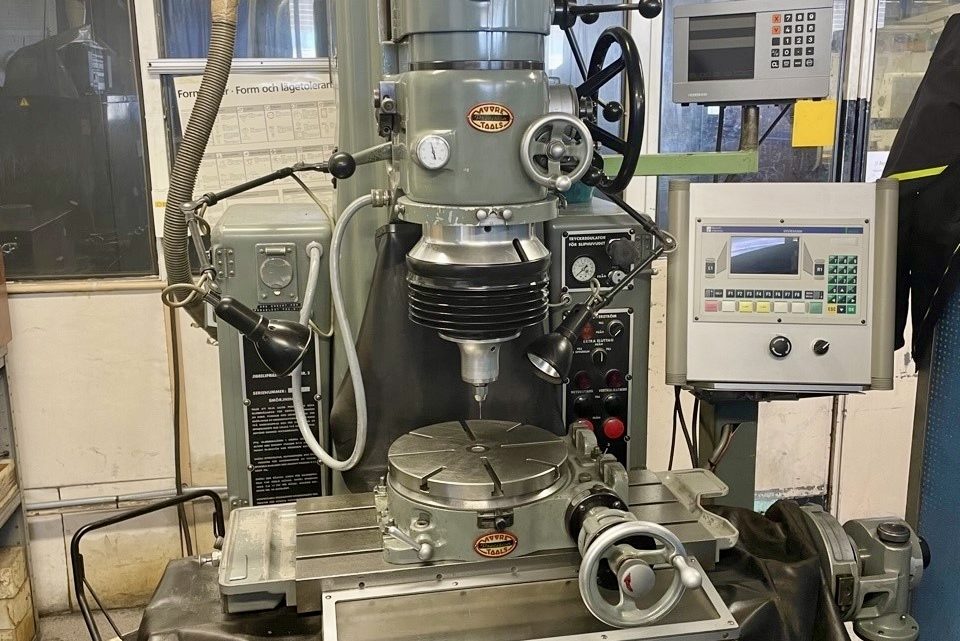
When professionals evaluate a used, pre-owned MOORE No. 3 Jig Grinder, they are not just buying a machine—they are acquiring a precision system capable of micron-level accuracy. This model, originally built by Moore Special Tool Company, remains a benchmark in coordinated hole grinding, toolroom precision, and aerospace-grade finishing.
Below is what experienced buyers understand—and what separates a good deal from a costly mistake.
What Makes the MOORE No. 3 Special?
A jig grinder like the Moore No. 3 is designed for ultra-precision hole positioning and finishing, often achieving tolerances in the range of ±0.0001″ (≈2.5 microns) .
Key Professional Advantages:
- Extreme accuracy → superior to most milling/turning machines
- Air spindle technology → ultra-high-speed grinding (40,000–60,000 RPM)
- Coordinate grinding capability → ideal for dies, molds, aerospace parts
- Long lifespan → many machines from the 1960s–80s still outperform newer grinders
👉 This is why Moore machines are still widely used in toolrooms, aerospace, and precision mold industries.
Technical Specifications (MOORE No. 3)
Below is a consolidated professional spec sheet (varies slightly by configuration and retrofit level):
Machine Capacity & Travels
- Table Size: 11″ x 24″ (280 x 610 mm)
- X-Axis Travel: 18″ (457 mm)
- Y-Axis Travel: 11″ (280 mm)
- Z (Spindle Vertical Travel): ≈3.6″ (92 mm)
- Table to Wheel Collet Distance: 2″ – 18″ (50–457 mm)
Spindle & Grinding Performance
- Main Spindle Speed: 25 – 250 RPM (variable)
- Grinding Spindle (Air Spindle):
- Typical: 40,000 – 60,000 RPM
- Spindle Feed: 2 – 240 strokes/min (variable)
- Grinding Capacity: ≈1/64″ to 3.5″ bore diameter
Machine Construction
- Structure: Heavy-duty cast iron base
- Positioning Accuracy: Up to 0.0001″ (2.5 µm) capability
- Table Movement: Hand-scraped ways with precision lead screws
- Control: Manual (often upgraded with DRO or CNC retrofits)
Dimensions & Weight
- Approx. Size: 80″ x 65″ x 102″
- Weight: ≈3,800 – 4,000 lbs (1,700–1,800 kg)
What Professionals Check Before Buying
1. Spindle Condition (CRITICAL)
- Air spindle is the heart of the machine
- Check:
- Runout (micron level)
- Noise/vibration
- RPM stability
👉 Replacement cost can exceed €5,000–€15,000
2. Table & Ways Wear
- Inspect:
- X-Y backlash
- Table smoothness
- Scraping marks (original vs worn)
👉 Worn ways = lost accuracy (main risk in old machines)
3. Alignment & Geometry
- Check:
- Spindle perpendicularity
- Table squareness
- Circular interpolation accuracy
👉 Even slight deviation kills jig grinding precision
4. Accessories & Tooling (Hidden Value!)
Machines often come with:
- Air spindles (different speeds)
- Grinding arbors
- Radius attachments
- DRO systems
👉 These can add €5K–€20K hidden value
5. CNC Retrofit Potential
Many professionals specifically buy Moore No. 3 for:
- CNC upgrades (3–5 axis)
- Achieving modern performance at low cost
Retrofit systems can reach:
- Positioning accuracy: 0.000010″ resolution
Common Mistakes Buyers Make
- Buying without checking spindle → most expensive mistake
- Ignoring missing grinding head → machine becomes unusable
- Assuming all Moore machines are equal → condition matters more than age
- Overlooking power requirements (single-phase vs 3-phase)
Real Market Insight (Used Machine Value)
Typical pricing range (depending on condition & tooling):
- Basic / incomplete: $… – $…
- Good working condition: $… – $…
- Fully equipped / retrofitted: $….+
👉 The real value is in precision + accessories, not just the base machine.
Final Professional Insight
A used MOORE No. 3 Jig Grinder is not just a machine—it is a precision platform.
Smart buyers focus on:
- Spindle health
- Mechanical geometry
- Included tooling
- Upgrade potential
If these are right, you can acquire a machine capable of:
👉 Aerospace-level tolerances
👉 Mold & die perfection
👉 Long-term reliability