Ultimate Buyer’s Guide: Expert Insights Before Investing in a Pre-Owned, Used, Surplus, Secondhand AMADA MIYACHI NOVA 6 Laser Welding System made in Japan
What is the AMADA MIYACHI NOVA6 system?
Before diving into buying tips, let’s start with what this machine is so you know what to expect.
- The NOVA6 is a CNC laser welding workstation by Amada Miyachi (through its Amada Weld Tech / Miyachi group).
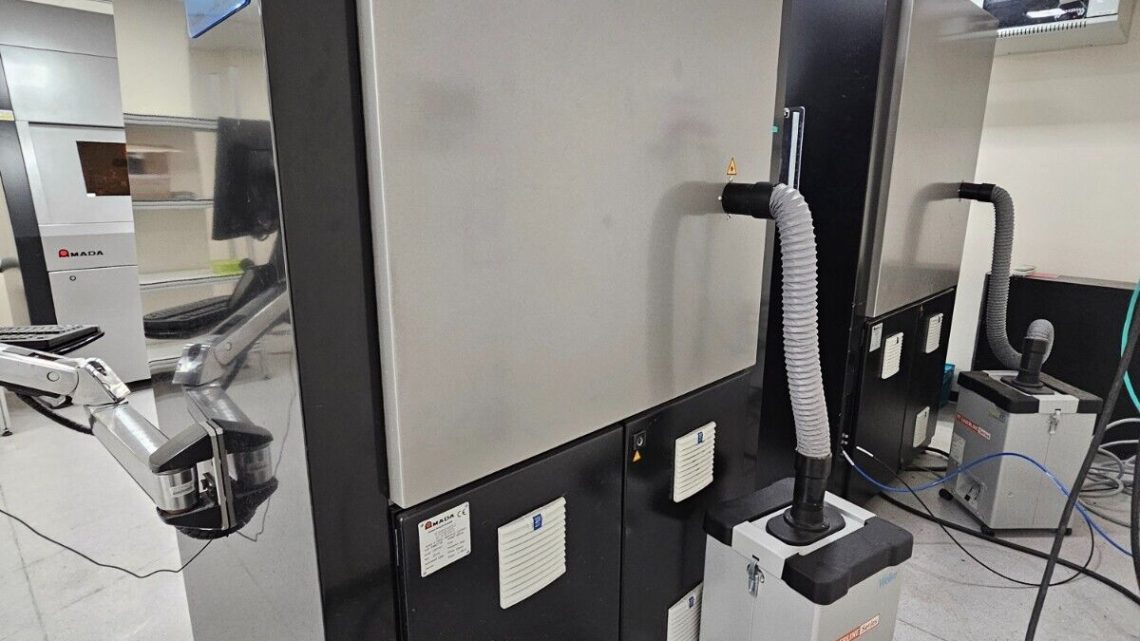
- It’s a modular, multi-axis (often X-Y-Z or gantry style) system, combining a laser, motion stage, optics, process monitoring, and controller (IMS-3000 or equivalent) into a unified system.
- It is used for precision applications such as medical implants, sensors, fine welding tasks (e.g. small parts, hermetic sealing) .
- Because the system is complex (optics, motion, control, laser source, gas systems, sensors), buying a used unit carries significant risk unless carefully vetted.
Given the sophistication, the devil is in the details. Here’s how to approach your purchase.
Why buy used / surplus?
Potential advantages
- Cost saving: You may acquire a high-end laser welding system for a fraction of new list price.
- Faster deployment: If you find a ready-to-use unit that’s been well maintained, you can reduce lead time vs buying a brand new build.
- Proven parts: A used system might already have updates, refinements, or user experience built in.
Risks you must manage
- Hidden damage or deterioration (especially in optics, lasers, alignment)
- Obsolete or discontinued components
- Lack of documentation, calibration records, or history
- Shipping, installation, re-alignment, commissioning costs that balloon beyond your savings
- Warranty void or no support
- Safety, regulatory, or compliance issues (laser safety, interlocks)
Many of the pitfalls of buying used lasers are explained in published laser-equipment guides (e.g. “Important steps to know before buying used laser system”) . Always treat the used purchase as high risk unless mitigated by thorough inspection, test runs, and contractual protections.
Pre-purchase Checklist & Due Diligence
Use the checklist below when evaluating a candidate NOVA6 (or equivalent) used system.
| Category | What to Check / Ask | Why It Matters | Acceptable / Red Flag Indicators |
|---|---|---|---|
| Seller & provenance | Who is the seller (OEM, integrator, lab, surplus house)? Ask for references or prior transactions. | A seller with domain experience in laser equipment is more likely to disclose defects and support you. | OEM or accredited integrator preferred. Avoid unknowns who have no track record. |
| Documentation & history | Request service records, calibration logs, optical alignment logs, parts replaced, upgrades, software version history. Ask for hours (or cycles) on the laser, motion axes, power supply, and critical subcomponents. | Knowing the history can reveal chronic issues or parts near end-of-life. | Complete and consistent logs are a good sign. Lack of documentation is a red flag. |
| Laser source & power module | Identify the laser type (Nd:YAG, fiber, etc.), its age, operating hours, maintenance schedule, spare parts availability. | The laser is the heart of the system. If it’s nearing end-of-life or uses obsolete components, replacement cost may be prohibitive. | If the source has been heavily used or no spare parts exist, you may face a major future investment. |
| Optics & beam path | Inspect optics (lenses, mirrors, beam combiners), beam delivery fiber or alignment modules, windows, beam splitters, cleanliness, coatings. Ask when they were replaced or cleaned. | Misalignments or degraded coatings reduce performance and may require expensive rework. | Optics in good condition (no coating damage, no contamination) is essential. |
| Motion / mechanical axes | Inspect XY, Z, and any motion stages for precision, backlash, wear, play. Check motors, encoders, linear guide rails, bearings. Run test moves, check repeatability. | Accuracy and repeatability are critical in precision laser welding. Worn mechanics degrade performance. | Small backlash, tight tolerances, responsive motion are good. Large play, worn rails, or jerky motion is bad. |
| Controller / software / firmware | Ask what version of controller (IMS-3000 or equivalent), what software, whether license issues exist, if backups are available. Try to see the user interface. | Compatibility, support, and ease of operation hinge on the control system. | Latest or supported firmware versions, software license transferability, clean UI. |
| Safety & interlocks | Confirm that all laser safety enclosures, key interlocks, shutter systems, emergency stops, safety curtains or housings are intact and functional. | Lasers are hazardous. Safety must not be compromised. | All interlocks functional. Missing or bypassed safety systems is a deal-breaker. |
| Gas / cooling / utilities | Check cooling systems (chillers, water flow, heater/cooler), gas supply (e.g. inert gas, shielding gas), vacuum if applicable, connections, valves. | Laser systems often require stable cooling and gas regimes. Failures here cause downtime or damage. | Clean plumbing, no leaks, proper flow, evidence of checking. |
| Power / electrical systems | Confirm voltage, current, stability, power supply modules, power cabling, redundant supplies. Check grounding and shielding. | Electrical issues can damage sensitive electronics or optics. | Solid, industrial-grade wiring, clean power, protection circuits. |
| Test welds / sample parts | Under your own parts or standard test samples, ask to run or verify sample welds using your production geometries. Check weld quality, consistency, reproducibility. | The system must be able to handle your real tasks. | Uniform, acceptable welds within tolerances. If not, red flag. |
| Calibration & alignment | Ask when the last optical calibration was done, alignment of beam path, focus position, motion axes. | Out-of-calibration machines may require costly requalification. | Recent calibration, or willingness to calibrate before sale. |
| Spare parts & consumables | Request which spare parts come with the system (focusing lens, windows, optics, nozzles, etc.). Ask about parts availability from OEM or third-party suppliers. | Some spare parts for older machines become obsolete, and lead times may be long. | Availability of common parts, willingness to supply spares. |
| Warranty, acceptance, and contractual clauses | Negotiate warranty, acceptance testing period, remedies if machine fails to meet specs, cost of moving/installation, transport risk. | To mitigate risk, you need contractual protection, not just “as is” sales. | Some limited warranty or performance guarantee. Clear cost arrangements. |
| Transport, installation & re-commissioning | Understand how you’ll physically move the unit (rigging, cleanroom, alignment in place), verify site requirements (floor load, power, foundation, vibration isolation). | The cost to transport, reinstall, align can far exceed purchase savings. | Supplier provides pre-shipping guidance, installation support, or engineer assistance. |
Special Considerations for the NOVA6 (versus generic laser systems)
Because the NOVA6 is a refined, integrated system, there are extra “gotchas”:
- Modularity & customization – NOVA6 systems are often customized with extra modules (vision systems, fixtures, special optics). Ensure any additional modules are functional and documented.
- Controller / firmware versions – Amada / Miyachi systems often have proprietary controllers and software. Transitioning control licenses or updating firmware may be restricted or expensive.
- Upgradability – Given advances in laser sources (e.g. migrating from traditional Nd:YAG to fiber lasers), check whether the unit you buy is “lock in” or can be retrofitted or upgraded.
- OEM support & parts chain – Because Amada / Miyachi is a specialized equipment supplier, parts and support for older units may be limited. Confirm that the OEM (or authorized service partners) still carry the parts you need.
- Laser safety class & regulatory compliance – Some older units may not fully comply with modern safety standards (e.g. interlock standards, laser enclosure certification). Re-certification may be needed for your jurisdiction.
- Re-alignment complexity – When re-installed, optical alignment, beam path tuning, and motion calibration demand high technical expertise. You’ll likely need a specialist familiar with NOVA6 or Miyachi systems.
- Integration dependencies – Because these systems often depend on other subsystems (e.g. vision cameras, fixturing, automation, part handling), verify that all ancillary parts are included, functional, and serviceable.
Pricing & Valuation Strategy
Evaluating the “right price” is tricky. A closing eBay listing shows a “seller refurbished” AMADA MIYACHI NOVA6 for (2019 manufacture) . That gives a rough ballpark for a “good condition” unit.
Here’s how to think about pricing:
- Benchmark vs new cost: Understand what a new or refurbished NOVA6 would cost from OEM / integrator to see how much headroom you have.
- Depreciation & condition adjustment: Adjust your pricing down depending on age, wear, missing parts, required rework, or risk factors.
- Value of included extras: Fixtures, tooling, spare optics, calibration services, installation support, warranty all add value.
- Cost of reinstallation & validation: Deduct your anticipated cost for shipping, installation, alignment, commissioning, downtime.
- Warranty and acceptance period: If the seller offers a test / acceptance period or limited warranty, you may be willing to pay a bit more.
- Negotiation levers: Use missing documentation, unknown maintenance history, risk of obsolete parts, cost of moving/commissioning, and calibration uncertainty as negotiation points.
As a rough rule, a used machine in good shape might fetch 30–60% of a new-equivalent cost (depending heavily on age and condition), but with the high stakes of laser systems, every discount must be earned by inspection or risk mitigation.
After Purchase / Commissioning Checklist
Once you purchase (or as part of your contract), make sure you or your engineer carry out:
- Pre-move inspection and documentation – Photograph, label, document every connection, cable, alignment before disassembly.
- Clean and service optics, replace old or near-end lifetime optics
- Re-alignment of beam path, calibration of motion axes
- Baseline test welds with sample parts to establish acceptance metrics
- Measure accuracy, repeatability, positional error, focus stability
- Thermal stability tests (warm-up, drift)
- Safety certification / interlock check
- Document recommended preventive maintenance schedule going forward
- Train operators & maintenance staff
- Inventory critical spare parts (optics, cables, sensors)
Key “Red Flags” That Should Make You Walk Away
- No or partial documentation (especially alignment/calibration logs)
- No demonstrable test welds or inability to run samples with your parts
- Missing or non-functional safety interlocks or enclosures
- Obsolete or unserviceable laser module or optics
- Visible damage, contamination, or misalignment in optics path
- Huge unknown cost to move, re-commission, align
- Seller refuses limited warranty or acceptance test period
- Firmware / software license issues or locked-out controllers
- Excessive wear on motion axes, rails, guides, or evidence of poor maintenance
- Supplements or modules are missing or don’t function
If you find any of these, use them to renegotiate heavily — or walk away if too risky.
Summary & Final Recommendations
- The AMADA MIYACHI NOVA6 is a high-precision, modular laser welding workstation, widely used in demanding industries (e.g. medical, microelectronic) .
- Buying it used can be cost-effective, but comes with substantial technical, logistical, and support risk.
- Use a rigorous due diligence checklist focusing especially on optics, motion, controller, safety, and vendor support.
- Demand a test / acceptance period, limited warranty, and clear transport & installation terms.
- Build in your own cost for moving, calibrating, aligning, and spare parts.
- If possible, involve someone with prior experience on NOVA6 or Amada/Miyachi systems to inspect the unit before final purchase.