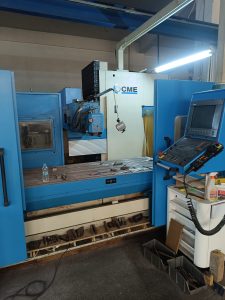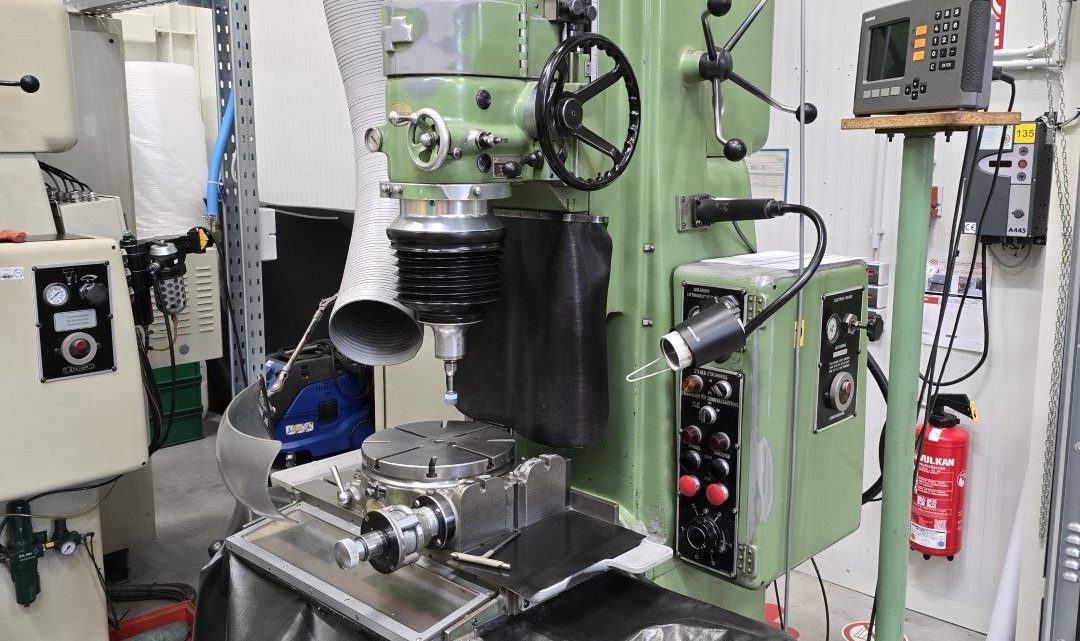
Technical Evaluation Guide: How to Identify a Quality Used, Secondhand, Pre-Owned, Surplus MOORE G-18 JIG Coordinated Hole Grinder Machine made in USA
1) Overview of the MOORE G-18 Jig Grinder
The MOORE G-18 is a precision jig grinding machine manufactured in the USA, widely regarded as the benchmark for ultra-fine hole and surface finishing accuracy. It is engineered for applications in aerospace, mold & die, and high-precision tooling industries, where tolerances are typically within a few microns.
The G-18’s combination of hydrodynamic spindle, precision-ground slideways, and optical measuring system makes it one of the most accurate manual and semi-automatic jig grinders ever built.
2) Key Technical Features to Verify
| Component | Evaluation Focus | What to Check |
|---|---|---|
| Base & Column | Structural integrity | Inspect Meehanite casting for cracks, corrosion, or coolant damage. Verify level and alignment. |
| Spindle Head | Spindle bearing & taper | Run spindle at various speeds (up to 60,000 RPM if high-speed head). Listen for bearing noise or heat rise. |
| Worktable & Slides | Geometric accuracy | Check for backlash, stick-slip, or uneven wear on ways. Movement should feel smooth and consistent. |
| Feed Mechanism | Handwheel & micrometer feed | Test for backlash and smooth feed motion; verify handwheel graduations match travel. |
| Optical Measuring System | Position accuracy | Ensure optical scale alignment and illumination system are working properly. |
| Lubrication System | Oil distribution & flow | Confirm lubrication lines are unblocked; check oil sight glass and flowmeter. |
| Electrical Cabinet | Original wiring | Inspect for modifications, corrosion, and grounding; verify panel condition. |
| Coolant System | Cleanliness | Look for contamination, filter clogging, and pump operation. |
| Accessories | Original MOORE tooling | Verify the presence of wheel arbors, spindle collets, air gauge heads, and dresser units. |
3) Core Accuracy Tests Before Purchase
| Test | Method | Acceptable Value |
|---|---|---|
| Spindle Runout | Use precision test bar and dial indicator | ≤ 0.002 mm |
| Table Flatness | Sweep indicator across full travel | ≤ 0.005 mm |
| Perpendicularity (X-Y) | Measure across optical scales | ≤ 0.005 mm |
| Spindle Thermal Drift | Run 1-hour test at 60% load | ≤ 2 µm |
| Feed Backlash (X/Y) | Reverse movement check | ≤ 0.003 mm |
| Hole Roundness | Grind test hole (φ10 mm) | ≤ 0.002 mm deviation |
| Surface Finish Quality | Measured Ra | ≤ 0.2 µm achievable with proper wheel and coolant |
4) Detailed Inspection Steps
A. Static and Visual Inspection
- Remove way covers and inspect for scoring, corrosion, or dried oil.
- Check the column and table for parallelism and mechanical rigidity.
- Confirm the machine’s foundation bolts and leveling pads are intact.
B. Power-On Test
- Run spindle at low, mid, and maximum RPM. Observe noise and vibration levels.
- Move each axis through full travel; verify no hard spots or binding.
- Test micrometer feed and handwheel backlash compensation.
- Operate air systems (if equipped with air-bearing spindles).
C. Grinding Accuracy Verification
- Perform a sample grinding operation on a known test piece.
- Measure bore roundness and taper deviation using a coordinate measuring machine (CMM) or air gauge.
- Evaluate the surface finish visually and via profilometer.
5) Common Wear Patterns to Watch
- Spindle Bearings: Noise, heat, or runout beyond spec — indicates imminent rebuild.
- Ways and Gibs: Dull movement or sticky slide behavior — may need scraping or regrind.
- Optical Systems: Weak light or inaccurate readings — optical encoder deterioration.
- Drawbar Tension: Poor wheel retention — spring fatigue or collet wear.
- Table Backlash: Measurable play when reversing direction — worn lead screw or nut.
6) Documentation & Accessories Checklist
| Required Document | Purpose |
|---|---|
| OEM specification sheet | Confirms spindle, travels, accuracy |
| Electrical schematic | For service or retrofit reference |
| Accuracy test certificate | Verifies geometry and spindle performance |
| Service log | Confirms preventive maintenance |
| Tooling inventory | Lists included spindles, arbors, wheel dressers, air gauging tools |
7) Operational Recommendations
- Always warm up the spindle before precision grinding.
- Maintain oil cleanliness and lubrication flow — critical for long-term accuracy.
- Use balanced grinding wheels and qualified dressing tools.
- Keep the optical system sealed from coolant mist and dust.
- Regularly re-level the machine to maintain geometry.
8) Acceptance Criteria Summary
| Parameter | Ideal Value | Notes |
|---|---|---|
| Positioning accuracy | ≤ ±2 µm | Verified by dial or optical scale |
| Surface finish (Ra) | ≤ 0.2 µm | Dependent on wheel and setup |
| Hole roundness | ≤ 2 µm | After full grinding cycle |
| Perpendicularity | ≤ 0.005 mm | X-Y verified |
| Backlash | ≤ 0.003 mm | In both X and Y axes |
| Thermal drift | ≤ 2 µm/hour | Stable environment required |
9) High-Value Features That Add Worth
- Machines with verified original MOORE calibration reports.
- Upgraded digital readout (DRO) system with micrometer precision.
- Air-bearing spindles with valid pressure system certification.
- Complete tooling packages (arbors, mandrels, diamond dressers).
- Machines maintained in temperature-controlled metrology rooms.
10) Red Flags — When to Walk Away
- Unstable spindle vibration or abnormal thermal expansion.
- Missing optical measuring components or unreadable scales.
- Cracks on table, saddle, or column casting.
- Unverified geometry or no accuracy test data.
- Modified wiring or non-MOORE electrical conversions.
11) Buyer’s Quick Inspection Checklist
✅ Serial number & OEM tag photo
✅ Service and calibration history
✅ Table, spindle, and slideway condition verified
✅ Optical measuring system functional
✅ Spindle runout & feed backlash tested
✅ Sample ground part inspected
✅ Tooling & accessories list confirmed
✅ Power supply compatibility (USA 220V / 3-phase)
Pro Tip
Before purchase, insist on a live grinding demonstration. Evaluate both hole geometry and surface finish using metrology equipment — this remains the most practical proof of true MOORE G-18 performance.