08/10/2025
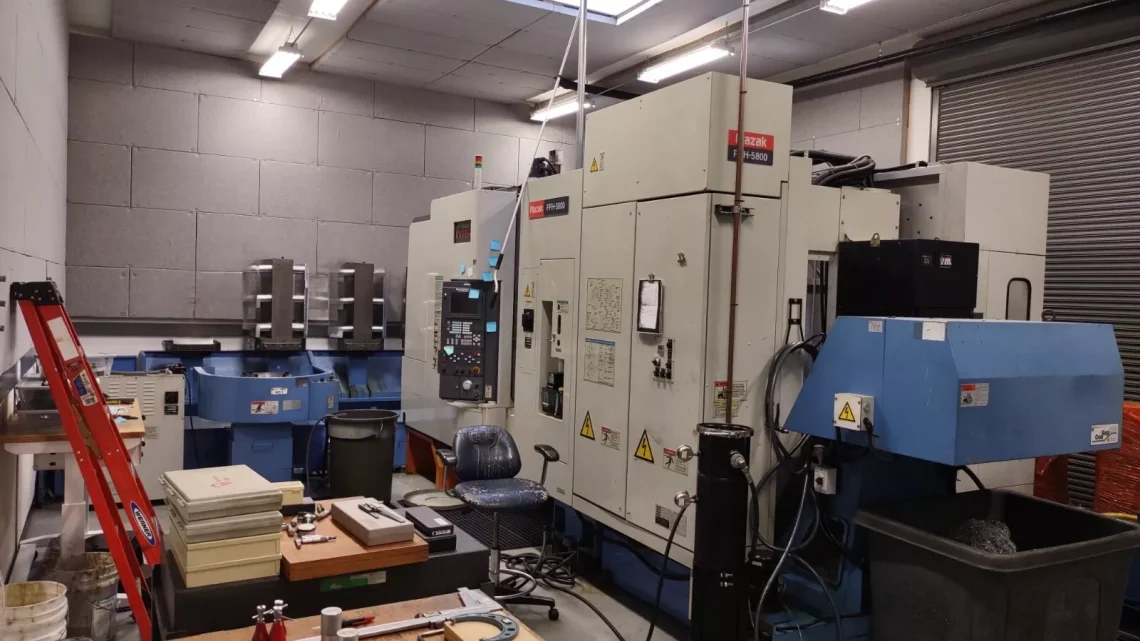
Technical Evaluation Guide: How to Identify a Quality Used, Secondhand, Pre-Owned, Surplus Mazak PFH-5800 CNC Full 4th axis Horizontal Machining Center with 6 Station Pallatech System made in Japan
1) Machine Overview & Benchmark Specs
Before on-site inspection, gather published specs for your specific unit so you can compare actual vs spec. This gives you baseline expectations. Example specs for PFH-5800 include:
- X / Y / Z travels: ≈ 730 × 730 × 740 mm
- Spindle: 12,000 rpm, BT/CAT-40 or similar taper, ~22 kW drive power
- Pallet size: ≈ 500 × 500 mm (for each pallet)
- Pallet load capacity: ~700 kg
- 4th axis (B-axis / pallet indexing) with 0.001° indexing accuracy (non-interpolating)
- Tool changer capacity: e.g. 80 pockets
- Through-spindle coolant (70 bar or low pressure) option
- Control: Mazatrol 640M (or Fusion 640M)
- Weight / footprint: ~11,600–13,400 kg, large floor footprint
Knowing these spec values sets your acceptance thresholds.
2) Pre-Inspection Document Request
Ask the seller to provide:
- Machine’s specification / build sheet (factors like pallet system, B-axis rating, ATC type)
- Serial number, build year, and past ownership
- Service / maintenance logs (spindle rebuilds, axis overhauls, lubrication)
- Geometry / calibration / laser test reports
- Control parameter backups, axis compensation tables, B-axis calibration data
- Electrical / hydraulic / pneumatic schematics
- Tooling / pallet system parts list
These documents help you set pass/fail benchmarks before going on site.
3) Visual & Static Inspection (Power Off)
When the machine is de-energized:
- Frame & Base: Check castings, weld repairs, cracked joints, internal weld lines, signs of overload or collision damage.
- Pallet Stations (Palletech): Look for wear or damage on pallets, indexing pins, pallet support rails, lock/unlock mechanisms.
- Pallet surfaces: Table flatness, no scoring or heavy marks; check contact surfaces for matching tolerances.
- Guideway / Ways Covers: Check for gouges, corrosion, lubricant crusting, chip damage, way cover condition.
- Spindle Nose / Taper: Inspect for damage, corrosion, scoring.
- ATC / Tool Magazine: Check magazine arms, tool grippers, pocket wear, indexing for play.
- Coolant / Through-spindle Plumbing: Check internal coolant lines, seals, O-rings, unions for leaks or damage.
- Electrical Cabinet / Wiring: Open and inspect; look for overheating, dusty accumulation, rodent damage, burnt wiring.
- Hydraulic / Pneumatic Lines: Inspect hoses, pressure lines, valves, accumulators for leaks or deterioration.
- Cabinet Doors / Safety Guards / Covers: Hinges, interlock switches, door alignment, condition.
4) Power-On & Functional Tests
With power supplied (and safety procedures enabled), perform:
- Warm-up / Initialization: Run axis motion for 20–30 min to stabilize temperature.
- Homing / Zero Return: Check repeatability of home positions.
- Axis motion test (X, Y, Z): Jog at 25 %, 50 %, 100 % feed/rapid rates; listen for unusual sound, chatter, or binding.
- Pallet / B-Axis Indexing: Index several pallets; check locking repeatability, speed, and no mis-index.
- Tool Change Cycles: Run ATC cycles multiple times (20+); test pick / drop / tool change reliability.
- Spindle Speed Sweep: Ramp from low to max rpm and back while monitoring vibration, noise, temperature ramp.
- Through-Spindle Coolant Flow: Engage coolant, check pressure, flow consistency, no leaks.
- Control / CNC Alarms: Review alarm log; induce mild error conditions and verify error detection functions.
- Pallet Exchange Test (if automatic): Exercise pallet change sequence; check cart motion, shuttle alignment, rails.
5) Accuracy & Motion Verification
These are the most critical tests for geometry and performance:
- Laser Interferometer / Renishaw measurement: Run positioning and straightness tests in X, Y, Z axes. For example, measure linear positioning error over full stroke segments.
- Repeatability: Back-and-forth motion (e.g. ±0.1 mm), measure deviation over multiple cycles.
- Squareness / Orthogonality (X–Y, Y–Z, X–Z): Using a precision square or laser collimator.
- Circular / Arc Interpolation Test: In 4th-axis mode, command a circular or angular contour and measure deviation from nominal.
- Corner Accuracy / Tool Center Offsets: Mill a test block with multiple faces and measure perpendicular faces, step transitions, and alignment.
- Pallet-to-Pallet Repeatability: Mount same part at different pallet positions and compare measured dimensions.
- Thermal Drift Study: Run prolonged machining (1–2 hours) at moderate load; periodically measure reference features to see drift.
- Backlash / Reversal Error: Jog reversal at small increments (e.g., ±0.01 mm) and inspect error magnitude.
6) B-Axis / 4th-Axis (“Pallet / Palletech Index”) Mechanics Check
- Index Accuracy: Verify the B-axis (or pallet indexing) can index to its positions with minimal error—compare index command vs actual.
- Locking / Clamping Force: Check the hydraulic / mechanical clamp on the B-axis or pallet indexing mechanism holds firmly with no slippage.
- Torque / Drive Motor Loading: During indexing, monitor motor current or torque load. Spike or overload may indicate binding or misalignment.
- Encoder / Feedback System: Verify the encoder or feedback device is functioning properly and no lost counts under motion.
- Tilt / Interpolation (if used): If the 4th axis is used in tilt or rotational mode, test small angular movements; check hysteresis, tilt drift, or backlash.
7) Spindle, Tooling & Wear Checks
- Spindle Runout / Vibration: Using a test bar, measure radial runout at nose. Use vibration analyzer to look for bearing frequencies.
- Temperature Rise: Run at a mid-high rpm for 30 min; measure spindle temperature rise.
- Drawbar / Tool Retention Force: If tool change is hydraulic or mechanical, measure retention force with pull gauge.
- Taper Surface Inspection: Blue test or dye test to check contact area.
- Tool Seating / Eccentricity: Use calibration tools to check that tools seat correctly in the spindle.
- Tool Change Accuracy: Check that tool offsets and repeat pick-up offsets are consistent.
8) Coolant, Chip & Lubrication System Tests
- Coolant System: Check pump pressure, flow rate, cleanliness, leaks, shut-off valves, filtration system.
- Chip Conveyor / Chip Handling: Run conveyor, inspect rail wear, no jamming or loose links.
- Lubrication / Way Oil Circulation: Confirm lube system is functional, supply to all axes, check for leaks or blockages.
- Hydraulic / Pneumatic Attitudes: Check pressures, valve responses, accumulator charge states.
- Tank / Filtration Units: Inspect filters, cleanliness (metal particles), leaks, ease of maintenance.
9) Common Wear Patterns & Failure Modes
- Wear on pallet indexing rails or guides causing pallet misalignment.
- Worn clamping surfaces on pallets leading to positional drift under load.
- Turret / ATC wear, gripper inaccuracy.
- Spindle bearing wear (noise or vibration).
- Axis backlash creep or degraded servo performance.
- Cooling & coolant leaks causing internal corrosion or washout of lubrication.
- Control or drive failures—outdated electronics, failing capacitors, servo amplifier degradation.
- Hydraulic leaks or valve sticking.
- Encoder issues or lost-count errors in high-dynamic modes.
10) Required Documentation & Records
Ask for:
- Factory build / configuration sheet
- Geometry / calibration / laser / ballbar reports
- Service / maintenance logs (spindle rebuilds, axis overhauls)
- CNC / control parameter backups
- Hydraulic / pneumatic schematics
- Spare parts list (pallet system components, tool changer parts)
- Manuals / operating instructions
- Evidence of retrofits (if any)
11) Acceptance Criteria Summary (Benchmarks)
Here is a sample target sheet you could use to judge whether the unit is acceptable:
| Parameter | Target / Tolerance | Notes |
|---|---|---|
| Positioning accuracy (X, Y, Z) | ±0.005 mm over 300 mm | Depends on spec sheet |
| Reversal / backlash error | ≤ 0.01 mm | Low is better |
| Repeatability | ±0.003 mm | Over many cycles |
| Pallet indexing accuracy | ≤ 0.005 mm | From commanded index |
| Spindle runout | ≤ 0.005 mm | At nose |
| Thermal drift | ≤ 5 µm over 1–2 hrs | Under load |
| Tool change repeatability | ≤ 0.01 mm | For offset consistency |
| Coolant stability / pressure | Within spec range | No drop under load |
| Drive / servo current stability | No sudden spikes | Smooth trace |
| Noise / vibration at rpm | Minimal | Use analyzer |
If the unit passes most of these, it likely is a high-quality example; if it fails many, it carries high risk.
12) Red Flags / Walk-Away Conditions
- Inability to hold pallet repeatability under load.
- Spindle vibration / bearing noise at any rpm.
- Multiple servo or axis alarms in control or recent history.
- Extensive hydraulic / coolant leaks.
- Cracked or distorted pallet support rails or indexing mechanism.
- Missing or corrupted control backups or parameter data.
- ATC / tool changer mis-indexing or gripper slippage.
- Excessive thermal drift or geometry instability in short time.
- Evidence of past crash damage or major repair without documentation.
13) Quick Buyer’s Checklist (for site use)
- Confirm serial number, year, and build config
- Review spec vs actual travel & component version
- Inspect frame, guides, pallet system, covers
- Run axis movement tests (X/Y/Z)
- Exercise pallet indexing / B-axis
- Cycle ATC / tool change tests
- Ramp spindle and test runout / vibration
- Accuracy tests: laser / measure / repeatability
- Coolant / chip / lubrication system operation
- Review control, backups, alarm history
- Walk away if multiple red flags arise