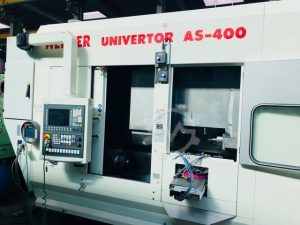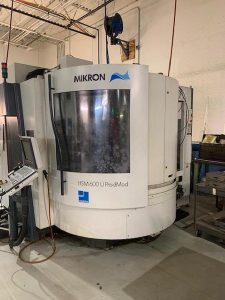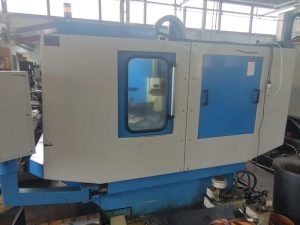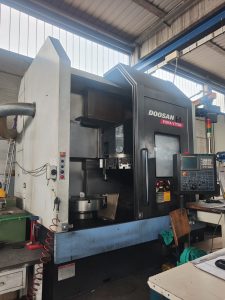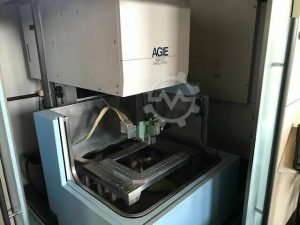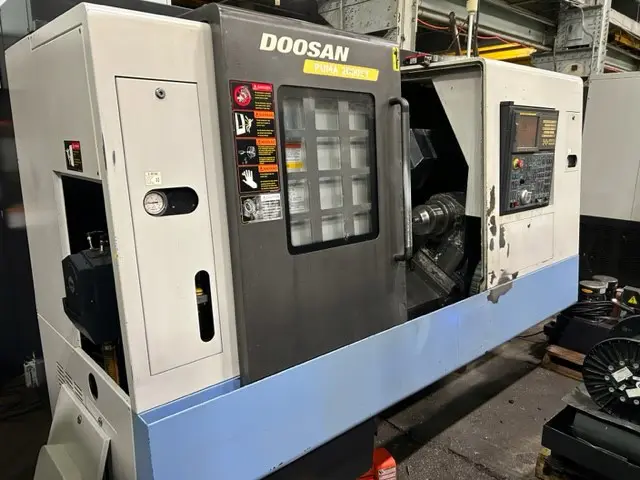
Technical Buyer’s Handbook: Assessing Pre-Owned , Used , Secondhand, Surplus CNC Machines Before Purchase Doosan Puma 2000SY CNC Turning Center made in South of Korea
Below is a detailed Technical Buyer’s Handbook / Due-Diligence Checklist tailored for evaluating a pre-owned / surplus Doosan (Daewoo) PUMA 2000SY CNC Turning Center (multi-axis, live tooling, sub-spindle variant). It’s adapted from general best practices plus known specifications and common issues for the PUMA 2000SY. Use this as your on-site inspection guide and negotiation tool.
1. Pre-Inspection Preparation & Research
Before visiting the machine, gather as much information as possible so you go in informed and with benchmarks to compare against.
1.1 Spec Sheet / Ideal Values
Here are sample specification values for a PUMA 2000SY (multi-axis, live tooling, sub-spindle variant) drawn from listings. Use these as reference targets or red-flag checks:
| Feature | Typical / Catalog Value | Notes / Source |
|---|---|---|
| Swing over bed | 23.6 in (~600 mm) | |
| Swing over carriage | 21.6 in | |
| Maximum turning diameter | ~13.0 in (~330 mm) | |
| Distance between main & sub spindle faces | ~33.8 in (~860 mm) | |
| X-axis travel | ~9.84 in (~250 mm) | |
| Z-axis travel | ~22.8 in (~580 mm) | |
| Y-axis travel | ~3.94 in (~100 mm) | |
| Spindle speed (main) | 45 – 5,000 rpm | |
| Main spindle motor | ~20 HP (continuous rating) | |
| Sub-spindle speed | 60 – 6,000 rpm | |
| Sub-spindle motor | ~10 HP | |
| Tool turret | 12 stations, BMT-55 style in many listings | |
| Live / rotating tooling | Some listings include 5,000 rpm rotating tools, collet style, etc. | |
| Weight / footprint / power | Weight ~ ~10,000–13,000 lb range (4,500–5,900 kg) |
These values are not guaranteed, but they help you detect when a machine is significantly underperforming or possibly modified / limited.
1.2 Ask Seller for Preliminary Info
Ask for the following before you go:
- Year of manufacture, serial number
- Total “hours” or cycle count or duty history
- Recent service / rebuild history (especially spindle, ball screws, way rework)
- List of installed options (live tooling, Y-axis, sub-spindle, part catchers, tool setters)
- List of included tooling, tool holders, chucks, fixtures
- Control type / version (often Fanuc 18iTB on these machines)
- Whether the machine is currently under power, and whether they permit a “test run” with sample parts
- Any known faults, crashes, repairs, or modifications
With that in hand, you’ll know what “should be there” and be ready to cross-check.
2. On-Site / Hands-On Inspection Checklist
Below is a structured checklist with remarks particularly relevant to the PUMA 2000SY (multi-axis, live tooling, sub-spindle). Use checkboxes or scores where helpful.
2.1 Visual / Structural & Mechanical
- Check for external damage, dents, cracked welds, repair patches.
- Inspect machine bed, saddle, carriage surfaces: look for wear, scoring, pitting, rust.
- Inspect way covers, shields, bellows: missing covers or heavily deformed ones may signal past collisions.
- Look inside the machine: chips, debris, coolant stains, oil leaks.
- Examine coolant tank, chip conveyor, guards, hoppers for damage or non-original modifications.
- Check leveling pads, base mounting, anchor points for cracks or uneven mounting.
2.2 Spindles & Bearings (Main & Sub)
- With power on, spin main spindle at low, medium, and high speeds; listen/feel for noise or vibration.
- Use dial indicator / test bar to check spindle nose runout (front and back) to detect bearing wear or misalignment.
- After a few minutes of running, check for excessive heat in housing (lack of cooling or bearing issues).
- Check for play / axial “float” in spindle (push/pull test) — minimal axial / radial play is desirable.
- If sub-spindle present: perform similar tests — check runout, torque, vibration behavior.
- If the machine has C-axis functionality, exercise C-axis rotation (under load if possible) and check angular accuracy and repeatability.
2.3 Axes (X, Z, Y) & Ball Screws / Guideways
- Jog each axis slowly over full travel to feel for smoothness, stick/slip, “dead spots.”
- Measure backlash in X, Z, Y axis at multiple positions (preferably near ends and mid travel).
- Check for nonuniform motion, binding at ends of travel, or spots where motion changes feel different (wear/fatigue).
- Inspect guideways, ways, rails: look for scoring, ridges, corrosion, lubricant residue.
- For Y-axis (if equipped): test movement in/out, check locking, smoothness, backlash.
- Inspect lubrication / oiling system: observe oil lines, pumps, filters, check for clogging or blockages.
- Examine the ball screws (or lead screws) for wear, end play, damage to threads, shields or covers.
- Check alignment and squareness: e.g. use test bar, dial indicators to confirm that the axes stay straight and perpendicular.
2.4 Turret, Tooling & Rotating / Live Tools
- Cycle turret indexing through all stations: check for speed, smoothness, consistency, repeatability.
- Measure turret index time (compare to spec or norm) and check for hesitation or overshoot.
- Check turret locking mechanism for firmness and absence of slack or wear.
- Inspect each tool station: condition of seats, mounts, holders, cleanliness.
- If live / rotating tools exist, test them: rotational speed, torque, vibration, runout of collets, ability to change direction.
- Check for wiring / cabling to rotating tool spindles: look for wear, breaks, insulation damage.
- If the machine has a tool presetter or touch probe, test its function if possible.
2.5 Tailstock / Quill (if present)
- If tailstock / quill is included (some PUMAs include optional quills), test smoothness and travel.
- Locking function should be firm with no slippage.
- Check alignment of quill to spindle centerline (use test bar, dial test).
- Inspect taper surfaces, check for damage, cleanliness, wear.
2.6 Control, Electronics & Wiring
- Power on the control; verify boot sequence, control version, alarms or error logs.
- Inspect control cabinet: cleanliness, signs of overheating (discoloration, burnt insulation), dust, moisture damage.
- Check all wiring, connectors, cables: look for loose or frayed wires, non-OEM splices, cable slack.
- Open the control cabinet if allowed: inspect power supply, drives, fuses, modules for signs of repair or damage.
- Test operator panel switches, emergency stop, buttons, fault indicators, display condition.
- Confirm ability to load / download CNC programs (RS-232, Ethernet, USB, as installed).
- Ask whether the seller has electrical / wiring / maintenance / schematic manuals; if original documentation is missing, risk is higher.
- For multi-axis / live tool variants: verify that auxiliary axes (Y, C, additional spindles) appear in software menus, and that their drives / modules are present.
2.7 Performance / Cutting Test
If permitted, bring a representative material (bar stock) to run a test cut. Here’s what to do / observe:
- Run a basic straight turning or facing operation through the full travel of the axes (X and Z) and measure resulting dimensional accuracy.
- Run a repeated pass to test repeatability: measure before and after to see deviation.
- Include cuts closer to both ends of travel to detect nonuniform behavior.
- If live tooling is installed, test drilling / milling / tapping operations and observe chatter, vibration, finish, and tool stability.
- Run extended operation (e.g. 15–30 minutes) to see thermal drift in dimensions (i.e., measure a feature before and after).
- Monitor spindle load / current draw (if possible) for anomalies.
- Listen for unusual harmonics, metallic noise (knocking, scraping) under load.
- If sub-spindle is used, test parts handoff, alignment, and part transfer repeatability.
2.8 Documentation, Maintenance Records & History
- Request all maintenance logs, repair records, parts replacement history (especially for spindle bearings, ball screws, regrinds).
- Request original operator, maintenance, parts, and electrical / wiring manuals.
- Ask whether the machine has ever been in a collision (tool crash, turret crash, axis crash) and how it was repaired.
- Ask for the purchase history, operator history, downtime history.
- Check whether any major rebuilds or retrofits have been performed (e.g. replacement of axis modules, drive upgrades, linear scale retrofits).
2.9 Ancillary Systems & Accessories
- Coolant / flood system: test pump, flow, check for leaks, condition of coolant (oil, contamination), filters, nozzles.
- Chip removal / conveyor, chip bins, part catcher (if included) — test functionality.
- Hydraulics / pneumatics: inspect hoses, fittings, seals, valves, pressure gauges.
- Safety systems: door interlocks, guard switches, emergency stops, covers.
- Workholding: chucks (main and sub), jaws, collets, chucks’ internal condition (scroll, jaws) — check wear or damage.
- Fixtures, collets, tool holders — inspect condition, cleanliness, whether they match your tooling standard.
- Bar feeder (if included or claimed) — check feeding reliability, alignment, capacity.
- Check for custom modifications: e.g. extra cooling, chip manipulation, added supports. Evaluate whether they’re beneficial or a liability.
3. Scoring, Risk Assessment & Pricing Adjustments
After inspection, you should convert observations into a comparative score and “risk premium” for negotiation. Here’s how to think about it:
3.1 Tolerance / Deviation vs Acceptable Limits
- Some wear or deviation is normal. The question is whether the deviation remains within acceptable tolerances for your parts.
- You may predefine “red line” tolerances (for backlash, spindle runout, axis straightness, thermal drift) above which you either reject the machine or demand a heavy discount or reconditioning.
3.2 Remaining Life / Wear Horizon
- Estimate remaining life for critical wear items (spindle bearings, ball screws, ways). If a spindle rebuild is imminent, discount accordingly.
- For example, if spindle bearings typically last X hours and you detect bearing noise or play, assume you’ll need a rebuild soon.
3.3 Parts & Support Risk
- Determine ease of sourcing spare parts (especially for drives, spindle modules, control boards). If parts are obsolete or expensive, that heavily raises risk.
- Control module obsolescence (or unavailable spare control boards) is a serious risk for long life.
3.4 Upgrade / Retrofit Cost
- If the machine lacks features you need (additional axes, live tooling, newer control, higher speed spindle), estimate cost to retrofit or upgrade.
- Sometimes conversion or retrofits (e.g. new drives or better control) can cost as much as a used machine margin.
3.5 Hidden Costs
- Include transport, rigging, leveling, foundation, electrical upgrades, coolant plumbing, commissioning, spare parts inventory, calibration, and breakdown risk.
- If the machine is overseas or being shipped, customs, duties, insurance during transit also matter.
3.6 Scoring / Weighting Scheme
- You may assign weights to categories (e.g. structure 20 %, spindle 25 %, axes 20 %, control/electronics 15 %, tooling systems 10 %, docs & history 10 %). Score 0–10 in each.
- Multiply by weights, sum to a “condition score.” Compare multiple candidate machines using this score.
- The seller’s asking price should be discounted based on condition and risk. For example, if you estimate a 15 % reconditioning risk + 10 % parts-obsolescence risk + transport & retrofit cost, your “allowed <as-is> price” may be 25–30 % below ideal value.
4. Example Application (Hypothetical Walkthrough for PUMA 2000SY)
To illustrate how you would use the checklist, consider a hypothetical candidate:
- Confirm variant & options: Suppose the seller claims it’s a PUMA 2000SY with live tooling and sub-spindle and Fanuc 18iTB (typical combination). You check the control and axis menu and confirm auxiliary axes are present.
- Check spindle behavior: As you spin at 1,000 rpm, you hear slight hum and feel slight vibration. Measuring with a dial indicator, you find ~0.0025 in (~63 µm) radial runout at nose — that is higher than ideal (~0.001 in or less), indicating bearing wear.
- Axis backlash & smoothness: In X and Z you detect mild backlash (~0.0015 in) and slightly rough travel near ends — possibly localized wear. Y-axis is slightly sluggish near travel limits.
- Turret behavior: Indexing is somewhat slow (0.15–0.18 s) and one station shows slight lag.
- Cutting test: You cut a sample bar, get dimension drift ~0.005 in over 30 min, and a surface finish that is acceptable but with slight chatter near one end of travel.
- Documentation / history: The seller only has partial maintenance logs, no full rebuild records, and no spare parts list or control wiring diagrams. Also reports a minor crash several years ago (repaired).
- Accessories & systems: Coolant pump works, but flow is weak and filter is clogged. Chip conveyor runs intermittently. One live-tool spindle shows abnormal noise under load.
From this, you might conclude major work is likely needed (spindle rebuild, turret repair, perhaps guideway rework), and parts may be risk. Suppose your scoring gives 60 /100, which compares poorly to a well-maintained 85/100 machine.
You then calculate allowable discount: e.g. base market value for a clean 2000SY is X, minus 20 % (spindle risk), minus 10 % (control / parts risk), minus transport / commissioning cost, etc. You negotiate accordingly (or walk away if condition too risky).
5. Common Faults, Known Weak Spots & Red Flags for PUMA 2000SY
From experience, user listings, and forum feedback, here are some of the typical problem areas and red flags worth remembering:
- Spindle bearing wear / noise / overheating: especially after heavy duty or long service.
- Axis wear near ends of travel or nonuniform motion (indicating wear on ways or inconsistent lubrication).
- Turret indexing issues: wear in turret mechanism causing slow or inaccurate station indexing.
- Live tooling spindles: vibration, noise, or wiring / insulation deterioration over time.
- Control electronics / module failures: older CNC modules may be obsolete or hard to replace.
- Coolant system neglect: clogged lines, corroded tanks, poor filtration can damage slides.
- Past collisions / crashes: turret or tool crashes may introduce misalignment, hidden stress, or internal damage.
- Unrecorded repairs / modifications: “Frankenstein” modifications or non-OEM parts may complicate future maintenance.
If you see evidence of these (e.g. spindle housing discoloration, welds on turret, missing covers, mismatched wiring), be particularly cautious.