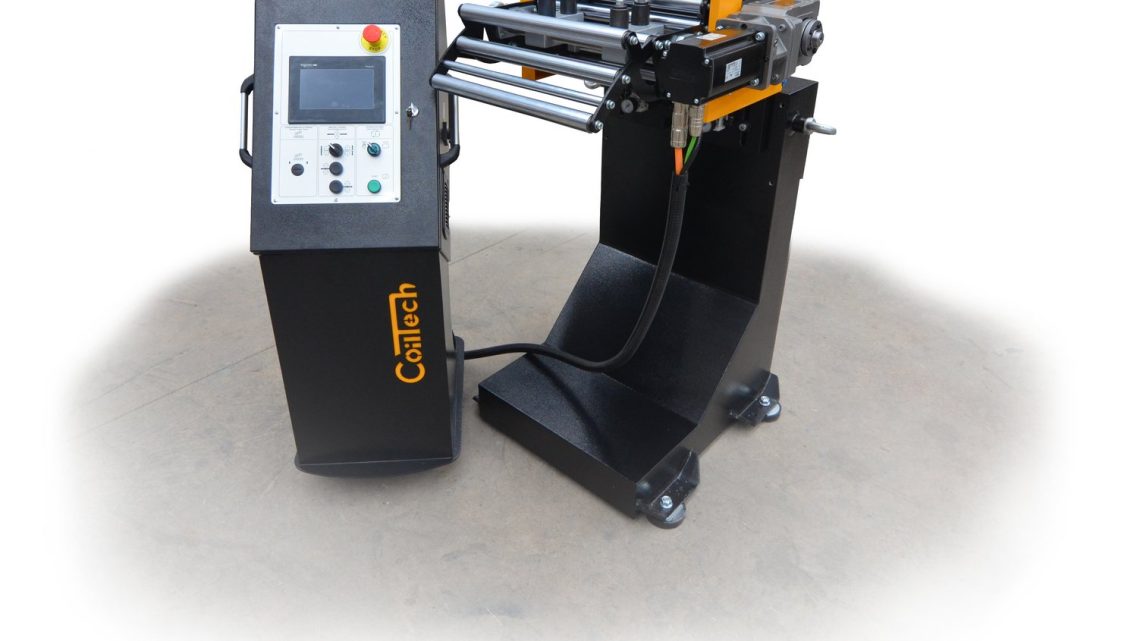
Technical Buyer’s Handbook: Assessing Pre-Owned , Used , Secondhand, Surplus CNC Machines Before Purchase COILTECH PRO 80 – 100 – Servo Feeder made in Türkiye
Below is a draft Technical Buyer’s Handbook / Due-Diligence Checklist tailored for evaluating a pre-owned / used / surplus COILTECH PRO series (e.g. PRO 80-100) Servo Feeder (or equivalent) before purchase. You can adapt it (add/remove items) depending on your use-case, budget, and risk tolerance.
This is intentionally detailed; you may choose which items are “must-check” vs “nice-to-check” depending on the deal size.
1. Pre-Assessment & Preparatory Steps
| Step | Purpose / Questions | What to Collect / Do Ahead |
|---|---|---|
| Define your functional requirements | Ensure that the candidate machine is appropriate for your process | Required coil width, thickness, feed speed, acceleration, stroke length, tolerances, integration with downstream press/tooling, control interface |
| Collect all available documentation from seller | To verify claims and reduce unknowns | Original manuals (electrical, mechanical, pneumatic), spare parts list, wiring diagrams, maintenance records, serial number, modifications history |
| Ask preliminary questions | To screen out obviously unsuitable offers | How old is the machine? Has it been in continuous operation or standby? Why is it being sold? What parts have been replaced? Is it currently running? Can you see it under power inspection? |
| Request photos & videos | Visual clues often reveal much | Exterior, interior panels, wiring, drive components, running in-feed / out-feed motion, roll surfaces under motion (if possible) |
| Understand spare parts availability & vendor support | Risk mitigation | For COILTECH / HESSE / related servo feeder brands, are key parts (rollers, bearings, encoders, belt/gearbox, servo motors, electronics) still available locally or via suppliers? Coiltech in Turkey does produce servo feeders. |
2. On-Site / Physical Inspection (Before Running)
Below is a checklist to go through before powering up (if possible), and in tandem with powering up.
2.1 Visual & Structural Checks
- Frame, body, mounting surfaces
Check for cracks, weld repairs, deformation, misalignment, bending. - Roller / feed rolls
Look for surface wear, pitting, corrosion, misalignment, flattening, run-out. - Bearings & shafts
Check for play, discoloration (overheating), lubrication condition, looseness. - Gearbox / transmission / belts / couplings
Inspect housing for leaks, damage; check belts for wear, cracks; couplings for misalignment. - Encoder, feedback devices, sensors
Inspect for damage, cleanliness, alignment. - Wiring, cabling, connectors
Loose wires, frayed insulation, overheating marks, exposed shielding, loose terminals. - Electrical panels, drives & control units
Open cabinets if allowed: look for signs of burning, corrosion, dust accumulation, moisture ingress. - Pneumatics / hydraulics / air supply (if used)
Check hoses, valves, cylinders, seals, fittings, pressure conditions. - Limit / safety switches, guards, interlocks
Verify that guards & covers are present, functional, and not bypassed.
2.2 Alignment, Geometry & Kinematics Checks (manual / low speed)
- Roller alignment & parallelism
Use dial indicators or straight edges to verify feed rolls are parallel and coaxial. - Axis / slide guideways (if applicable)
Check for smooth motion, binding, scoring, lubrication. - Backlash / slop
Manually move axes (or feed mechanism) to detect slack, play. - End stops / homing / limit travel
Verify limiters operate and are not overridden. - Encoder feedback vs mechanical travel
Where accessible, move mechanism and see if encoder reading matches movement (coarse check). - Flatness / planar reference
Use surface plates or reference planes to check that machine is not warped. - Lubrication systems
Confirm that lubrication lines are intact, no clogged or missing parts, check oil levels if gearboxes have oil reservoirs.
3. Power-Up & Functional Testing (Under Power / Dynamic Checks)
If allowed, run the machine under controlled conditions. For a servo feeder, feed movement, acceleration & accuracy are key.
| Test | What to Observe / Measure | Acceptable / Warning Signs |
|---|---|---|
| Power-up / boot diagnostics | Control boots cleanly; error/warning messages | Persistent errors, alarms or inability to initialize are red flags |
| Homing / referencing | All axes / positions home correctly and reliably | Inconsistent homing, large offsets |
| Feed motion (acceleration / deceleration) | Does it follow expected profile? Inspect for jerk, vibration, stalling | Excess vibration, inconsistent motion, slipping |
| Repeatability / positioning accuracy | Feed a test strip or marker, measure deviation vs nominal | Deviations beyond spec tolerance (e.g. >±0.05 mm if spec) |
| Maximum speed test (gradually increasing) | Ramp up to nominal speed and slightly beyond | Motor overload, torque drop, slip or current spikes |
| Load / torque test | Use a small dummy load (sheet, coil) to test under typical working conditions | Loss of motion, current limit trips, overheating |
| Thermal and stability test | Run extended period to see temperature rise in motors, drives, gearbox | Excessive heat, drift, thermal expansion causing errors |
| Interrupt / sudden stop / reverse test | Test emergency stops, reverse motion, abrupt deceleration | Mechanical instability, lost position, noise |
| Sensor / limit / safety test | Trigger limit switches, safety interlocks to ensure machine stops or responds correctly | If safety fails or continues operation, unacceptable |
| Noise & vibration monitoring | Listen, feel vibrations, check for unusual noises | Grinding, knocking, bearings failing, gear noise |
4. Measurement, Calibration & Accuracy Validation
- Use calibrated gauges, micrometers, dial indicators to measure actual output vs commanded motion.
- Inspect the feeding accuracy: feed 1 m, measure actual displacement, see cumulative error.
- Use a test strip with markings to see if alignment drifts during feed.
- If possible, integrate with downstream tooling briefly to verify feed registration / repeatability with tooling.
5. Documentation & Records Review
- Maintenance / service logs
Check routine services, major overhauls, part replacements, downtime history. - Spare parts replaced
What major components (servo motor, gearbox, encoder, bearings) have been replaced, when? - Modifications / retrofits
Any non-stock modifications — check whether they were professionally done or “ad hoc.” - Calibration / alignment certificates
If previous owner had calibration, inspection, or alignment checks, review them. - Original technical documentation
Control manuals, wiring diagrams, electrical schematics, user manuals. - Warranty / guarantee / seller promise
If the seller can offer short-term warranty or “as-is foot-in guarantee,” that reduces your risk.
6. Risk Assessment & Cost Forecasting
- Remaining useful life of wear items
Estimate how many hours left on rollers, bearings, belts, gearbox, servo motors before replacement needed. - Spare parts cost and lead time
Check local / regional suppliers and lead times for key components. - Calibration / alignment overhead
You may need to re-set or re-calibrate after relocation. - Transport & installation risk
Disassembly, reassembly, alignment, foundation, leveling, utilities, vibration isolation. - Downtime and opportunity cost
Time to bring the machine to production from delivery. - Residual / salvage value
If things fail, what salvage value remains? - Obsolescence risk
Control electronics, firmware, interface compatibility with your existing systems.
7. Negotiation & Contract Clauses (Purchase Safeguards)
- Price adjustment based on condition findings.
- “Acceptance test” clause: allow you to test after installation (e.g. 30 days) and reject or adjust price.
- Spare parts package / inventory transfer (bearings, belts, O-rings, sensors).
- Seller to deliver full documentation, drawings, wiring, program backups.
- Guarantee that no hidden defects (e.g. encoder damage, motor winding faults) exist at time of delivery.
- Transport / insurance clause: who bears risk in transit.
- Payment tied to successful performance acceptance.
8. Specific Considerations for COILTECH PRO 80-100 Servo Feeders (or equivalent)
Because the COILTECH / HESSE brand and PRO series is relatively specialized, here are specific points you should be aware of:
- The PRO series servo feeders are used for coil feeding, straightening, and controlled sheet feeding. For instance, the PRO 100 model (by HESSE / COILTECH) is specified for ± 0.05 mm coil feeding accuracy.
- Verify the encoder / feedback system is original, in tolerance, and not substituted arbitrarily.
- The gearbox / drive coupling: many units use helical / bevel gear drives; check wear in those precisely.
- The roll diameter & material: ensure the feed roll diameter (e.g. 80 mm) is as spec and material is appropriate (hardness, coating).
- Check the maximum feed speed / acceleration capability (e.g. 75 m/min, 10 m/s² in some models) and confirm the candidate machine can reliably reach it.
- Confirm control & interface compatibility: if your press / cutting tool chain uses a particular communication protocol (e.g. digital I/O, fieldbus, PLC interface), ensure the servo feeder can match.
- Because COILTECH is Turkey-based, you might have relatively easier access to local support or parts (depending on your location).
- If the machine has been idle for a long time, seals, bearings, lubrication may have deteriorated more than usage implies.
9. Sample Inspection Scoring / Decision Matrix
You may find it helpful to build a scoring matrix. Below is a template you can adapt:
| Inspection Area | Weight (%) | Score (0–10) | Comments |
|---|---|---|---|
| Structure & Frame Integrity | 15 | ||
| Rollers / Bearings / Wear Items | 20 | ||
| Drive / Gearbox / Transmission | 15 | ||
| Encoder / Feedback & Controls | 15 | ||
| Electricals / Wiring / Panels | 10 | ||
| Dynamic Performance (speed, repeatability) | 15 | ||
| Documentation & History | 5 | ||
| Spare Parts / Support Risk | 5 |
You can set a threshold (e.g. ≥ 70/100) for acceptance or require remedial work before purchase.
10. Post-Purchase / Installation Checklist
- Pre-installation alignment & foundation check
- Power quality, grounding, noise suppression
- Re-zeroing / calibration with your tooling
- Run-in / break-in period under light load
- Full performance test tied into your production line
- Document baseline measurements (feed accuracy, repeatability)
- Train operators / maintenance staff
- Maintain spare parts inventory for wear / critical parts