Smart Investment Checklist: Key Factors Before Buying a Pre-Owned, Used, Surplus, Second-Hand Göckel G50RSL Knife Grinding Machine made in Germany
Here’s a Smart Investment Checklist for evaluating a pre-owned / used / surplus / second-hand Göckel G50RSL (or G50 / G50el / knife grinding / honing) machine (German origin). Use this when visiting a seller or comparing multiple offers. The goal is to minimize risk, expose hidden issues, and secure a reliable machine.
1. Know the Machine — Baseline Specs & Context
Before you go see anything, you should arm yourself with what a Göckel G50-series machine typically offers, so you can judge whether the seller’s claims are realistic.
From Göckel’s literature:
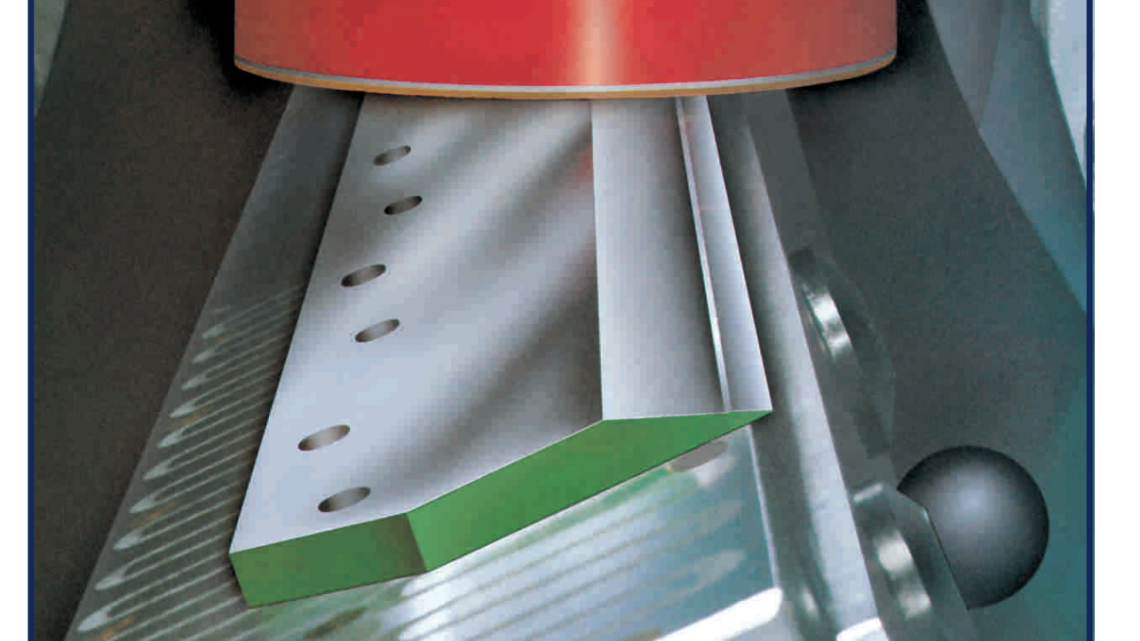
- The Göckel G50 / G50RSel / G50el / G50elT line is a knife / straight blade grinding / honing machine.
- Typical features:
- 15 hp grinding spindle (approx. 11 kW) option in some variants.
- Electromagnetic rotating table (magnetic chuck) to hold workpieces.
- Grinding travel / carriage drive speeds in a range (e.g. up to ~25 m/min for carriage)
- Grinding width capacity ~ 225 mm (i.e. width of knife table)
- Ability to grind lengths of knives up to several meters (in modular lengths)
- Tiltable head (cross / radial grinding options) and use of ring wheels, segmental heads, CBN / diamond wheels.
- Göckel emphasizes precision, durability, and German engineering in their marketing.
So when a seller claims a “G50RSL” (or G50RSL variant)—which is less documented—you should expect performance in the ballpark above, or at least a clear explanation of deviations.
Use these as benchmark expectations (spindle power, grinding width, table type, travel) when comparing a machine to what the seller claims.
2. Remote Pre-Screening (Before Visiting)
This step helps you avoid wasting time on poor candidates.
- Request full specifications & documentation
- Model name, serial number, build year, variants (RSL, EL, ELT, etc.).
- Grinding width, grinding length, spindle spec, motor power, table type (magnetic, rotating), head tilting specs.
- Maintenance / repair / overhaul history, usage hours, operating conditions (environment, dust, coolant).
- Photos & videos
- Photos inside the cabinet, head, table, guides, wiring, controls.
- Video showing motion of carriage, head tilting, table rotation, tool change (if exists).
- Ask for a test / demonstration right
- The seller should agree to run the machine (dry / no load) and ideally run a sample knife or blade.
- Insist that you can operate controls, move axes, inspect motion.
- Spare parts / consumables availability
- Blades, grinding wheels, rings, spindles, magnets, bearings—check whether Göckel or third-party suppliers still support them.
- Ask which parts have been replaced and whether replacements are still available.
- Check for modifications or retrofits
- Many used machines may have been altered (added automation, different head, non-standard control).
- Ask for change logs or wiring / mechanical modification records.
If documentation is poor, or the seller resists demonstration, treat it with caution.
3. On-Site Inspection & Technical Audit
Bring measuring tools (dial indicators, surface plate, micrometers), inspection light, and ideally a test blade or sample.
A. Structural & Mechanical Condition
- Machine frame & base integrity
- Look for cracks, weld repairs, distortions or signs of collision.
- Use straight edges or surface plates to check for frame warpage or unevenness.
- Guideways / carriage slideways
- Move the carriage manually / under low power: check for smoothness, binding, jumps, irregular resistance.
- Inspect guides for wear, scratches, contamination (chips, rust).
- Check lubrication paths, wipers, covers.
- Ball screws, nut assemblies, backlash
- Measure backlash in carriage travel by pushing/pulling.
- Inspect thread condition, nut play, corrosion, lubrication.
- Table / magnetic table (workholding)
- Examine the magnetic table if present (mag chuck): whether the magnetic plate is still flat, the magnetism is intact, wear or pitting.
- Check table rotation (if rotary) for smoothness, indexing accuracy.
- Grinding head / tilting head / cross & radial motion
- Tilt or rotate the head as intended; check whether axes move smoothly without binding.
- Inspect bearings, pivot points, alignment, backlash, play.
- Confirm the head can move the radial/cross adjustment as advertised.
- Spindle / grinding wheel mounting
- Mount a test wheel or dummy arbor; spin and measure radial/axial runout with dial indicator.
- Listen for bearing noise, vibration.
- Run the spindle for a while and monitor temperature.
- Wheel change / tool head attachments
- If the machine has quick-change systems or wheel exchange mechanism, test these for locking, repeatability, adjustment.
- Inspect for wear in adapters, mounting flanges, inserts.
B. Electrical / Control Systems & Safety
- Control cabinet & wiring
- Open up and inspect wiring, terminal blocks, deterioration, insulation, loose connections, signs of overheating.
- Control / operator panel / display
- Power on the controller. Test motion commands, responses, menu access, error logs.
- Inspect for missing modules, corrupted firmware, or locked features.
- Servo drives / motors / power supply
- Ensure all drive modules are present and functioning.
- Inspect motor nameplates, check for overheating, fault lights or signs of repair.
- Exercise axes and check that motors drive without noise or stalling.
- Limit switches / safety interlocks / E-stop
- Test limit switches on all axes.
- Activate emergency stop and verify machine stops immediately.
- Check safety guards: open guards should disable motion.
- Sensors / encoders / feedback systems
- If the machine uses encoders or linear scales, verify their signals and calibration integrity.
C. Functional / Performance Testing
- Dry motion test
- Run axes through full stroke without grinding. Look for smooth acceleration/deceleration, no slipping, no jumps.
- Command small incremental moves and verify response matches input.
- Test grind on sample blade / knife
- Use a sample workpiece. Perform machining passes (rough, finish) under typical feed rates and depth.
- Measure surface finish, edge quality, dimensions, flatness, runout.
- Test at extremes (end of table travel, near limits).
- Extended stability / drift test
- Run multiple grinding cycles over 30–60 minutes.
- Recheck critical dimensions before and after to detect drift.
- Listen / monitor for vibration, noise, bearing heat.
- Repeatability / concentricity / indexing
- Return to same position multiple times and measure deviation.
- If rotary or table indexing present, test repeatable positioning.
D. Documentation, Parts & Support
- Machine ID / serial / build document
- Verify the model, serial number, configuration (RSL, EL, etc.), and original factory documentation.
- Check if modifications or retrofits were done and how.
- Maintenance / repair / overhaul history
- Ask records: spindle rebuilds, head requalification, guide regrinds, refurbishment, part replacement.
- Note frequency and quality of maintenance.
- Spare parts / consumables availability
- Confirm availability of grinding wheels, wheel adapters, spindle components, bearings, magnets, etc.
- If some parts were replaced with non-standard ones, make sure you can still support them.
- Software / parameter files / control backups
- Get all parameter and control files, settings, offsets, program libraries.
- Check whether the control is locked or modules are missing.
- Contractual safeguards
- Negotiate acceptance period (e.g. after installation, test runs).
- Define performance criteria (dimensional accuracy, edge quality, repeatability) that must be met.
- Hold-back a portion of payment until successful performance tests.
4. Red Flags & Warning Signs
These are danger signals you should either negotiate hard or walk away:
- Excessive wear, scoring, or damage on guideways, carriage, or slides.
- Spindle / wheel mounting runout beyond acceptable tolerance or bearing noise.
- Head tilting or cross / radial axes binding or backlash.
- Magnetic table that is no longer flat, magnetism weak, or damaged.
- Missing, burned, or severely modified control electronics or wiring.
- Drive failures, overheating, or missing modules.
- Safety interlocks disabled or removed.
- Poor coolant / lubrication systems, contamination, sludge.
- Parts / consumables unavailable for that model (obsolete).
- Seller refuses test under load or denies motion / grinding demonstration.
- Major frame damage, weld repairs, structural distortion.
If you see multiple red flags, carefully weigh the risk and possible restorative cost.
5. Decision Criteria & Acceptance Thresholds
Before you commit, decide which metrics you require the machine to satisfy:
- Spindle runout (radial & axial) within your tolerance (e.g. < a few microns) on test wheel.
- Dimensional and finish accuracy on test blade meets your spec.
- Repeatability / return-to-zero within your tolerance on axes.
- Carriage and head motion smooth, no binding or jumps, consistent behavior across travel.
- Safety systems, interlocks, controls fully functional.
- All required software, control backups, parameters transferred to you.
- Available spare parts / consumables path.
- Cost of transport + refurbishment must still leave you margin over other options.
- Seller agrees to conditional acceptance, test period, or hold-back until post-install tests passed.
If a candidate meets all of these, you can proceed with more confidence.