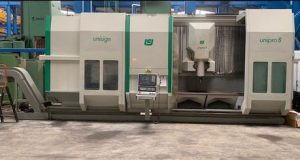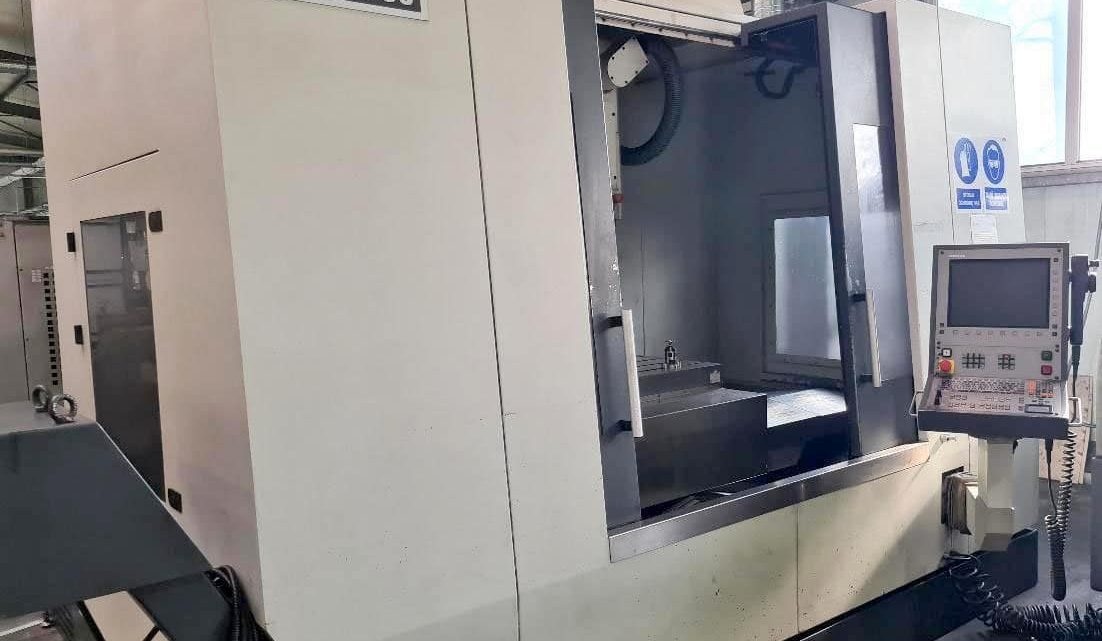
Smart Investment Checklist: Key Factors Before Buying a Pre-Owned, Used, Surplus, Second-Hand AVIA X-5 1250/630 CNC 5 Axis Vertical Machining Center made in Poland
Here’s a Smart Investment Checklist for evaluating a pre-owned / used / surplus AVIA X-5 1250/630 5-Axis Vertical Machining Center (made in Poland). Use this to compare offers, inspect on-site, and negotiate with confidence.
1. Know the Benchmarks & Specifications First
Before going onsite or signing anything, collect the expected spec range for the AVIA X-5 1250/630 so you can spot deviations. Some published specs include:
| Parameter | Published / Typical Value |
|---|---|
| Machine footprint / dimensions | ~ 3,500 × 4,000 × 3,360 mm |
| Machine weight | ~ 10,000 kg |
| Table / worktable surface | ~ 1,500 × 700 mm |
| Axes travels | X = 1,250 mm |
| Spindle rpm | 18,000 rpm (electro-spindle option) |
| Control / options | Heidenhain, linear encoders, 5 axes (swivel head + rotary table) |
These are your design targets. If a used machine falls significantly below these, ask “why?” — missing options, worn parts, or downgraded version.
2. Remote Pre-Screening (Before You Travel)
Use this to weed out weak offers.
- Request full spec sheet & serial / build data — includes version (which year), options, control model, spindle type.
- Photos & videos — all axes in motion, the rotary / swivel head, workpiece hold-down zones, tool changer, control panel, and the machine’s electrical cabinet.
- Ask for hour / usage logs — hours under load vs idle, how intensively it was used.
- Spare parts / consumables record — which parts have been replaced, which are spares still held.
- Ask for a remote demo / motion test if feasible — even just axis motion without cutting can reveal mechanical issues.
- Confirm part / component availability — make sure key spares (linear guides, encoders, control modules) are still available for that model.
If the seller cannot or will not provide these, treat the offer with caution.
3. On-Site Inspection & Technical Audit
Bring a toolkit: dial indicators, test bars, micrometers, multimeter, flashlight, workpiece samples.
A. Structure, Mechanics & Motion
- Frame, castings, machine body
- Check for cracks, weld repairs, distortions or signs of dropping/mishandling.
- Use straightedges / granite / test bars to check flatness or twist in table and base.
- Guideways / linear motion systems
- Move axes slowly. Feel for rough spots, binding, non-uniform resistance.
- Inspect for wear, scuffing, corrosion, chips left in guides.
- Check whether protective way covers are intact (bellows, scrapers).
- Ball screws / lead screws / backlash
- Measure backlash in each axis with dial indicator.
- Inspect screws for wear, pitting, corrosion.
- Check how nut assemblies are held (preload, anti-backlash features).
- Swivel head / rotary table / axes B / C
- Check tilt head motion, locking, indexing.
- Test rotary table accuracy, backlash, gear teeth, encoders.
- Verify that the rotary / swivel axes move smoothly without jump or error.
- Spindle / electro-spindle
- Mount a test tool or collet, spin up to rated rpm, check runout (radial & axial).
- Listen & feel for vibration or abnormal noise.
- Run the spindle for a while and check temperature stability.
- Tool changer / tool magazine
- Cycle the full magazine, test tool-to-tool change, check for misfeeds or jamming.
- Examine gripper condition, wear, alignment.
- Work holding / table
- Check table flatness, T-slot wear, clamping surfaces.
- Look for damage from heavy fixturing or collisions.
- Chip / coolant / removal systems
- Inspect coolant pumps, piping, leaks, filters, chip conveyors.
- Check for contamination, sludge, blocked filters, coolant quality.
B. Electrical / Control / Safety
- Control cabinet & wiring
- Open it up: look for burnt wires, scorched insulation, dust, moisture, component discoloration.
- Check ventilation fans, cooling of electronics, cleanliness of cabinet.
- Control panel & CNC
- Power up the control, load parameters, manually command axes.
- Inspect error logs, alarm history, software versions.
- Request backup of all parameter and configuration files.
- Drive modules / servo amplifiers
- Verify all drives are present, test for proper operation, inspect for overheating or faults.
- Check connectors, capacitors, cooling, fans.
- Limit switches / safety interlocks / E-stop
- Trigger each limit or open guards; the machine should halt motion.
- Test emergency stop and verify it brings all motion to safe stop.
- Sensors, scales, encoders, feedback systems
- If equipped with linear scales or rotary encoders, check calibration readouts, alignment, and feedback loops.
C. Functional & Cutting Tests
- Dry motion run
- Run full-axis motion without cutting. Check for smooth motion, uniform acceleration, no slips or jumps.
- Command incremental moves and compare actual vs commanded.
- Test machining / sample cut
- Bring representative workpiece material and cut simple, known geometry.
- Measure dimensional accuracy, surface finish, tool path fidelity.
- Push the machine near its travel / limit zones to test behavior at edges.
- Extended run / stability test
- Run multiple machining cycles over 30–60 minutes in a row.
- Recheck dimensions before/after to detect thermal drift or instability.
- Repeatability / return-to-zero test
- Cycle to a point, retract, return, and measure deviation.
- Do multiple cycles to chart consistency.
- Stress / overload zones
- Test corners or extreme positions in axes to see if performance drops or errors appear.
D. Documentation & Parts / Support
- Machine identity / serial / build history
- Confirm serial number, manufacture year, factory build records.
- Check any rebuilds, retrofits, or modifications.
- Maintenance / service logs
- Review past repair history, component replacements, alignments, downtime.
- Note long gaps or unrecorded repairs.
- Parts & tooling availability
- Confirm that critical spares (guides, encoders, drives, spare electronics) are still available.
- If custom or outdated parts were installed, understand cost/lead time implications.
- Software / parameter transfer
- Ensure you receive all configuration files, control software, tool libraries, fixture offsets.
- Check whether the control is locked, licensed modules are transferable.
- Contract / acceptance terms
- Insist on a conditional acceptance clause or test period after installation.
- Define key performance metrics (tolerances, repeatability, speed, surface finish) in the contract.
4. Red Flags / Warning Signs
Watch out for:
- Excessive wear on guideways, ball screws, axes (hard to repair).
- Spindle bearings that run hot or show noise / vibration.
- Control / electronics cabinet damage, burn marks, missing boards.
- Servo drive faults, failures, or missing modules.
- Control software or parameter loss / corruption.
- Tool changer misfeeds or tool-clamp issues.
- Heavy collision damage, welded repairs, structural distortions.
- Poor coolant / chip systems (corrosion, clogged filters, leaks).
- Obsolete or unavailable spare parts.
- Refusal to allow full test runs or machining trials.
If any of these are found unaddressed, either discount heavily or walk away.
5. Decision Criteria & Acceptance Thresholds
Before purchase, set clear pass/fail criteria, for example:
- Achieve ≥ 90–95 % of the advertised performance (accuracy, repeatability, surface finish) on test parts.
- Backlash and repeatability within your process tolerances.
- Tool changer and magazine must function reliably across full cycle.
- Control, electronics, and safety features must be fully operational.
- Spare parts risk acceptable (you must be able to get components).
- All software, parameter files, tool libraries must be transferred.
- The cost for needed repairs / updates (if any) plus transport must still leave you margin.
- Seller must allow post-installation acceptance testing or hold-back funds until metrics met.
If a candidate meets all these, you can proceed confidently.
6. Logistics, Installation & Commissioning Planning
- Arrange for safe rigging, transport, and unloading (these machines are heavy and precise).
- Prepare foundation, leveling, alignment (use precision leveling tools).
- After installation, re-check axis alignment, spindle to table perpendicularity, rotary / tilt axes alignment.
- Run your test parts again and verify performance in your shop conditions.
- Keep a stock of critical spares from day one (bearings, tool holders, guides, electronics).
- Set up periodic preventative maintenance and calibration schedule.