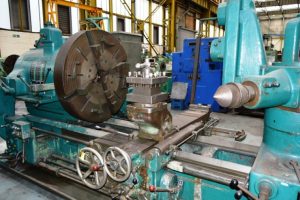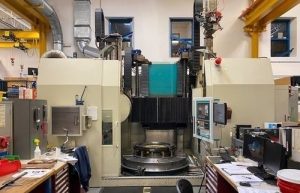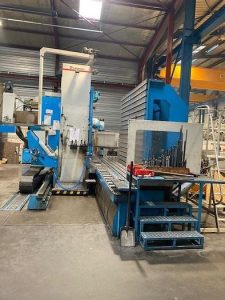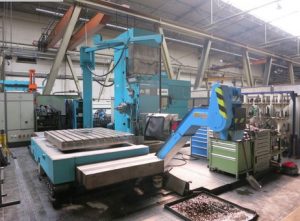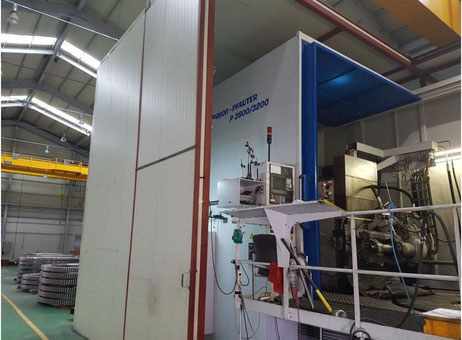
Smart Buyer’s Guide: How to Choose the Right Pre-Owned, Used, Secondhand, Surplus CNC Equipment Before Purchasing GLEASON PFAUTER P 2800/3200 CNC Gear Hobbing Machine made in Germany
Buying a used GLEASON-PFAUTER P 2800/3200 (or similar large vertical gear hobbing / gear cutting machine) is a complex, high-risk investment. But with systematic due diligence and a good inspection checklist, you can significantly reduce the chance of surprises. Below is a Smart Buyer’s Guide (checklist + decision framework) specifically tuned for large CNC gear hobbing machines like the P 2800/3200.
A. What is the GLEASON-PFAUTER P 2800/3200 — Baseline Specs to Know
Before evaluating any candidate, you should know the “ideal / nominal” metrics and capabilities of the P 2800/3200, so you can spot deterioration, missing features, or unrealistic claims. Some of these data are drawn from used-machine listings.
Here are key spec benchmarks:
| Parameter | Typical / advertised value | Notes / caveats |
|---|---|---|
| Maximum gear diameter capacity | 3,200 mm (outer) | This is a big machine, used for large ring gears, etc. |
| Maximum gear length (axial / face width) | ~ 386 mm | Many gear jobs are shorter, but the machine’s capacity gives flexibility. |
| Radial (X) travel / slide | ~ 1,200 mm | This is how far the cutting tool can move outward from center. |
| Tangential (Y) slide / travel | ~ 300 mm | For shaping / shifting the tool relative to the stub. |
| Axial (Z) travel | ~ 1,000 mm (in many ads) | |
| Tool (hob / cutter) speed / rpm range | ~ 25 to 150 rpm (per listing) | |
| Maximum permissible load / force capacity | ~ 400 kN (on many adverts) | |
| Machine weight & footprint | ~ 56,000 kg (≈ 56 tons) | |
| Electrical / supply voltages | e.g. Operating voltage 380 V, control voltage 24 V | |
| Control system | Many listings show Siemens CNC type control |
Use those benchmarks during inspection: if a candidate machine’s travel, slide sizes, or speed ranges differ significantly (unless documented as an upgrade or variant), that’s a red flag or negotiation lever.
Also note: Because this is a large, heavy, precision gear machine, some wear or drift is inevitable. Your job is to quantify wear and decide whether it’s acceptable or repairable.
B. Define Your Requirements & Use Cases
Before you inspect any candidate, define exactly what you need it to do (or at least the envelope of what it must do). That gives you a filter and bargaining baseline.
Questions / criteria to settle:
- Gear size / diameter / width / module
What is the largest gear (outer diameter, internal diameter, face width) you will ever hob? Does that fit within the P 2800/3200’s capacity with margin? - Precision / tolerances / surface finish
What tolerances do you need (tooth form, runout, flank accuracy, profile, etc.)? If you require “gear class 5 / AGMA 12” or better, the used machine must still be in very tight condition. - Hob / cutter types, speed & module ranges
What hob module sizes, cutter types (involute, tapered, special forms), speeds, materials will you cut? Ensure the machine’s spindle and drives can support your worst-case scenario. - Production volume / duty cycle
Will you run heavy production, or occasional / prototyping? The stress on the machine (thermal cycles, load transitions) will influence what wear you can tolerate. - Control, software, gear-programming support
Does the CNC / control system support gear programming, indexing, interpolation, form modifications, multi-axis motion, etc.? Is it compatible with your software or your engineers’ skill set? - Shop infrastructure & supporting systems
- Power supply (voltage, current capacity, stable three-phase)
- Cooling / lubrication systems
- Chip removal & guarding
- Floor structure and vibration isolation
- Lifting / rigging / crane capacity
- Support for spare parts / backup modules / service in your region
- Budget including refurbishment, installation & hidden costs
A used P 2800/3200 may look “cheap” but often demands expensive rebuilds, alignment, part replacement, control upgrades, and transportation.
Having your “must-have thresholds” (gear max size, tolerance, rpm, etc.) will allow you to eliminate machines that are undersized or too worn even before you visit.
C. Remote Pre-Screening / Inquiry
Before making a site visit, filter out weak candidates by asking the seller for detailed data, photos, and proof. If they can’t or won’t provide these, treat that as a red flag.
Ask for:
- Full model, serial number, and manufacturing year (so you can check parts availability, typical lifespan, versions).
- Complete spec sheet including all travels (X, Y, Z), slide sizes, speed ranges, load ratings, spindle / drive ratings, control model, workholding details.
- Control / CNC details: what controller it uses, what gear-programming / interpolation features, what version or software, whether backups of parameters exist.
- Running / cutting hours, maintenance logs, repair history (spindle rebuilds, bearing replacements, slide repairs, etc.).
- Any known defects, faults, or recurring error history.
- Photographs (or video) of the machine: slides, ways, tool spindles, control cabinet, wiring, alignment marks, condition of paint, guards, covers.
- A video demonstration:
• Move each axis through travel
• Run the hob / cutter spindle at various speeds
• Indexing, tool changes, part-engagement simulation
• Use a light test part or cut if possible - Ask about spare parts / support / local availability of key modules (drive electronics, spindle bearings, slides, encoders).
- Confirm that documentation is included (operation & maintenance manuals, wiring diagrams, parts lists, CNC parameter backups).
If the seller is evasive or cannot produce credible records, count that heavily against the machine.
D. On-Site Inspection & Functional Check List
When you arrive, bring a metrology kit (dial indicators, test bars, probes) or a machine tool inspector. Walk through a disciplined, methodical check.
D1. Structural / Mechanical & Wear Inspection
- Castings, frame, base, welds
Look for cracks, weld repairs, structural distortions, past collision damage, corrosion. Check that mounting bases are flat and not warped. - Slides / guideways / rails / ways
Inspect all sliding surfaces (radial slide, tangential, axial). Look for wear, scratches, pitting, scoring, uneven polish or “rail rash.”
Check whether way covers, bellows, guards are present and intact (missing or torn covers accelerate wear). - Ball screws, nuts, backlash, drive train
Jog axes slowly, reverse direction, measure backlash at different travel positions. Excessive or varying backlash suggests worn screws or nuts.
Inspect drives, couplings, gears, belts, encoders for signs of wear. - Tool spindle / hob arbor / cutter interface
Check spindle nose, taper surfaces, key / taper match surfaces. Look for wear, deformation, chips or damage.
Mount a test arbor or tool stub and check runout. Listen for bearing noise. - Rotary table / worktable / indexing mechanism
If machine has rotating table or indexing, check the indexing mechanism, worm gears, backlash, runout, and stability under load. - Lubrication / cooling / hydraulic / pneumatic systems
Examine oil lines, pumps, filter systems, flow, coolant tanks, piping, valves. Poor or neglected lubrication is a major wear driver. - Electrical cabinet, wiring, control panels
Open and inspect wiring, cable looms, terminals, signs of overheating, corrosion, wire insulation condition, modifications. Check control panel switches, HMI screens, buttons. - Leveling / foundation / mounting
If the machine has been relocated, inspect leveling feet, shims, anchor bolts, base supports for signs of shifting.
D2. Operational / Performance Checks
- Axis motion tests
Move each slide / axis through full travel (X, Y, Z) at slow, medium, and high traverse speeds. Observe for stuttering, hesitation, snatching, uneven motion. - Indexing / indexing motion (if applicable)
If the machine indexes for hob engagements, test multiple indexing cycles, both forward and reverse. - Backlash / repeatability test
Command moves back and forth (e.g. + → – → +) and measure deviations. Do this at different travel positions. - Spindle / hob / cutting-axis test
Run the hob or cutter spindle at different speeds. Listen for bearing whine, vibration, resonance, or temperature rise. Let it stabilize and check for drift. - Simulated cut / test job
If possible, run a sample gear-cutting simulation or light cut (on a soft material) to see how the machine behaves under load. Observe forces, chatter, control response, errors, thermal drift. - Repeated tool / cutter transitions
If the machine changes hobs or cutters, repeatedly perform tool exchanges and evaluate reliability, speed, consistency. - Review control / error logs
Examine CNC/PLC error logs, alarm history, fault frequency. Recurring errors may point to deeper problems (drive trips, limit overruns, spindle faults). - Thermal stability / drift checks
Let the machine run idle for 30–60 minutes, then rerun critical measurements to see how geometry or backlash shifts with temperature.
D3. Metrology & Precision Tests (if you can bring instruments)
- Use precision ground test bars, indicators, or probes to measure straightness, angular deviation, squareness, parallelism, and geometric errors across axis travels.
- Measure positional repeatability by repeated approach from both directions.
- Check runout of spindle / arbor / cutter at various tool lengths.
- If possible, perform volumetric error mapping: how errors accumulate across the large travel envelope.
D4. Documentation, Support & Spare Parts Check
- Confirm that the machine includes operation & maintenance manuals, wiring diagrams, parts lists, CNC parameter backups, and software.
- Check whether the control software / license is intact and functional.
- Inquire about availability (or inclusion) of spare modules, spare encoders, spindle bearings, drive modules, sensor boards, couplings.
- Document any non-OEM modifications or retrofits that may complicate future service.
- Ask for service / repair invoices, rebuild history, and parts replacement records.
E. Evaluate Wear, Risk & Remaining Value
After inspection, you must judge how much life is left in major subsystems—and what cost will be required to restore or refurbish.
Major wear / replacement risk areas:
- Spindle bearings / arbor bearings — often a very costly repair. If bearings are suspect (noise, runout, vibration), the cost may be large.
- Ball screws / nuts / axis backlash — worn nuts or screws may degrade precision; replacement or regrinding costs money.
- Slide / guideway wear — if ways are heavily worn or rails have damage, resurfacing or replacement is expensive (scraping, regrinding, relapping).
- Control / electronics obsolescence — older CNC modules, drives, boards may be hard to replace or expensive, especially for large gear machines.
- Indexing / gear train wear — wear in worm gears, indexing mechanisms, gear boxes can degrade accuracy.
- Thermal / structural drift — old machines that have been moved or reset multiple times may have misalignment or drift in structural elements.
- Auxiliary systems aging — coolant, lubrication pumps, valves, filters, piping, and sensors may require overhaul.
You should build a “repair reserve” estimate. For instance: “I will need $X for spindle rebuild, $Y for ways, $Z for control modules, etc.” Subtract that from your top allowed price.
Also, assess whether local/regional suppliers can support parts and service for Gleason / Pfauter spares (drive modules, encoders, spindles) in your country or region.
F. Logistics, Installation & Hidden Cost Considerations
Do not overlook the “soft costs”—these often make or break a used-machine deal.
- Transportation & rigging
A machine of ~ 56 tons requires heavy transport, disassembly, crating, lifting, reassembly, alignment. Use experienced riggers. - Foundation / floor & structural support
The floor must support dynamic loads without vibration. You may need a reinforced concrete base or structural supports. - Electrical & utilities
Ensure you have adequate power supply (voltage, current, stable three-phase), wiring, grounding. Also coolant supply, chips / debris control, guarding, ventilation. - Alignment, leveling & calibration
After setup: leveling, realignment, geometric calibration, error mapping, backlash compensation, test runs. - Burn-in / test / acceptance phase
You’ll probably need several weeks of trial runs, adjustments, error correction, and re-measurements. - Training & tuning
Staff must be familiar with gear hobbing, CNC control, specialized maintenance, hob tool setup, and inspection. - Spare parts, tooling & consumables
Cross your fingers that spares are available for key modules. Budget for spares, hob tools, sensors, belts, etc. - Acceptance warranty / guarantee period
If buying from a dealer/refurbisher, negotiate a short-term warranty or acceptance clause (30–90 days) during which defects can be claimed.
Depending on your location, rigging, alignment, and modernization costs can add 10–30 % (or more) to the raw machine cost.
G. Negotiation, Valuation Strategy & Risk Buffer
Here’s a typical negotiation framework:
- Benchmark comparable sales
Look up recent sales / listings of P 2800/3200 or similar Gleason-Pfauter gear hobbing machines in comparable condition and region (or international). Use that as a reference. - Adjust for condition / defects
Subtract for known wear, needed refurbishment, missing parts, control obsolescence, etc. - Incorporate a risk buffer
Always leave margin for hidden, unforeseen problems discovered during shipping, installation, or early operations. - Demand demonstration under load / test cuts
Make the sale conditional on running a representative gear-cutting part or simulation under actual load. - Include spares, documentation, acceptance period
Insist that the seller includes spare modules, manuals, backups, parameter files, and grants you an acceptance warranty window. - Third-party inspection / metrology before commitment
If possible, hire a gear / machine-tool inspector to validate your assessment before paying in full. - Set your “walk-away” ceiling
Before making any offers, compute the maximum total cost (purchase + refurbishment + installation + risk buffer) you are willing to pay. Do not exceed that.
Because gear hobbing machines are niche and expensive to repair, buyers should generally bid conservatively.
H. Specific Gear-Machine “Red Flags” / Deal Killers
When evaluating a P 2800/3200 (or any large gear hobbing machine), watch especially for these warning signs:
- Hob / cutter spindle or arbor with excessive noise, vibration, or poor runout.
- Major backlash or variable backlash in slides or indexing.
- Indexing / rotation mechanism (table, worm gear, divide unit) out of tolerance or with play.
- Slides / ways severely worn, scored, or damaged.
- Missing or nonfunctional lubrication / coolant systems.
- Control / CNC missing, downgraded, corrupt, or with no backup parameters.
- Electrical cabinets damaged, wiring burnt, modules missing.
- Evasive seller, unwilling to allow test cuts or full demonstration.
- Poor or no documentation (manuals, wiring, parts lists, backups).
- Local parts / service support for Gleason / Pfauter modules is weak or non-existent in your region.
- Structural repair history (cracks, major rewelds) or heavy corrosion.
- Too low asking price without credible explanation (often a trap).
- Hidden transport / install complexity (remote location, difficult access, site constraints).
If you see several red flags, the seller must discount heavily, or you should walk away.
I. Post-Purchase Commissioning & Best Practices
Once you have the machine in your facility:
- Before dismantling at source: Carry out baseline measurements (flatness, alignment, test bar checks) so you have reference data to compare after installation.
- Re-leveling & alignment: Use high-precision leveling tools, realign axes, check geometry, and adjust indexing.
- Soft-start / break-in: Run axes and spindle slowly at first, monitor for vibration, drift, or loose components.
- Calibration & test cuts: Run gear-cutting calibration jobs, measure actual results, compare to spec, and adjust backlash, error maps, offsets, indexing, etc.
- Monitor early weeks / months: Track drift, thermal behavior, alignment shifts, chatter, or deviations under load.
- Preventive maintenance plan: Regularly check lubrication, alignment, backlash, drive current levels, vibrations, and temperature. Schedule periodic inspection of spindle, indexing units, and electronics.
- Maintain logs / documentation: Record every repair, calibration change, measurement drift, adjustment, and replacement.
- Stock critical spares: Spindle bearings, encoder modules, drive cards, index units, couplings, sensors, etc.
- Periodic re-verification: Every few months, re-check accuracy (dimensional, runout, gear form) and catch creeping wear before it becomes catastrophic.