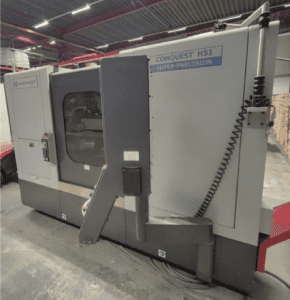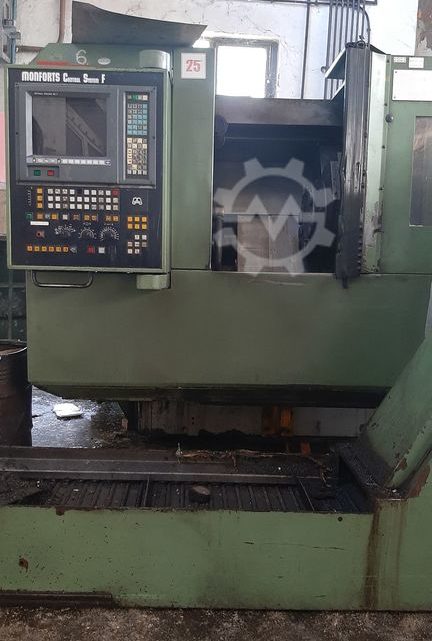
How to Avoid Common Pitfalls When Buying a Pre-Owned, Second-Hand, Surplus, Used Monforts RNC3 CNC Lathe made in Germany?
Below is a professional, buyer-focused guide tailored specifically for evaluating a pre-owned, second-hand, surplus, used Monforts RNC3 CNC Lathe made in Germany
How to Avoid Common Pitfalls When Buying a Pre-Owned, Second-Hand, Surplus, Used Monforts RNC3 CNC Lathe Made in Germany
The Monforts RNC3 is a German-built CNC lathe known for rigidity, precision, and long-term reliability. However, like all used CNC machines, improper checks can lead to expensive surprises. Below is a comprehensive guide to protect your investment and ensure you secure a high-quality machine.
1. Verify the Machine’s German Origin and Build Specification
Not all Monforts-branded machines were configured identically.
To avoid misrepresentation:
Check:
- Original nameplate (country of manufacture should clearly state Germany)
- Machine documentation, including CE certificates and technical data sheets
- Model variant (RNC3, RNC4, RNC5—specs differ)
Why it matters:
German-built Monforts machines maintain tighter tolerances and better long-term rigidity.
2. Inspect Linear Guides, Ball Screws, and Slideways
Precision components wear over time—especially on machines used in mass-production environments.
Check for:
- Backlash in X and Z axes
- Wear marks on slideways or guideways
- Ball screw whip or vibration during rapid movement
- Excessive servo compensation values in the CNC control
Pitfall:
Worn linear components can cost thousands to replace.
3. Evaluate Turret Indexing and Repeatability
The turret on an RNC3 must lock precisely.
Warning signs:
- Turret not clamping properly
- Delayed indexing
- Tool misalignment during test cutting
- Audible clicking or grinding noises
Fix cost:
A turret rebuild can be expensive if parts or hydraulic components are damaged.
4. Assess Spindle Health Under Load
The spindle is the heart of the machine.
Perform:
- Cold start spindle test (listen for bearing rumble)
- Hot-run test after 30–40 minutes
- Acceleration/deceleration test at multiple RPM points
- Vibration analysis if possible
Red flags:
- Unusual high-frequency noise
- Slow acceleration
- Overheating
- Oil leakage from spindle seals
5. Confirm CNC Control Condition (Usually Siemens or Fanuc)
Common Monforts RNC3 setups include Siemens SINUMERIK controls.
Check:
- Boot time and error logs
- Condition of CRT/LCD screen
- IO board health
- Axis feedback quality
- Backup availability
Common pitfalls:
- Old controls may have obsolete parts
- Missing PLC programs or parameters can render the machine unusable
6. Check Hydraulic, Electrical, and Pneumatic Systems
German machines rely heavily on stable hydraulic and electrical systems.
Inspect:
- Hydraulic pumps for pressure stability
- Wiring harnesses for brittleness or overheating
- Pneumatic valves for leaks
- Hydraulic chuck and tailstock pressures
Hidden dangers:
- Small leaks indicate worn seals or neglected maintenance.
7. Evaluate Chuck, Tailstock, and Tooling Condition
Replacement tooling can be costly.
Check:
- Chuck gripping force (measure with a pull tester)
- Tailstock quill smoothness and alignment
- Availability of tool holders
- Wear on pockets and tool clamping mechanisms
8. Demand a Real Cutting Test
A test cut reveals more than visual inspection.
Request:
- Straight turning test
- Facing and shoulder test
- Surface roughness measurement
- Dimensional repeatability after 10–20 cycles
Avoid machines where:
Sellers refuse cutting trials or offer only “dry run” demonstrations.
9. Review Maintenance Records and Usage History
Machines that ran 24/7 will show significant wear.
Ask for:
- Full service history
- Replaced components list
- Factory retrofit information
- Hours of operation (spindle hours, not power-on hours)
10. Inspect for Structural Damage and Alignment Issues
A crashed or misaligned German lathe is costly to recondition.
Check:
- Headstock alignment
- Tailstock–spindle parallelism
- Bed straightness with a laser or straightedge
- Crash marks around turret or chuck
11. Calculate Total Cost Including Missing Options
Do not overlook missing items:
Possible extras:
- Chip conveyor
- Coolant filtration
- Bar feeder interface
- Measuring probes
- Tool holders
- Manuals and parameter backups
Tip:
Missing manuals or PLC backups can delay commissioning.
12. Validate Seller Credibility
Avoid:
- Sellers with no physical address
- Machines that cannot be inspected under power
- Units “awaiting refurbishment” with no timeline
- Unverified claims about condition
Conclusion
A pre-owned Monforts RNC3 CNC lathe made in Germany can be a powerful asset—if inspected correctly. By thoroughly evaluating mechanical precision, spindle condition, CNC control health, and machine alignment, you can avoid costly pitfalls and confidently invest in a machine that delivers long-term reliability and productivity.