23/11/2025
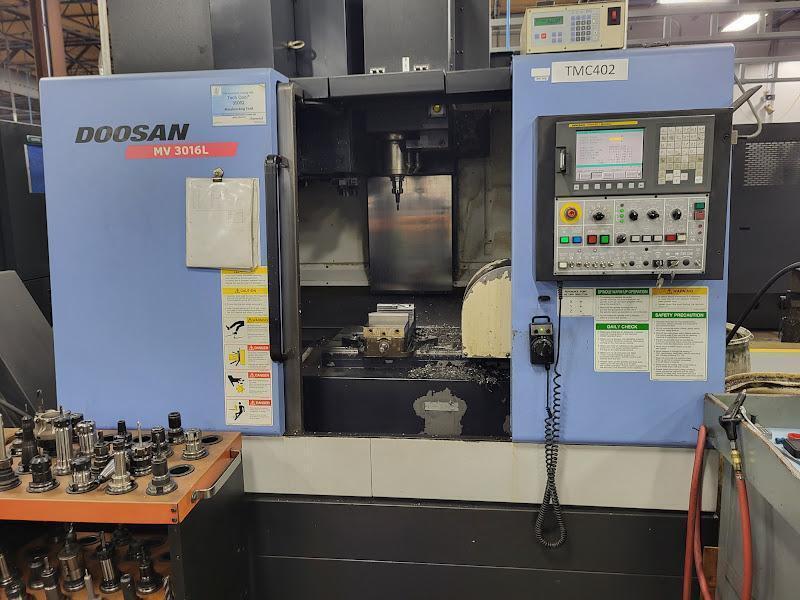
How to Avoid Common Pitfalls When Buying a Pre-Owned, Second-Hand, Surplus, Used Doosan MV 3016L CNC Vertical Machining Center made in South Korea
Here is a detailed checklist and guidance — in English, as requested — for avoiding common pitfalls when buying a used/surplus machine like the Doosan MV-3016L (made in South Korea). Although the recommendations are general, I’ll refer to machine-specific specs where relevant to help you apply them.
Why this machine is interesting
- The MV-3016L is a mid-sized vertical machining centre (VMC) from Doosan, with for instance table size approx 36″×17″, travels ~30″ (X) × ~17″ (Y) × ~20″ (Z) and spindle speeds up to ~8,000 rpm.
- Because it’s used/surplus, you may get good value — but you must watch out for wear, part availability, control system condition, and hidden costs.
Key checkpoints & common pitfalls
Here are the major areas to examine, with specific signs of risk and what you should request or measure.
1. Machine hours / “work history”
- Ask for how many cutting hours or spindle hours, not just power-on hours. The more hours, the more wear.
- Ask what kind of material it was used for. Heavy work (hard alloys, large parts) accelerates wear.
- Pitfall: Seller cannot provide logs, or only gives “general estimate” without documentation. That is a red flag.
2. Condition of mechanical components
- Check the spindle: look for run-out, noise, vibration, signs of bearing issues.
- Check ball screws, ways, guide rails: look for play/backlash, uneven wear, way cover damage.
- Check the tool changer: side-mount mag as per MV-3016L specs (30 stations) — verify all slots work smoothly, no mis-loads.
- Check accurate measurement: Do test cuts or alignment tests to see whether the machine still holds tolerance. Machine tolerance degrades with use.
- Inspect for rust, leaks, corrosion – rattling covers or missing panels are a warning.
3. Control system, electronics & software support
- Confirm the exact control: many listings show Fanuc Oi-MC on MV-3016L.
- Ask: Is software up-to-date? Are there backups of parameters? Has the control been replaced/refurbished?
- Pitfall: Older or non-supported control might make future service or parts very expensive.
4. Spare parts / service support
- Doosan is a well-known brand — check availability of genuine spares for your region.
- For older models, some parts may be discontinued or long lead-time.
- Ask: Has the machine had any major rebuilds (spindle, drives, balls screws) and were OEM parts used?
- Pitfall: Cheaper units may come with “aftermarket” spares or “unknown service history” which may be risky.
5. Machine suitability for your production
- Check that the machine’s travels, table size, spindle speed and taper match your required parts. For example the MV-3016L’s spindle taper is CAT-40 and speed up to ~8,000 rpm.
- Think about future jobs: If you will extend production, will this machine still suffice?
- Pitfall: Buying a machine that fits only your current job, but will limit future growth (causing you to upgrade soon) is less economical.
6. Hidden costs and inspections
- Transport, installation, leveling, alignment, site prep, power supply: these can add substantial cost.
- Factor in tooling/setup costs, possible rebuilds, wear part replacement soon after purchase.
- Pitfall: You buy “cheap” but then spend a lot in first 6-12 months repairing or aligning, raising total cost far above budget.
- Bring a technician or arrange for inspection: test run the machine if possible, inspect under load, take probe/measurement readings.
7. Documentation and provenance
- Ask for service records, maintenance logs, machine manual, drawing of parts replaced.
- Ensure the machine is not tampered with, undocumented changes made, or has unknown prior damage (crash, flood, etc.).
- Pitfall: Seller cannot provide any documentation or states “we don’t have service history” — increased risk.
8. Alignment, calibration & accuracy test
- After installation, you will want to verify axes are within tolerance, the machine is level, tool offsets accurate.
- Ask: Has there been any recent calibration or alignment done? What were the results?
- Pitfall: Buying without assessing current accuracy may mean you get a machine that produces scrap or rejects until rectified.
9. Ask about past repairs or major replacements
- Has the spindle been rebuilt? How many times? Have the ballscrews been replaced? Were they OEM or aftermarket?
- Pitfall: Major components nearing end-of-life shorten usable lifespan and increase future cost.
10. Warranty / guarantee (if any)
- Some used machine dealers offer limited warranty or “walk-in” guarantee for a short period.
- If machine is sold “as-is”, you bear all risk of immediate repair.
- Pitfall: No guarantee + no inspection = high risk of hidden defect.
Summary: Avoiding the most common pitfalls
- Don’t buy based only on low price. If it’s very cheap compared to market, ask why — often hidden costs.
- Don’t skip inspection or testing. Running the machine, listening for unusual sounds, checking interface – these reveal many issues.
- Don’t assume “it just works”. Components age, tolerances wear, control systems may be unsupported.
- Don’t ignore logistics and installation. A used machine may require more set-up and cost than a new simple smaller machine.
- Don’t neglect future support. Ensure you can get spares and service for the model in your region.
- Don’t trust missing documentation. A machine without history is riskier.
Machine-specific tips for the MV-3016L
- Because its table is ~36″×17″ and travels ~30″×17″×20″, ensure your parts fit within that envelope (especially if you plan larger components).
- Its spindle speed and taper (CAT-40 up to ~8,000 rpm) mean it is capable, but if you require higher speeds or different tooling you may need an upgrade or aftermarket spindle.
- Ensure the tool-changer (30-station side mount) is functioning properly — a common wear item.
- Check the control interface (Fanuc Oi-MC often) to see if it is in a language you are comfortable with, and if operator training/manuals exist.
- Because it is older, check for any major wear in ways/ballscrews — the value of the purchase relies on how much life remains.