18/10/2025
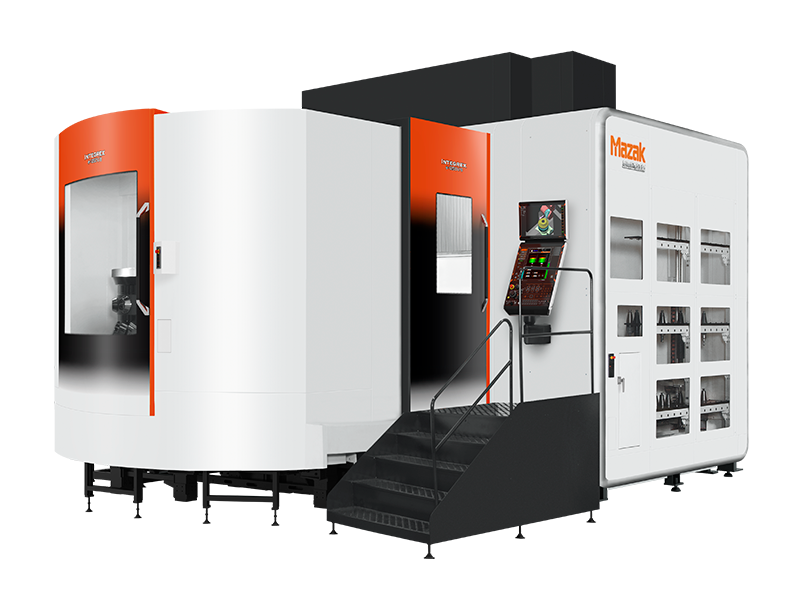
How Smart Engineers Assess a Pre-Owned, Used, Second-Hand, Surplus MAZAK INTEGREX e-1250V/8S CNC Vertical Multi-Tasking Machine with Process Integration for Large Workpieces made in Japan Before Purchase
Here’s a detailed pre-purchase due-diligence checklist and assessment guide for a used / second-hand / surplus Mazak INTEGREX e-1250V/8S (vertical multi-tasking machine, made in Japan) that smart engineers use before buying.
This machine combines turning, milling, 5-axis capabilities and is designed for large workpieces, so the checklist is accordingly comprehensive.
Why this machine warrants thorough inspection
- The INTEGREX e-V series (including the e-1250V/8 and the “/8S” variant) are high-end vertical multi-tasking machines – capable of large-workpiece multi-face machining, turning and 5-axis simultaneous milling.
- Typical spec for the e-1250V/8S: max workpiece diameter approx. Φ59.06″ (≈ 1500 mm) × machining height approx. ~65.16″ (≈1655 mm) for the workpiece.
- Given the complexity (heavy-structure, rotary/tilt C/B axes, direct-drive table, large tool magazine, dual turning/milling spindles) the risk of hidden wear, refurbishment cost, integration complexity is higher than for simpler machines.
- If used in aerospace/heavy-industry production, the investment is large — hence you want to avoid buying a machine that requires major rebuild or has unsupported components.
Pre-Purchase Assessment Checklist
Below are major categories and inspection items. Use them when visiting the machine, or set them up as criteria for your negotiation.
1. Specification & Fit for Purpose
- Confirm model “INTEGREX e-1250V/8S” (the “/8S” often means a single table or specific configuration) and verify serial number and build year.
- Verify machine’s capacity vs your production needs:
- Max workpiece diameter and height (for e-1250V/8S: ~Φ59.06″ × 65.16″)
- Travel of X, Y, Z axes: spec sheet shows for e-1250V/8 (X 1,875 mm / 73.82″, Y 1,249.9mm / 49.21″, Z 1,344.9mm / 52.95″)
- Tooling system: spindle speeds (milling spindle up to 10,000 rpm) for e-1250V series.
- Table and turning spindle capacities: direct-drive rotary table, heavy-duty turning spindle with very low rpm (~500 rpm) for large workpieces.
- Confirm what version of control system is installed (Mazatrol Smooth, SmoothX, or SINUMERIK, etc) and whether software versions are still supported.
- Confirm your tooling and fixture requirements are compatible (e.g., you may need large part holding, heavy pallets, automation) and that the machine has the right options (rotary table, loader, tailstock, tool magazine size).
2. Mechanical & Structural Condition
- Base/column/structure: Examine for signs of distortion, welding repairs, corrosion. The machine must remain rigid to maintain precision.
- Rotary/tilt (B/C-axis) table: For the table that rotates—the direct-drive table—check for backlash, smooth motion, vibration. The spec says “direct-drive table eliminates backlash for high accuracy”.
- Turning spindle: Check for bearing noise, run-out, vibration. Large parts turned demand the main spindle and table are tight.
- Milling spindle: For the 5-axis milling side, check the milling spindle bearings and tool change mechanism. The spec mentions a 10,000-rpm milling spindle for the e series.
- Guideways / ball screws: Check X, Y, Z axis ways for wear, scoring, lubrication condition. Smart engineers use dial indicators to measure travel and backlash.
- Tool magazine / turret: For large tool bank machines, check movement, indexing, tool holding condition.
- Automation & accessories: If there is a pallet changer, loader, tailstock, check their condition, sensors, clamps.
- Hydraulic / servo systems: Check hydraulic oil condition, leakages, servo motor drives, belts or couplings.
- Coolant / chip handling: Large workpieces produce lots of chips; check the machine’s chip conveyor, coolant system, stability of coolant temperature, filtration.
- Wear and maintenance history: Ask for service records – has any major part been replaced (spindle bearings, rotary table drive, guideway rescrape)? A machine with clear history is lower risk.
3. Electrical / Control / Software Condition
- Control unit: Visually inspect control panel, check for error logs, CPU/servo drives condition.
- CNC software: Check version, licensing; older versions might be unsupported or difficult to find parts for.
- Wiring / cabinet: Inspect inside the electrical cabinet: dust, signs of overheating, burnt wires, cable condition.
- Safety systems: E-stop, door interlocks, guard actuators – must function reliably.
- Servo/drive units: Check for error codes, fan condition, temperature.
- Backup & documentation: Ensure original or recent backups of control parameters/programs exist; missing backups = risk.
- Integration readiness: If you plan automation or part handling systems, check whether the machine has necessary interfaces (robot interface, pallet interface, probe/macro features).
4. Operational / Accuracy Testing
- Live demonstration: Insist on seeing the machine running under load (if possible). Choose a piece that approximates your production environment.
- Axis movement test: Jog X, Y, Z, B, C axes and observe smoothness, listen for abnormal sounds, check return to zero accuracy.
- Spindle run test: Run milling spindle at multiple speeds (2,000 / 5,000 / 10,000 rpm) and monitor for excessive vibration or noise. Also check turning spindle at low rpm.
- Cutting test: If possible, perform a sample cut on a block of material representative of your parts. Check the surface finish, dimensional accuracy, repeatability, heat generation, machine stability.
- Tolerance checks: Use a dial gauge or laser measurement to check axis accuracy (e.g., linear repeatability, rotary indexing accuracy, table flatness) – check against manufacturer tolerances or your required spec.
- Thermal behaviour: Let machine warm up and then perform a cut to check for thermal drift or dimension shift during long cycles.
- Tool change test / pallet change test: If automation is included, test tool magazine indexing, pallet change time, sensor functionality and repeatability of pallet location.
- Cutting large workpiece: If machine is intended for large parts, test the turning table/large table for vibration or deflection under heavy cutting load.
5. Cost & Commercial Evaluation
- Purchase price vs new: Determine realistic used price considering machine age, hours, condition, included options, spare parts availability.
- Refurbishment cost: Estimate cost for any necessary refurbishing (e.g., spindle rebuild, guideway rescraping, control upgrade).
- Installation / transport cost: Large machines like INTEGREX e-1250V/8S are heavy and large footprint; rigging, relocation, foundation, leveling may cost significantly.
- Spare parts availability: Mazak is a major brand, but confirm availability of key parts for this model (especially if older). Obsolete parts can be costly.
- Downtime risk: Because of complexity (turn/mill/5-axis/pallet), downtime risk is high if there’s hidden wear; build contingency time/cost.
- Support & serviceability: Check local service agents, remote support for Mazak in your region.
- Resale value: Considering future upgrade path, what is resale market for this model? Does it hold value?
- Integration fit: Ensure the machine fits your workflow and capacity — if you under-utilize it, ROI may suffer.
On-site Quick Checklist (for your notebook)
| Item | Requires Check | Pass/Fail | Notes |
|---|---|---|---|
| Model & serial number | Verify correct model (e-1250V/8S) & build year | ||
| Hours / usage history | How many hours, production vs job shop | ||
| Machine structure condition | No major cracks, rust, repairs visible | ||
| Rotary table / turning spindle | Low backlash, smooth motion | ||
| Milling spindle condition | Smooth, no noise, correct rpm | ||
| Guideways / ball screws | No scoring, minimal play | ||
| Tool magazine / automation | Works reliably, no sensor faults | ||
| Electrical cabinet & control | Clean, no burnt components, software version | ||
| Demo under load | Sample cut part, check finish & accuracy | ||
| Accuracy measurement | Use test gauge for axis/travel/test piece | ||
| Coolant/chip system | Clean, working filters, chip conveyor | ||
| Documentation present | Manuals, wiring, service history | ||
| Included accessories | Fixtures, pallets, tools, automation | ||
| Cost/installation estimate | Transport, foundation, hooking up |
Final Advice
- Don’t just buy based on brand; many large multi-tasking machines have hidden refurb costs and downtime risks.
- Insist strongly on live demonstration under realistic load, and reference accuracy tests (either from manufacturer or independent).
- Negotiate based on condition: If you find major wear (e.g., in rotary table or spindle), reduce offer or require seller to repair/replace key components.
- Budget for installation, leveling, calibration — large machines may need weeks to be fully production ready.
- Ensure you have the tooling, fixtures and automation required to exploit the machine’s capability — otherwise you won’t gain full value.
- Consider the future: If your new production mix changes, will this machine still suit you? Or will it be over-capacity and under-utilised?