25/10/2025
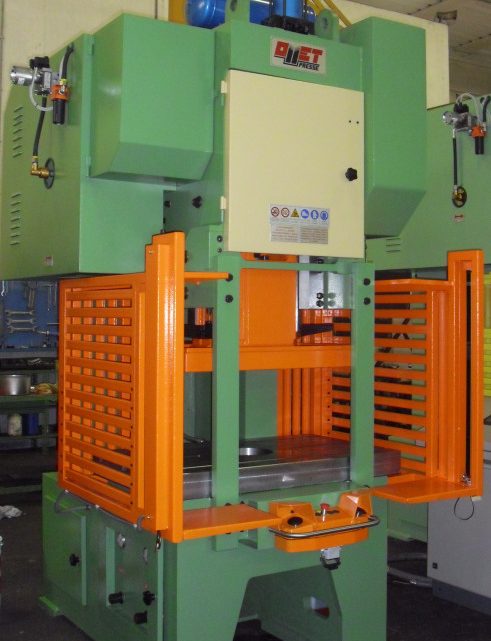
From Inspection to Installation: What to Verify Before Buying a Pre-Owned, Used, Secondhand, Surplus OMET 105T Presses made in Italy
When evaluating a pre-owned or surplus OMET 105 T hydraulic press (made in Italy) for purchase, you’ll want a full inspection + installation checklist to cover machine condition, hydraulic system, structural integrity, service history, and site readiness. The more thorough your review, the less risk of hidden costs or downtime. Below is a detailed guide you can use.
Pre-Purchase & Inspection Checklist
1. Structural Integrity & Frame Condition
- Inspect the main frame, bed, platen(s), and ram for cracks, weld repairs, deformation or signs of fatigue.
- Check for uneven wear on bed surfaces or platen faces, corrosion (especially near hydraulic ports).
- Verify that the ram and platen interfaces are flat and free of excessive scoring or mechanical damage.
2. Hydraulic System & Components
- Review hydraulic oil level, condition, colour. Dark, dirty or milky oil typically means contamination or water ingress.
- Inspect hoses, fittings and cylinders for leaks, abrasion marks, bulging or external damage.
- Operate the press (if possible) through a test cycle: watch for slow speed, uneven travel, or sluggish behavior in the cylinder/ram.
- Check the hydraulic pump, motors, valves, and filters for cleanliness and any history of maintenance.
- Confirm that pressure gauges are calibrated and functioning properly.
- Check for leakage around the main ram and check its condition: piston rod scars, fluid wetness, misalignment.
3. Drive, Clutch/Brake & Mechanical Subsystems
- Inspect clutch and brake systems (if applicable), ensure they engage/disengage properly, no slipping.
- Check the motor and drive power system: verify nameplate data, hours of operation, overheated components.
- Examine all moving parts for wear: slideways, fit between ram and guides, lock-up mechanisms, tie rods.
- Ensure any die cushion, blank holder or other attachments function correctly and have well-documented service records.
4. Controls, Safety & Electrical
- Check the control panel, electrical wiring, relays, safety interlocks, emergency stop, guard position sensors.
- Review the machine’s alarm or event log—look for repeat faults such as motor overcurrent, hydraulic pressure drops, ram mis-positioning.
- Confirm major electrical components are clean, properly grounded and free of overheating marks or odor.
- Ensure safety blocks, two-hand controls (if required), and protective guards are present and correct for your local safety standard.
5. Work Area, Table/Bed & Accessories
- Inspect the press table or platen: flatness, mounting holes, condition of clamping surfaces, any warpage or damage.
- Review bed clearance, ensure the table is properly anchored/leveled.
- Check included accessories: tooling plates, clamps, dies, sensors—make sure they match your production needs.
- Verify that any ancillary equipment (hydraulic reservoirs, cooling systems, chip removal/trash systems) are included and functional.
6. Service History, Usage & Documentation
- Ask for machine serial number, build date, hours or number of cycles, major repairs or rebuilds.
- Obtain maintenance logs: hydraulic oil change schedule, cylinder rebuilds, clutch/brake service, safety block checks.
- Check for aftermarket modifications: were major parts changed or replaced (e.g., cylinder, pumps, controls)? These may be positives or risks depending on quality.
- Review relocation history: if the machine was moved multiple times and reinstalled often, alignment and anchoring issues may arise.
7. Foundation & Installation Check
- Confirm the machine is installed on a proper foundation: typically a reinforced concrete slab designed for press loads and vibration.
- Check for anchor bolts, leveling screws and that the bed is stable and true—no rocking or vibration under load.
- Ensure supply systems match your site: power voltage, phase, hydraulic oil reservoir size, cooling, ventilation.
- Check that the installation space allows for safe access to the ram, columns, hydraulic service area and that clearance is adequate for tooling and maintenance.
Installation & Commissioning Checklist
Once you acquire the machine, ensure the following steps are performed before production:
- Level & align bed/ram: Use precision levels and feeler gauges to confirm bed flatness, ram perpendicularity and overall alignment.
- Flush/replace hydraulic oil & filters: Even if the oil looks acceptable, replacing oil and filters is prudent for a used machine.
- Conduct a test cycle: Run a full stroke with no load, then with a light load, inspect ram speed, respond to controls, check for oscillation or instability.
- Check ram and platen faces for parallelism: Use straight edge or dial test indicators across platen faces under no-load and loaded conditions.
- Validate safety systems: Make sure emergency stop, safety lockouts, guards and sensors all function properly.
- Document baseline performance: Record clearances, cycle times, ram speed, hydraulic pressure, power draw. With this data, future deviations can be monitored.
- Operator training & maintenance schedule: Ensure your team knows the machine’s control system, required lubrication and service intervals, and that you integrate the press into your preventive maintenance program.
Key Red Flags to Watch For
- Extensive hydraulic leaks or oil contamination: if oil looks poor and the system is leaking, replacement of many components may be required.
- Ram misalignment, obvious wear on ram or platen faces, major repairs or signs of heavy abuse.
- Poor service history, missing documentation, or frequent fault codes in electrical/hydraulic system.
- Machine relocated several times without professional rigging: alignment and anchoring issues are common after relocations.
- Foundation issues: if the press was installed on inadequate base, you may face vibrations, unacceptable deflection or future structural costs.
Summary Table
| Item | What to Verify |
|---|---|
| Frame & ram condition | No cracks, wear, damage, warpage |
| Hydraulic system | Clean oil, no leaks, cylinder health |
| Drive / clutch / mechanical | Clutch/brake engagement, good motor condition |
| Controls & safety | Electrical health, interlocks functioning |
| Table / accessories | Flatness, clamps, dies, tooling present |
| Service & documentation | Maintenance logs, rebuild history |
| Installation & foundation | Proper anchor, good leveling, site readiness |
In summary: buying a used OMET 105 T press can be an excellent value if you inspect thoroughly, verify hydraulics, structure, control and installation readiness. A detailed inspection now can save large unexpected repairs later.