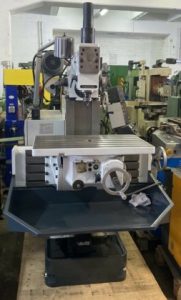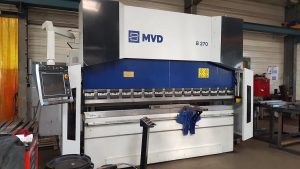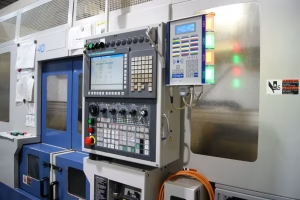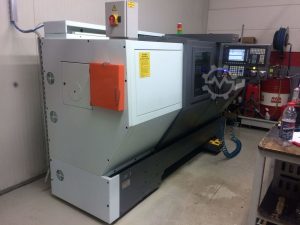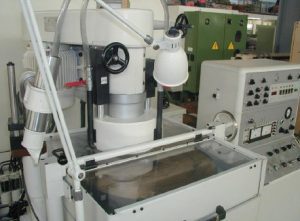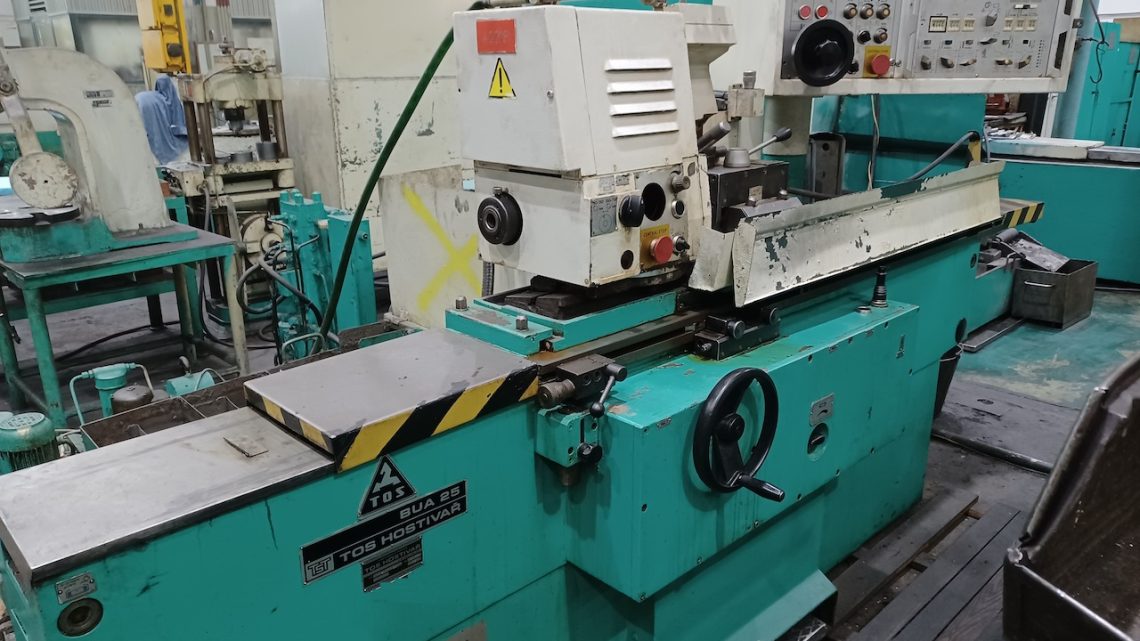
From Factory Floor to Your Workshop: Evaluating a Pre-Owned , Used , Secondhand, Surplus CNC Machines Before Purchase TOS HOSTIVAR BUA 25/1000 Universal Cylindrical Grinding Machine
Here’s a detailed, structured guide and checklist for evaluating a pre-owned / surplus Universal Cylindrical Grinder like the TOS Hostivař BUA 25/1000 (or similar BUA / BUB class machines) before purchase. I’ll also highlight known specs of the BUA 25/1000 as a working reference point.
1. Understand the model & nominal specifications
Before you even visit the machine, gather as much documentation and specs as possible. For the TOS Hostivař BUA 25/1000, here are some reference data:
- It is a universal cylindrical grinding machine (can do external, internal, plunge, maybe taper grinding).
- Weight: ~ 3000 kg (depending on configuration)
- Power input: ~ 4 kW (for the “CNC changed / overhauled” version)
- Swing (max diameter): ~ 279–280 mm (i.e. the largest external diameter it can grind)
- Distance between centers: about 990.6–1000 mm (i.e. 1 m length capacity)
- The model is listed as “discontinued” in many catalogs, so spare parts / documentation availability is something to be wary of.
- Some versions are manual, others possibly retrofitted with CNC capability. The listing at Limetech calls a “BUA 25/1000 CNC” with total input 4 kW.
Knowing the “as-new” specification gives you a benchmark to measure deviations, and helps you verify whether the machine you’re inspecting matches those capabilities or has been modified/ upgraded.
2. Pre-visit preparation: questions & documentation to request
To avoid surprises, ask the seller (or the person in control) to provide:
- Service, maintenance & repair history
- Spare parts replaced (especially spindles, bearings, guideways, ballscrews, drives)
- Any major rebuilds or retrofits
- Dates of last calibration, alignment, regrind, or overhaul
- Drawings, OEM manuals, wiring / electrical schematics
- As-built drawings, control wiring, hydraulic / pneumatic schematics
- Parts lists (especially for critical spares)
- Operational logs / power-on hours / actual working hours
- How many total hours, how many in part loading / idle / running
- Warm-up cycles, spindle run time
- Spare parts & tooling inventory
- Whether wheels, dressers, coolant pumps, chucks, internal grinding attachments, balancing equipment come with it
- Control / electronics details
- What control system is installed (analog, CNC, brand, version)
- Date of last firmware / software update
- Whether control is fully functional
- Photos / video of the machine in operation
- In motion (axes moving), spindle running, part grinding
- Environmental / site log
- Operating environment (humidity, dust, coolant contamination)
- Was the machine idle for long stretches?
- Transportation & rigging plan
- How they plan to disassemble it for transport
- Whether alignment and reinstallation will be included
Having this information beforehand can save time and help you target what to inspect.
3. On-site inspection checklist
Once you reach the machine, do a systematic inspection. I break this into mechanical, electrical / control, functional / test, and ancillary systems.
A. Mechanical inspection
| Component | What to Check | Acceptable / Warning Signs |
|---|---|---|
| Bed, base, casting | Check for cracks, welds, distortions, corrosion. Ensure the machine is rigid and hasn’t been “patched up.” | Minor surface corrosion is OK; structural cracks or large repairs are a red flag. |
| Guideways / ways | Inspect for scratches, wear marks, scoring, pitting. Measure flatness or runout if possible. | Smooth movement without binding; excessive wear, unevenness, or need for re-scraping is concern. |
| Ballscrews / feed screws / leadscrews | Check backlash, wear, remove covers to inspect threads. | Minimal backlash, smooth travel; excessive back-lash or groove wear signals possible replacement cost. |
| Spindle & bearings | Run the spindle (if possible) at various RPMs, listen for noise, feel for vibration or heat, check for radial/axial play. | Quiet, stable running; no excessive vibration, no audible knocking. Bearing failure is costly. |
| Chucks, work-holding, tailstock, centers | Check alignment, wear, taper condition. | Worn tapers, damaged grips, misalignment are red flags. |
| Grinding wheel spindle and wheel arbors | Check the wheel mounting, runout, balancing capability, spindle bearings. | Excessive runout, wobble, or inability to balance a wheel indicate need for spindle overhaul. |
| Dressing / dressing mechanism | Check if the dresser works, condition of diamond / dresser tools. | If dressing is dysfunctional or missing, that’s a required repair. |
| Coolant / fluid systems | Inspect coolant tank, pump, piping, filters, cleanliness, leaks, corrosion. | Clean system indicates good maintenance habits; sludge, rust, leaks are warning signs. |
| Hydraulics / lubrication systems | Check oil lines, pumps, leakage, pressure, automatic lubrication (if equipped). | Any leaks, weak pressure, or nonfunctional lubrication are red flags. |
| Covers, guards, enclosures | Check if protective covers, splash guards, guarding are intact. | Missing covers may suggest past damage or neglect. |
After you inspect visually, if possible, bring measuring tools (dial indicators, straightedges, test bars) to measure critical tolerances (e.g. table flatness, spindle runout, parallelism).
B. Electrical / Control / Electronics
- Control panel & interface: power it up, test buttons, switches, alarms, jog mode, etc. All user inputs should respond promptly and correctly
- Wiring and connectors: inspect for frayed wires, corrosion, loose connections, burnt insulation
- Drives / motors / amplifiers: check their condition, whether thermal protection works, cabling is intact
- Feedback systems / encoders / resolvers: verify signal integrity (jitter, lost counts)
- Grounding, shielding, noise suppression: good practice is essential in older machinery
- Safety circuits, interlocks, E-stop: test safety mechanisms, emergency stops, limits
- Backup battery, memory, parameter storage: make sure control settings are preserved
C. Functional / operational tests
Assuming the machine is powered and (if allowed) you can run it:
- Move all axes (X, Z, etc.) through full travel, listen and feel for binding, stiction, jumps
- At low and higher feed rates, check smoothness of feed
- Run the spindle (if possible) at varied speeds, monitor vibration, noise, temperature
- Perform a test grind: mount a test bar or cylindrical sample, grind a known diameter, check dimensional accuracy, roundness, surface finish
- Check directional reversal backlash (go in one direction then reverse)
- Check spindle starting, stopping, reversing, braking behavior
- Perform a test with dressing (if internal/external)
- Verify that all gauges / readouts correspond to actual movement
If possible, have an experienced machinist or metrologist accompany you for these tests.
D. Ancillary systems & environment
- Floor & foundation: Does the machine have a proper foundation, mounting anchor bolts, level base, stable floor support?
- Cooling and ventilation: Whether the heat dissipation is adequate
- Dust / grit / contamination: If the machine was in a harsh environment (grinding dust, coolant sludge), that accelerates wear
- Environmental control: Temperature fluctuations, humidity, presence of acids in coolant, etc., all degrade machine lifespan
- Spare parts availability: Ask whether consumables, wheels, bearings, seals are easy to source or whether the machine is “orphanned”
- Operator ergonomics, accessibility: Are critical maintenance points accessible or obstructed?
4. Evaluation, measurement, and analytics
Once you have all the inspection data, use those to compare against acceptable thresholds and derive a “health score” or estimate remaining useful life.
- Wear margin: Compare measured geometries (flatness, straightness, runout, parallelism) to original specs and acceptable tolerances
- Backlash / precision losses: quantify how much backlash or lost motion exists, and whether it’s within your required tolerance
- Spindle life remaining: Based on bearing condition, vibration, noise, suggestions from the seller
- Upgradability / retrofit potential: If control electronics are obsolete, is it feasible to retrofit CNC or newer systems
- Cost of repair / reconditioning: From your inspections, list out major repairs needed (e.g. spindle regrind, guideway re-scraping, repacking of ways, controls replacement) and estimate costs
- Downtime / commissioning risk: If the seller must disassemble and transport, alignment and recalibration costs must be included
- Total cost of ownership (TCO): Sum purchase price + transport + repairs + spare parts + downtime, vs expected useful life vs alternative options
5. Red flags & deal-breakers
While lesser defects can be negotiated, some are serious enough to walk away:
- Heavily damaged or cracked base / casting
- Spindle damage, severe bearing failure, or ambiguous spindle condition
- Severe guideway or bed wear beyond repair (would require full re-scraping or replacement)
- Control electronics in unrepairable / unsupported state (no spare parts, obsolete hardware)
- Missing critical components (chucks, dresser, drives, encoders)
- Unrecoverable misalignment or inability to re-calibrate after disassembly
- Lack of documentation or parts history
- Seller unwilling to allow testing or inspection
- Environmental damage (corrosion, contamination) beyond economical repair
6. Specifics to the TOS Hostivař BUA 25/1000
Since you mentioned that specific model, a few extra considerations:
- Given its age and discontinuation, spare parts might become scarce. That includes bearings, seals, electronic modules, encoder units, etc.
- The swing and distance between centers suggest a 1 m travel capacity—but ensure the specific machine (especially if retrofitted) still maintains this.
- If it has been retrofitted to CNC (as some listings show), check how well the retrofit has been integrated; interfaces, rigidity, feedback systems must be high quality.
- Ensure that any “CNC” designation is not superficial (i.e. just adding servo drives) — probe whether feedback loops, interpolations, axis linear encoders, calibration have been redone.
- Given its ~3-ton mass, transportation, rigging, demounting, and alignment will be nontrivial.
7. Negotiation & final considerations
- Ask the seller to share the results of your test / inspection (or perform them in their presence).
- Use your repair / overhaul estimates as negotiation levers.
- Factor in transportation, lifting, alignment, installation in your budget.
- Insist on a “right-of-return” or limited warranty period (if possible) for major components.
- Consider hiring an independent inspector or consultant familiar with cylindrical grinders, especially older / specialized machines.
- Try to run the machine with your own test piece or your typical workpiece, rather than a “demo part” chosen to look good.