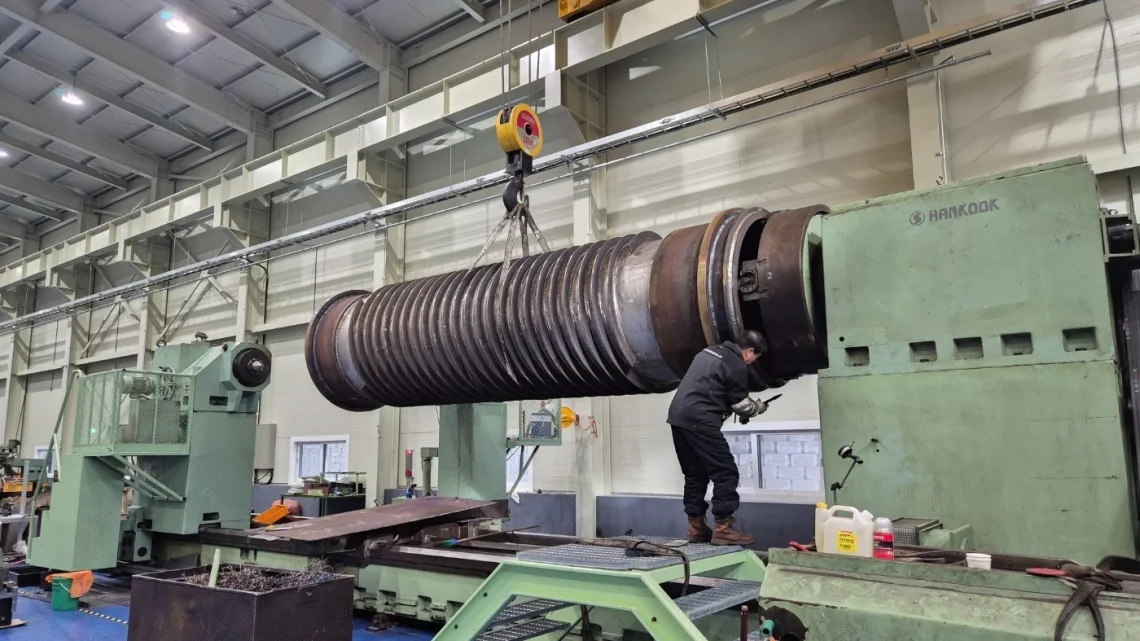
From Factory Floor to Your Workshop: Evaluating a Pre-Owned, Used, Secondhand, Surplus CNC Machine Before Purchase Hankook Machine Tools CNC Heavy Duty Lathe Distance 10 Meters Swing over bed 4200mm made in South of Korea
1. Introduction
In today’s competitive manufacturing environment, acquiring a pre-owned CNC heavy-duty lathe can be a highly strategic investment. Machines built for large-scale turning operations—such as those produced by Hankook Machine Tools—are engineered for durability, rigidity, and long service life.
However, when dealing with extreme-capacity machines (e.g., 10-meter between centers and 4200 mm swing over bed), the evaluation process must go far beyond a standard inspection. These machines often operate under heavy loads, and even minor wear can significantly impact precision, safety, and profitability.
2. Machine Overview
Typical Configuration:
- Machine Type: CNC Heavy Duty Lathe
- Manufacturer: Hankook Machine Tools
- Origin: South Korea
- Distance Between Centers: ~10,000 mm
- Swing Over Bed: ~4,200 mm
- Application Range:
- Shipbuilding shafts
- Energy sector components
- Large rollers and cylinders
- Steel and heavy fabrication industries
These machines are designed to handle massive workpieces, often weighing several tons, requiring exceptional structural integrity and alignment stability.
3. Structural Integrity & Mechanical Condition
The first and most critical step is evaluating the mechanical foundation of the machine.
Key Inspection Points:
- Bed Ways:
Look for wear patterns, scoring, or uneven contact. A machine of this size often suffers from localized wear due to repetitive machining zones. - Headstock Assembly:
Check spindle bearings, gear noise, and thermal stability. Any vibration at high torque levels indicates potential bearing fatigue. - Tailstock & Support Systems:
On long-bed machines (10 meters), tailstock alignment is crucial. Misalignment leads to taper errors over long shafts. - Carriage & Cross Slide:
Inspect backlash, lubrication efficiency, and smooth travel. Heavy-duty lathes must maintain consistent rigidity across full travel.
4. CNC System & Control Evaluation
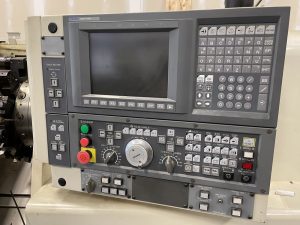
The CNC system is the brain of the machine and determines usability and integration capability.
Checklist:
- Control brand (commonly Fanuc, Siemens, or proprietary systems)
- Software version and upgrade availability
- Axis responsiveness and interpolation accuracy
- Servo motor condition and feedback systems
- Availability of spare parts and technical support
Older systems may still be functional but could limit automation, connectivity, and precision enhancements.
5. Spindle Performance & Power Transmission
For a machine handling large diameters, spindle performance is non-negotiable.
Critical Factors:
- Torque Output: Must be sufficient for large-diameter turning
- Speed Range: Typically low RPM but high torque
- Gearbox Condition: Listen for abnormal noise or backlash
- Runout Measurement: Essential for precision verification
A worn spindle system can lead to surface finish defects and dimensional inaccuracies.
6. Alignment, Geometry & Accuracy Testing
Precision is often overlooked in large machines, but it is just as critical.
Recommended Tests:
- Straightness of bed over full 10 meters
- Parallelism between spindle axis and bed
- Tailstock alignment test
- Test cut on large-diameter workpiece
Even small deviations can result in millimeter-level errors over long parts.
7. Hydraulic, Lubrication & Cooling Systems
Heavy-duty CNC lathes rely heavily on auxiliary systems:
- Hydraulic Units: For chucking, steady rests, and tool clamping
- Central Lubrication: Must function flawlessly to prevent accelerated wear
- Coolant System: Check pump capacity and filtration
Failures in these systems often indicate poor maintenance history.
8. Tooling, Accessories & Additional Equipment
Evaluate included components carefully:
- Steady rests (essential for long shafts)
- Faceplates and large chucks
- Tool holders and turret configuration
- Chip conveyors
- CNC steady support systems
Accessories for large machines are expensive and difficult to source, making them a significant part of the machine’s value.
9. Transportation & Installation Considerations
A machine of this scale presents serious logistical challenges:
- Disassembly requirements
- Specialized heavy transport
- Foundation preparation at destination
- Reinstallation and calibration costs
These factors can sometimes exceed the purchase price if not planned properly.
10. Documentation & Service History
Always request:
- Maintenance records
- Original manuals and electrical diagrams
- CNC parameters backup
- Previous application details
A well-documented machine significantly reduces operational risk.
11. Cost vs. Value Analysis
While pre-owned machines offer cost advantages, consider:
- Refurbishment costs
- CNC retrofit possibility
- Energy consumption
- Spare parts availability
A cheaper machine with hidden issues can quickly become a financial liability.
12. Conclusion
Investing in a pre-owned Hankook CNC Heavy Duty Lathe can deliver exceptional value—provided that the evaluation process is conducted with technical rigor. Machines of this magnitude are not just equipment; they are long-term production assets that directly influence capacity, precision, and profitability.
A disciplined inspection covering mechanical integrity, CNC functionality, alignment accuracy, and logistical feasibility is essential before making any purchasing decision. When properly selected, such a machine can serve reliably for decades, transforming heavy manufacturing capabilities within your workshop.